

Most AI engineering certifications will do nothing for your career. That is not me being cynical. It is just how hiring works right now.
But a small group of them do two things that actually matter. They get you past the first filter, and they force you to build something you can show a real person.
So I went through seven AI engineering certifications and compared what each costs, how long it takes, and what it proves to an employer.
What AI engineering certifications really do for you
Here is the honest version. A certificate does not get you hired. It gets you seen.
Recruiters filter resumes on keywords. When a posting asks for experience with Bedrock, Vertex AI, or Azure, the badge is the thing that survives the first pass. That is job one.
Job two is the part people skip. A good program makes you build something. You come out with a working app, a repo, and a story you can tell in an interview.
That second part is where the money is. The average pay for an AI engineer in the United States sits at about $101,000 a year, according to ZipRecruiter, and the people earning it can point to systems they shipped.
If you want a wider view of the market first, our guide to high paying AI jobs breaks down which roles are actually hiring.
Best AI Engineering Certifications
- IBM Generative AI Engineering Professional Certificate
- IBM AI Engineering Professional Certificate
- NVIDIA Certified Associate in Generative AI and LLMs
- Claude Certified Developer, Foundations
- Microsoft Azure AI Apps and Agents Developer Associate
- Google Cloud Professional Machine Learning Engineer
- AWS Certified Generative AI Developer, Professional
1. IBM Generative AI Engineering Professional Certificate
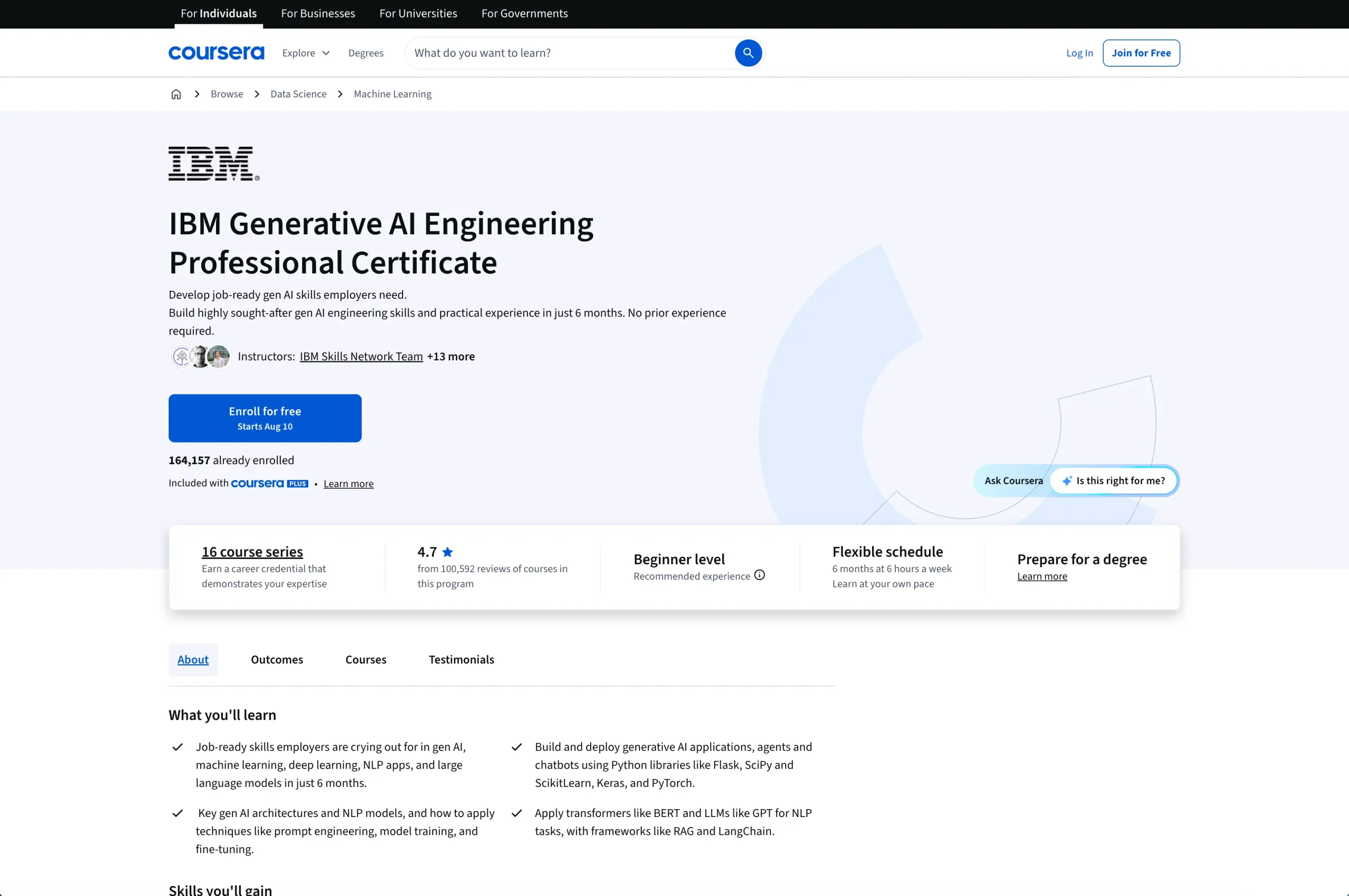
This is where I would send anyone starting from zero.
It is a sixteen course program on Coursera that runs about six months at six hours a week. There are no prerequisites, and it really is built for beginners.
What I like most is how the lessons stack. It teaches you Python from scratch, then walks you through building and deploying real applications with Flask.
From there it climbs into fine tuning transformers and building agents with retrieval augmented generation and LangChain. You finish with a working generative AI app you can demo in an interview.
It also carries an ACE credit recommendation. The IBM badge page lists it as recommended for up to 17 college credits, which almost nothing else on this list can say.
More than 100,000 people have enrolled and it holds a 4.7 rating on Coursera.
Best for: career changers who want one structured path from nothing to job ready.
2. IBM AI Engineering Professional Certificate
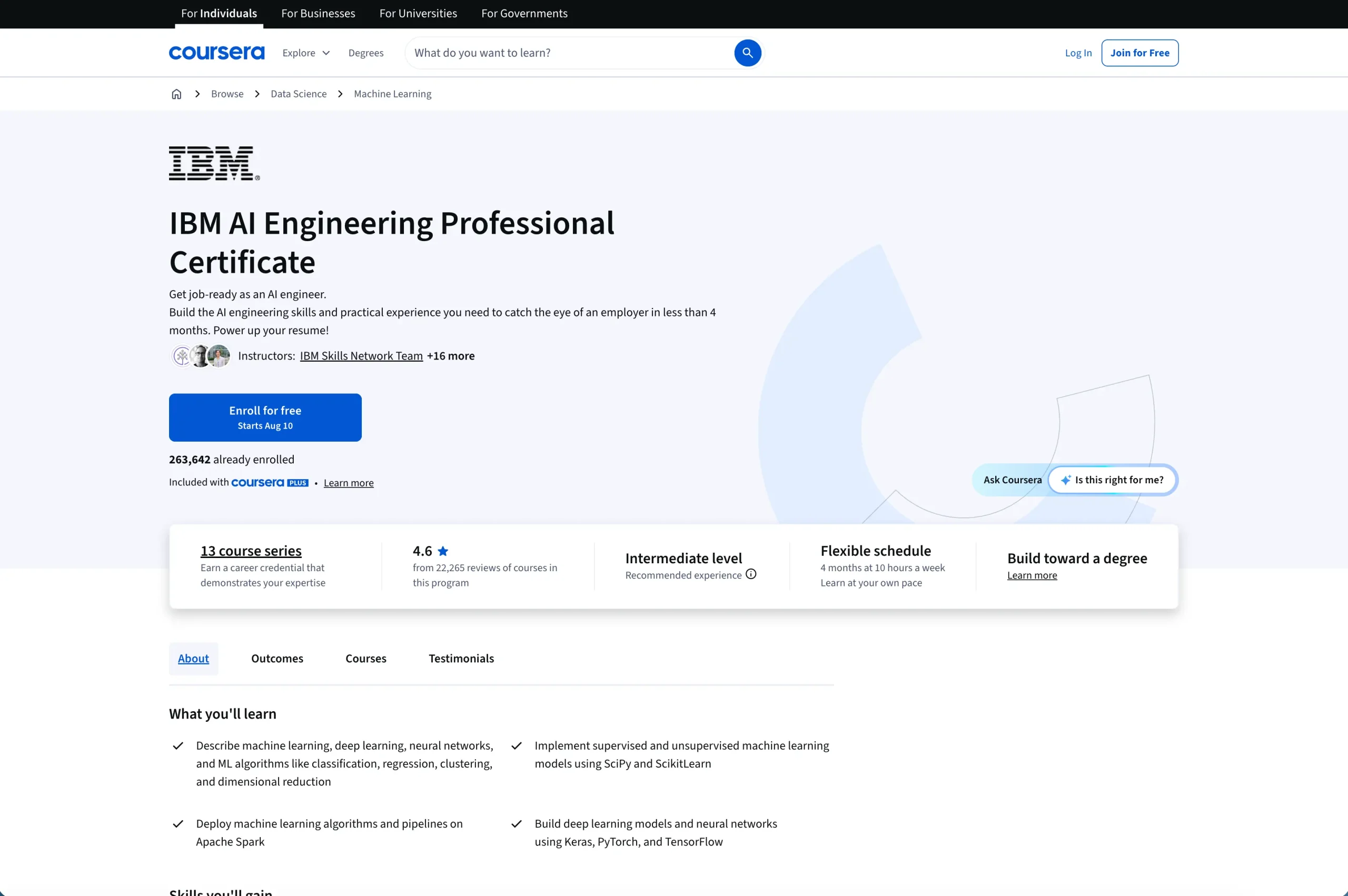
This is the sibling program, and it assumes you already write Python.
It is shorter at thirteen courses, roughly four months at ten hours a week, and it sits at an intermediate level. This is the one I would take if you are already technical.
It goes much deeper on the machine learning side. PyTorch, Keras, TensorFlow, and computer vision, with a proper deep learning capstone before it moves into large language models.
That deep learning work is the difference between people doing the job and people talking about it. Interviewers can tell within two questions which group you are in.
If you are weighing the two IBM options against each other, we compared them in more detail in our roundup of IBM AI certifications.
Best for: developers who already code and want a recognizable IBM badge with real depth behind it.
3. NVIDIA Certified Associate in Generative AI and LLMs
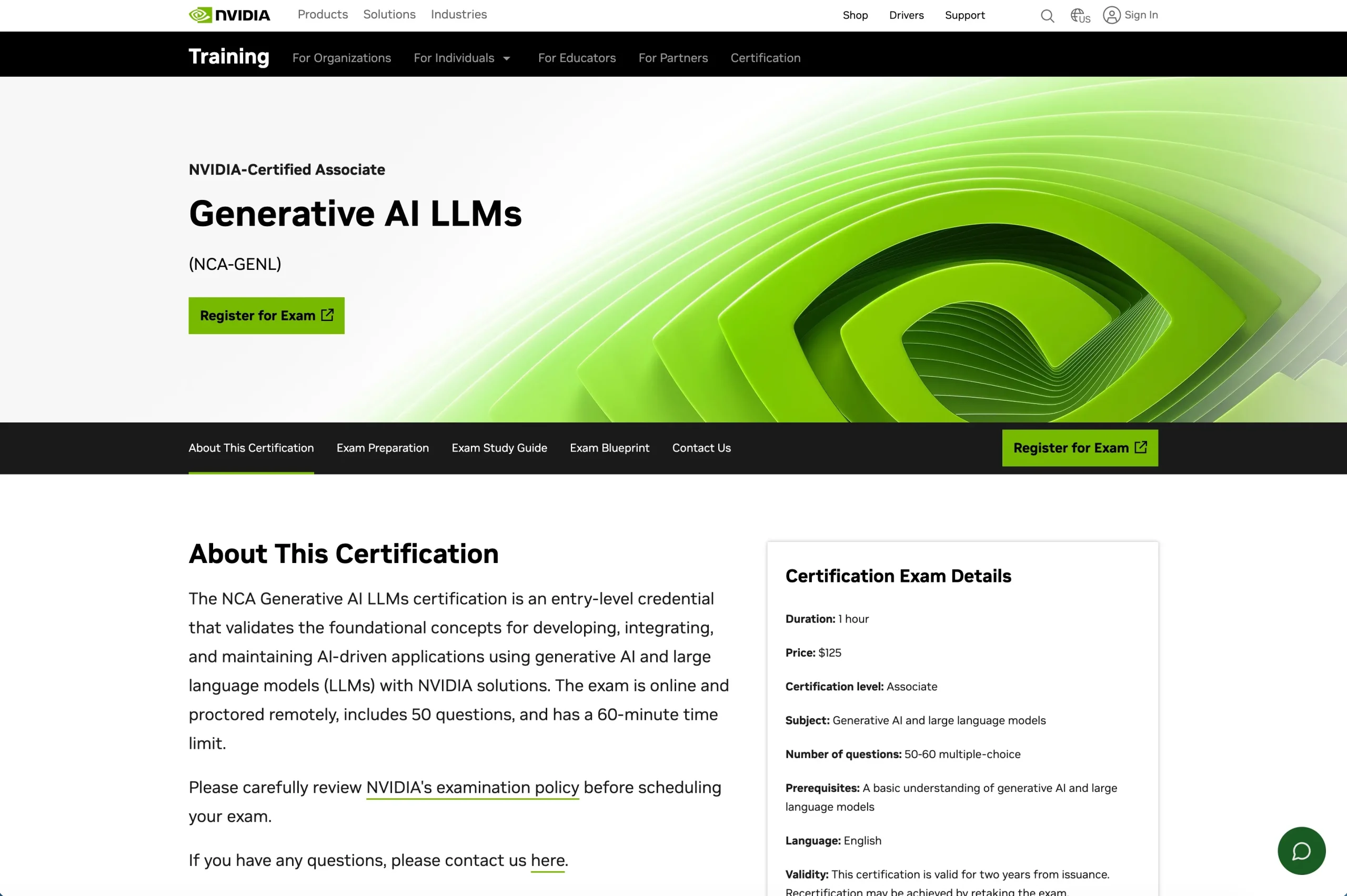
This is the best value proctored exam on the entire list.
NVIDIA lists it at $125 with a one hour exam, and it stays valid for two years. It is delivered online with remote proctoring.
Here is why I rate it so highly. Almost every other exam makes you learn an entire cloud platform before it will test you on AI.
This one goes straight at the model layer. Transformer architecture, prompt engineering, retrieval augmented generation, fine tuning tradeoffs, inference, and deployment.
Yes, it leans on NVIDIA's own stack in places. But most of that knowledge transfers to whatever tool you touch next, and those are the exact topics an interviewer will push you on.
A month of focused study and a little over a hundred dollars is the cheapest way I know to put something current and credible on a resume.
Best for: anyone who wants a real proctored credential fast without committing to one cloud.
4. Claude Certified Developer, Foundations
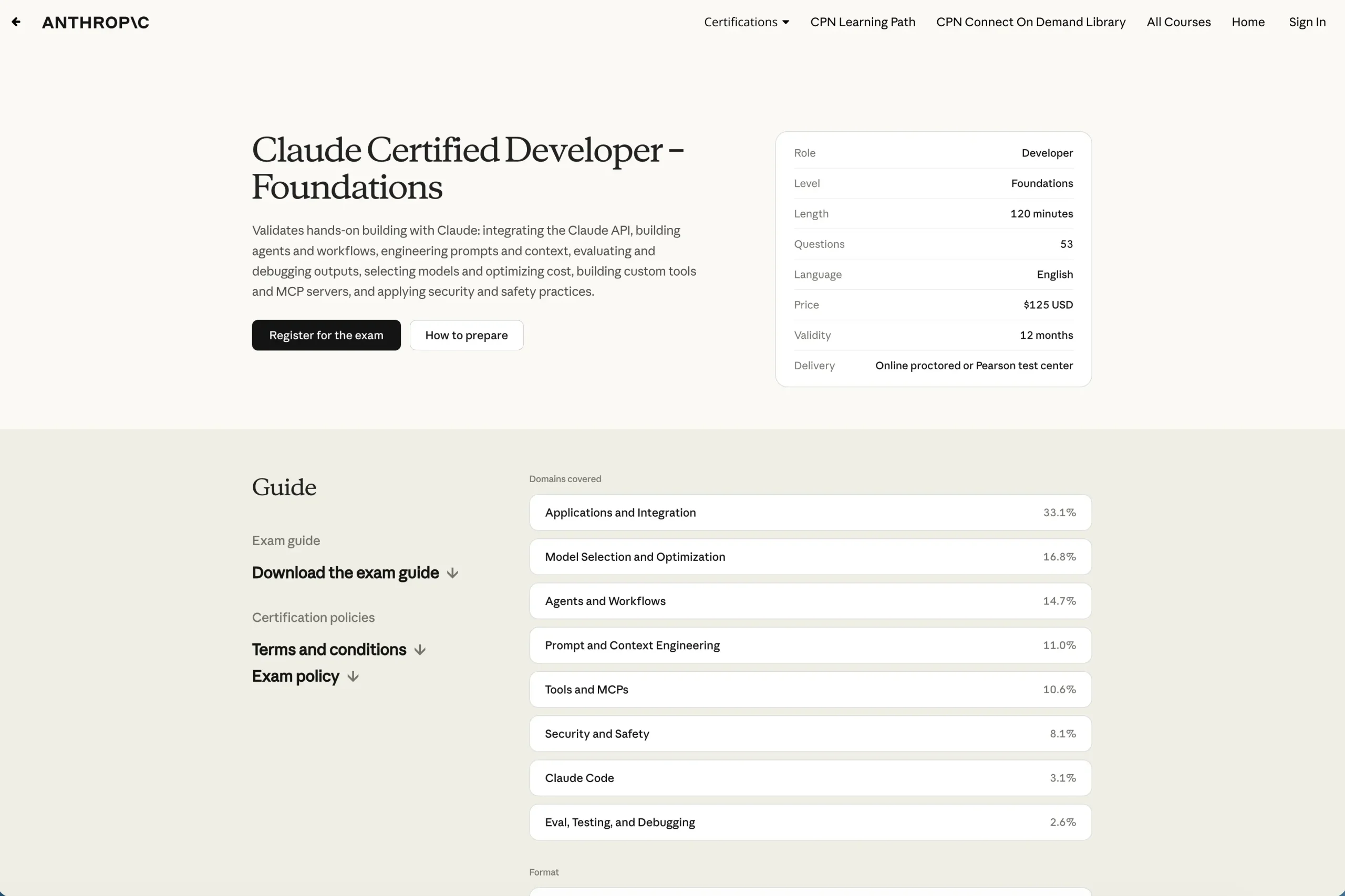
This is the newest credential in the space, and I think it is a smart pick right now.
The exam costs $125, runs 120 minutes, and needs a scaled score of 720 out of 1,000 to pass. It is delivered through Pearson VUE, either online or at a test center, and the credential is valid for twelve months with a free on time renewal.
What makes it different is where it sits. Every other exam here certifies you on a cloud platform. This one certifies you at the model layer, on shipping real applications with the API and the Agent SDK.
Because Claude runs on AWS Bedrock, on Google Vertex, and through the direct API, those skills travel with you no matter whose cloud your next employer runs on.
Two things to know before you plan around it. The prep is free, since Anthropic Academy publishes its courses on the API, agents, and Claude Code at no cost.
The second is eligibility. Registration runs through the Anthropic Partner Academy, and several guides report that a company domain email is required rather than a personal one. Check the current rules before you book, because the program has changed fast since launch.
Best for: developers already building with LLM APIs who want the most current credential available.
5. Microsoft Azure AI Apps and Agents Developer Associate
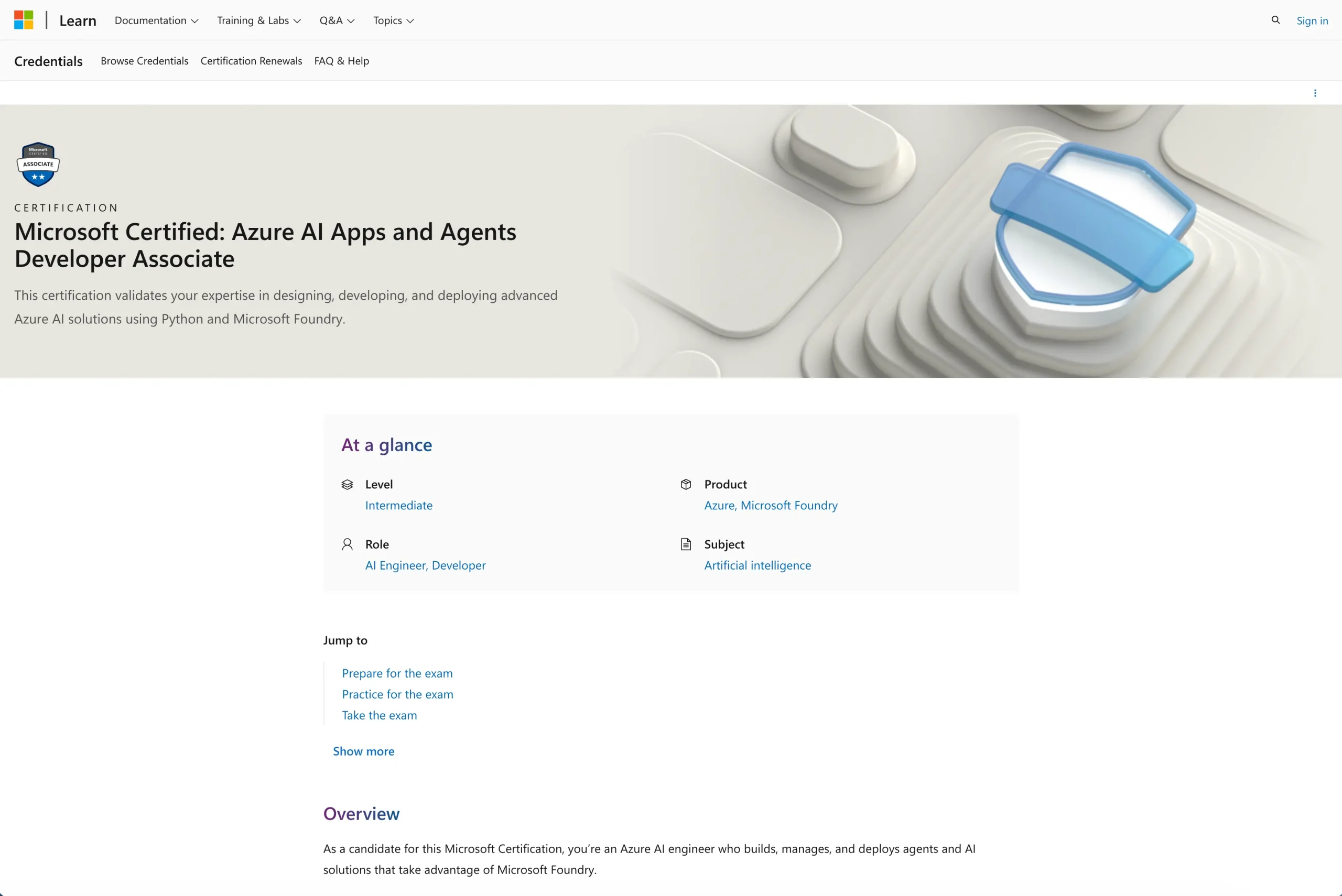
If your workplace runs on Microsoft, put this one at the top of your list.
You earn it by passing Exam AI-103, which replaces the older AI-102. Microsoft lists the exam at 120 minutes, and the passing score is 700 out of 1,000. In the United States it costs around $165.
The largest domain on the exam is implementing generative AI and agentic solutions. Multi agent systems, tool calling, grounding, and retrieval, all built around Microsoft Foundry in Python.
That is not a general AI exam with an agents chapter bolted on the side. That is an agent developer exam.
And here is the detail I really like. Microsoft certifications renew every year for free on Microsoft Learn. Every other exam on this list charges you again when it expires.
You can read the full skills breakdown on the Microsoft Learn certification page.
Best for: developers at companies already paying for Azure, and anyone who wants agent skills validated properly.
6. Google Cloud Professional Machine Learning Engineer
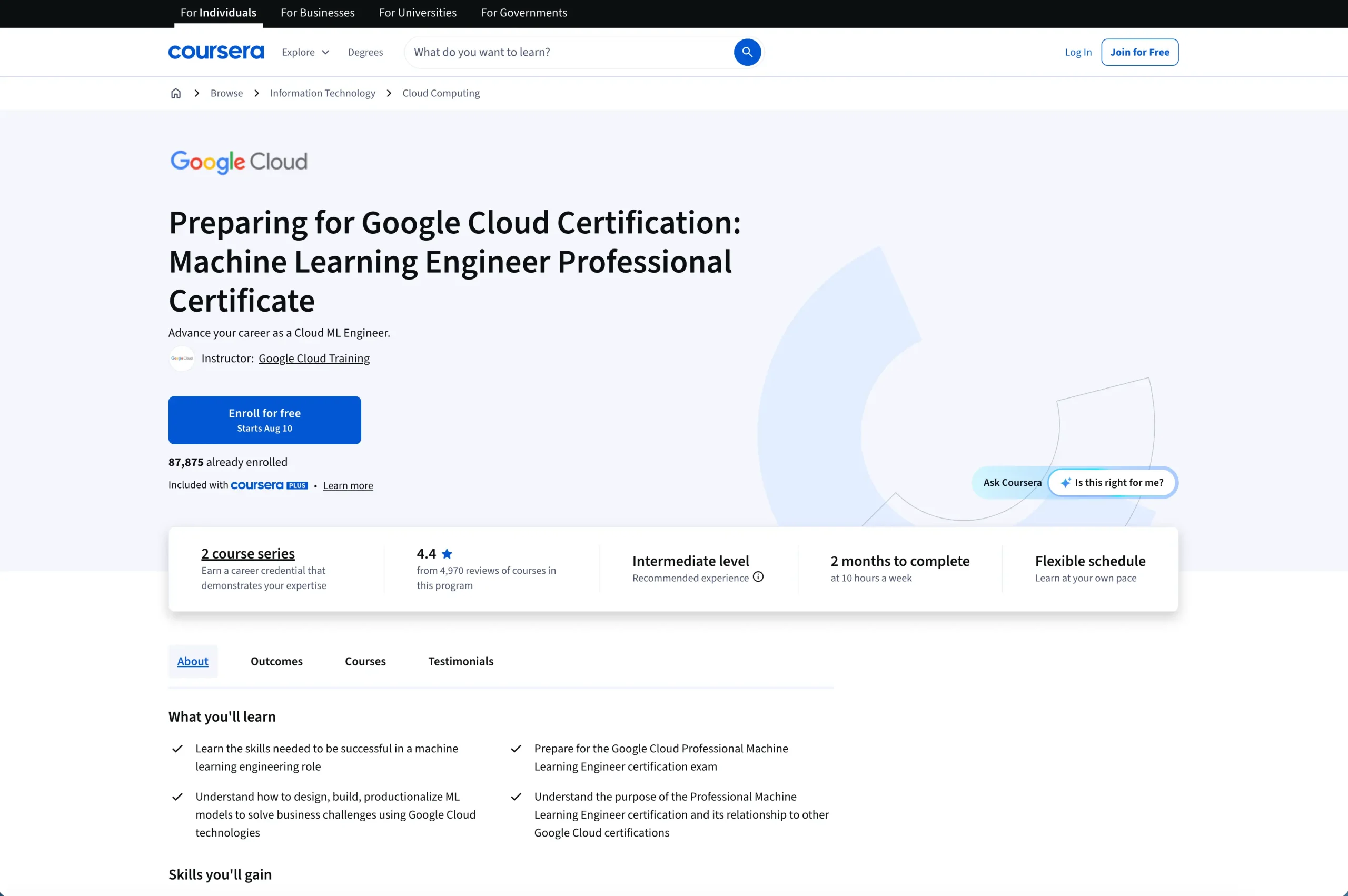
This is the most established credential here, and that is its superpower.
It costs $200, runs two hours, and uses 50 to 60 scenario based questions. It stays valid for two years, and recertification usually comes at a reduced fee.
It shows up in more job postings than anything else on this list, especially at cloud consultancies, financial services firms, and large tech companies. Hiring managers know exactly what it means.
Google also refreshed the exam in June 2026, shifting it toward the Gemini Enterprise Agent Platform rather than older batch pipelines, according to the official certification page. Any prep material older than that will leave gaps.
Plan for three to six months of study, and expect it to test machine learning operations properly, not just generative AI. Our full breakdown of Google AI certifications covers how it fits with Google's other options.
Best for: engineers already running models in production who want the widest name recognition.
7. AWS Certified Generative AI Developer, Professional
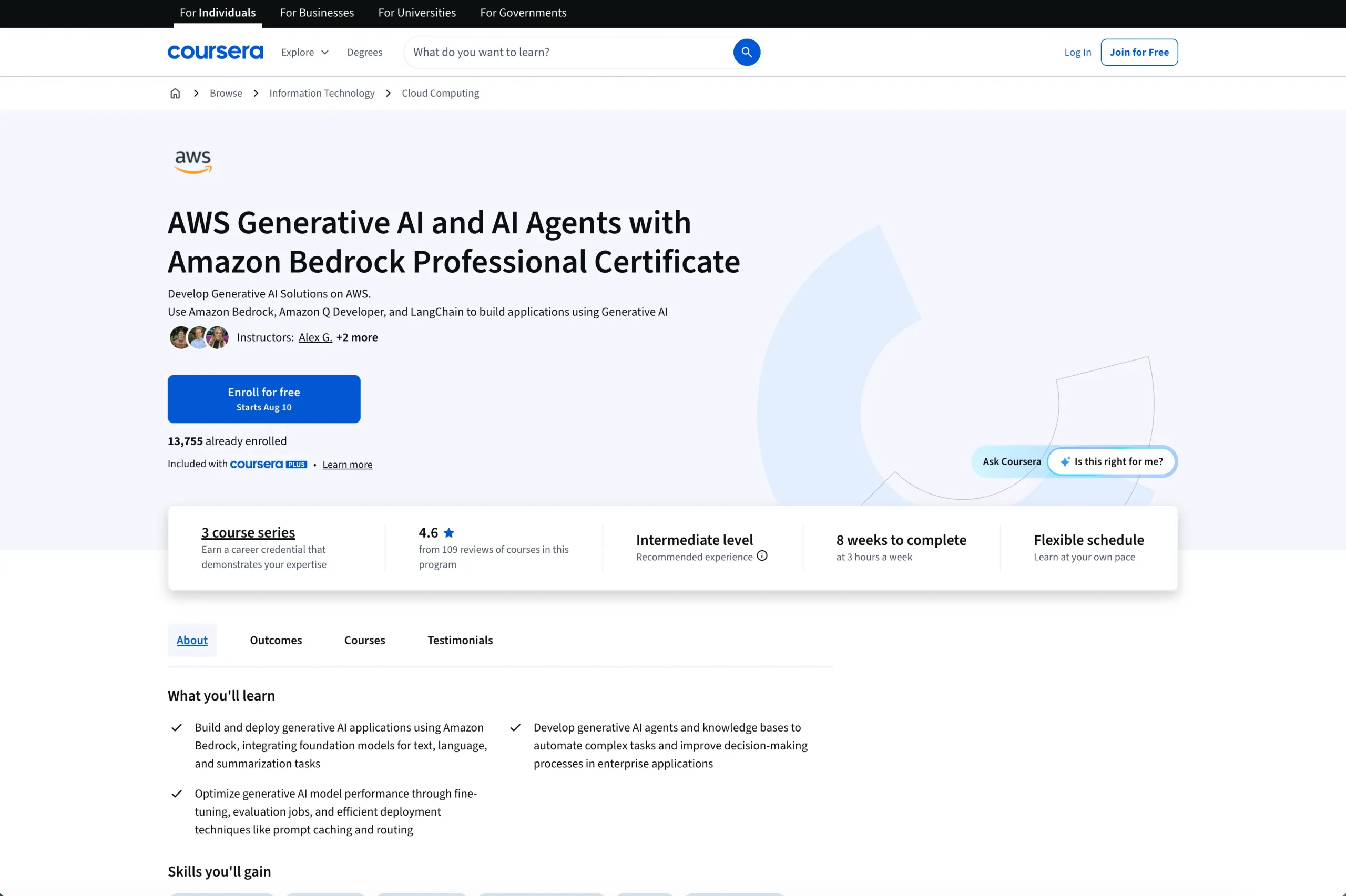
This is the heavyweight of the group.
It costs $300 and has 65 scored questions, with a passing score of 750 out of 1,000. It stays valid for three years, the longest window on this list.
The beta closed at the end of March 2026 and standard registration is now open, refreshed to include Bedrock AgentCore.
AWS placed this at professional tier, sitting alongside Solutions Architect Professional, and that placement is deliberate. Every question stacks requirements together and asks for something scalable, cost effective, and secure all at once.
It replaced the old machine learning specialty exam, and that shift tells you everything. It is no longer about training models. It is about shipping production systems built on foundation models, retrieval architectures, and vector databases.
You can check the current exam details on the AWS certification page. Because it is still new, the badge is rare, which is worth something on its own.
Best for: people already building on AWS who want to move from developer to AI engineer.
Compare AI Engineering Certifications
This is the part worth saving. Cost, time, and who each one is really for.
| Certification | Cost | Time needed | Best for |
|---|---|---|---|
| IBM Generative AI Engineering | Coursera subscription | About 6 months | Total beginners |
| IBM AI Engineering | Coursera subscription | About 4 months | Existing Python developers |
| NVIDIA Generative AI and LLMs | $125 | About 1 month | Fast, cloud neutral proof |
| Claude Certified Developer | $125 | 4 to 6 weeks | LLM API builders |
| Microsoft AI-103 | Around $165 | 6 to 8 weeks | Azure shops and agent work |
| Google Professional ML Engineer | $200 | 3 to 6 months | Production ML and wide recognition |
| AWS Generative AI Developer | $300 | 3 to 6 months | Senior AWS builders |
The shape of it becomes obvious once you line them up.
The two IBM programs are the longest commitment but the gentlest entry. NVIDIA and Claude sit in the middle on price and give you the fastest route to a real proctored credential.
Microsoft, Google, and AWS are the platform credentials. The right one is simply whichever cloud your employer already pays for.
The one I would pick with only one shot
Microsoft's AI-103.
Around $165, six to eight weeks of study, built around agents from the ground up, and tied to a platform that enterprises everywhere already run.
Then there is the renewal. It refreshes free every single year, while everything else on this list asks for the full fee again when it expires.
Nothing else matches that combination of cost, currency, and reach. If I had to hand one recommendation to a developer who wanted maximum return for minimum spend, that is the one.
My close second is the NVIDIA exam, purely because of how quickly you can earn it and how little it costs to try.
How to choose the right one for you
Skip the rankings for a second and answer three questions instead.
First, what cloud does your employer or target employer use? If the answer is obvious, pick that platform credential and stop overthinking it.
Second, can you already write Python and ship an application? If not, start with the beginner IBM path rather than paying for an exam you are not ready to pass.
Third, how fast do you need something on your resume? If the answer is weeks rather than months, the NVIDIA or Claude exams are the only two that fit.
If you are still comparing options across the whole market, our guide to the best AI certifications covers the wider list, including options outside engineering roles.
What a certification will not do
Let me answer the question everyone asks. Does anyone actually check these?
Here is the honest answer. Recruiters filter on the keyword, so the certificate gets you into the room.
Then the interviewer asks what you built while you were studying. That is what gets you the job.
Which means the real return is not the exam at all. It is the projects you ship on the way to it.
So do both at once. Study for one of these and build in public while you do it. Post the repo, write up what broke, share the demo.
You get paid twice for the same work. Once by the badge, and once by the portfolio sitting underneath it.
Next steps
Pick one and start this week. Two IBM paths depending on your level, NVIDIA for the best value entry point, Claude for the most current model level credential.
Microsoft for the best all rounder, Google for the widest recognition, and AWS when you are ready to prove you can build the hard thing.
If you want to test the waters before spending anything, start with our list of free AI courses and see which side of the work you actually enjoy.
And if you would rather learn by building alongside other people, that is exactly what we do inside AI Builders Lab, where the focus is shipping real projects rather than collecting badges.