
- Digital Marketing Vs. Social Media Marketing
- What Is Digital Marketing?
- What Is Social Media Marketing?
- How Digital Marketing and Social Media Marketing Work Together
- Digital Marketing Or Social Media Marketing? Which Is Better?
- Digital Marketing vs Social Media Marketing Careers and Salary
- Digital Marketing vs Social Media Marketing FAQ
Digital Marketing Vs. Social Media Marketing
Digital marketing is the umbrella term for promoting a business through digital channels, such as search engines, websites, email, paid ads, and social media. Social media marketing is one part of digital marketing that focuses only on social networks like Facebook, Instagram, LinkedIn, TikTok, and X.
In other words, all social media marketing is digital marketing, but not all digital marketing is social media marketing. Many people believe that by posting on social media, they are doing digital marketing, but social media is only one of the channels a digital marketing strategy can use.
The key differences between the two are:
- Scope: A digital marketing strategy can include many channels (SEO, content, email, PPC, and social media), while a social media marketing strategy covers one or more social platforms.
- Goals: Digital marketing usually covers the whole customer journey, from awareness to sales. Social media marketing is strongest for awareness, engagement, and building a community.
- Tools: Digital marketers measure results across channels with tools like Google Analytics, while social media marketers rely mostly on each platform’s own analytics, such as Meta Business Suite.
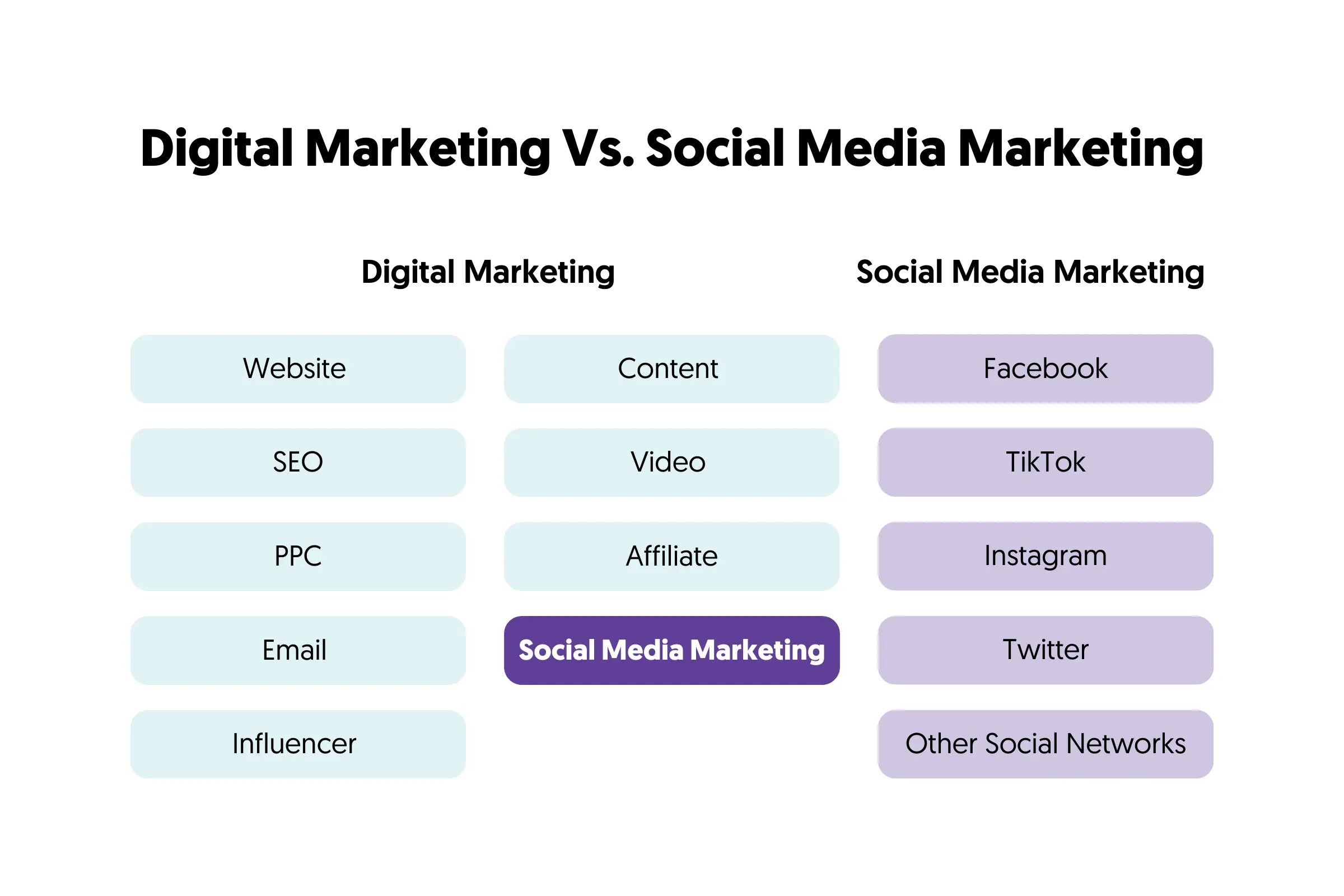
Here is how the two compare side by side:
| Digital Marketing | Social Media Marketing | |
|---|---|---|
| Scope | All digital channels | Social networks only |
| Main channels | SEO, PPC, email, content, websites, social media, video | Facebook, Instagram, LinkedIn, TikTok, X, YouTube, Pinterest |
| Main goals | Traffic, leads, and sales across the whole funnel | Awareness, engagement, community, and trust |
| Core tactics | Search optimization, paid search, email automation, landing pages | Regular posting, short videos, community management, paid social ads |
| Analytics | Cross-channel tools like Google Analytics | Native dashboards like Meta Business Suite and TikTok Analytics |
| Example | An online store that ranks on Google, runs shopping ads, and emails past customers | A café that posts daily Reels and answers messages on Instagram |
What Is Digital Marketing?
Digital marketing is the process of building awareness and promoting a brand or product using digital channels.
The main digital marketing channels are:
- Website marketing and SEO
- Search engine marketing and PPC advertising
- Content marketing and email marketing
- Video marketing and influencer marketing
- Social media marketing
Some definitions also include digital channels outside the internet, such as digital billboards, SMS, and connected TV.
Here is an overview of how digital marketing works:
- Identify your target audience
- Set digital marketing goals
- Create a digital marketing strategy
- Choose your digital marketing channels
- Start campaigns
- Monitor and measure results
Digital Marketing Pros
The most important benefits of digital marketing are:
Global Reach and Specific Targeting: Digital marketing allows you to reach a global audience more efficiently than traditional marketing. You can target specific demographics, interests, and behaviors, making your campaigns more effective.
Cost-Effective and Scalable: Compared to traditional advertising, digital marketing lets small businesses compete with larger ones using cost-effective strategies like SEO and content marketing.
Measurable: Digital campaigns can be tracked in detail. This allows you to make data-driven decisions, adjust budgets, and improve profitability.
Increase Customer Engagement: With digital marketing, you can engage with your audience through many channels, build brand loyalty, and keep your audience aware of your business.
For more on what digital marketing includes, read what is digital marketing.
Digital Marketing Cons
The major disadvantages of digital marketing are:
Constantly Changing Landscape: Digital marketing is always evolving, and to stay current, you need to invest in continuous learning.
Competition and Costs: Online marketing is very competitive. Standing out requires creative effort and unique strategies, which take time and money.
What Is Social Media Marketing?
Social media marketing is the process of promoting a product or service through social media platforms. Generally, there are two ways to run a social media marketing campaign.
The first way is organic and involves building followers, fans, or connections by sharing useful content, running contests, and engaging with your audience.
The second way is paid advertising. You can use Meta Ads, LinkedIn Ads, TikTok Ads, or X Ads to promote your products or services on those platforms.
Here is an overview of how social media marketing works:
- Identify your target audience
- Set social media marketing goals
- Choose your social media platforms
- Create a social media schedule
- Run and optimize paid campaigns
Social Media Marketing Pros
There are many advantages of using social media for marketing:
It’s a Fast Way to Spread Your Message: If you have a large following, a single post can reach thousands of people within minutes, which makes social media one of the fastest ways to share news or an announcement.
It Reaches People Where They Spend Their Time: Billions of people use social networks every day, so social media lets you stay close to your customers and reach new audiences.
It Brings Visitors to Your Website: Posts and ads send people to your website, where they can sign up or buy. Popular content also gets seen by people who may link to it or search for your brand.
It’s a Way to Interact With Your Customers: Customers can show what they like by liking, commenting, and sharing. You can analyze these reactions, talk with your customers, and learn how to improve your products, content, or services.
For more on how social media marketing works, read our social media marketing guide.
Social Media Marketing Cons
The drawbacks of social media marketing are:
Requires Continuous Effort: Social media marketing requires creating and posting content regularly, which can be time-consuming and costly.
Requires Expert Knowledge: Running effective paid ads on social media platforms requires a deep understanding of how each platform works, which means investing in your skills or hiring experts.
Social Media Trends Change Quickly: What works today might not work tomorrow, so you need to update your strategy often.
Potential for Negative Publicity: A brand’s reputation on social media needs careful monitoring to avoid negative publicity.
How Digital Marketing and Social Media Marketing Work Together
Digital marketing and social media marketing work best together. Your website, SEO, and email marketing build the foundation: they help people find you when they search and turn visitors into customers. Social media adds a human, conversational layer that builds awareness and keeps your audience engaged.
For example, a blog post can rank on Google, be shared on LinkedIn and Instagram, and promoted to your email list. Social media ads can bring people to a landing page, and retargeting ads can remind those visitors to come back. Each channel supports the others.
Digital Marketing Or Social Media Marketing? Which Is Better?
Neither is better on its own, because social media marketing is part of digital marketing. The real question is how much of your effort should go into social media compared with other channels, and that depends on your business:
- Local businesses should start with a Google Business Profile and local SEO, then use social media, especially Instagram and Facebook, to show their products and stay in touch with customers.
- eCommerce stores usually get the most sales from search (SEO and shopping ads) and email, and use social media and short videos to reach new customers and show their products in action.
- Service businesses and B2B companies often get their best leads from SEO, content, and email, with LinkedIn as their main social platform.
For example, if you sell software, social media can help you find new customers, share tips with existing ones, and announce updates. But if you sell specialized equipment to farmers, most of your customers will find you through search, trade publications, and local advertising, and social media will play a smaller role.
Digital Marketing vs Social Media Marketing Careers and Salary
Social media marketing is one of the most common ways to start a career in digital marketing. Many people begin as social media specialists and later move into broader digital marketing roles.
According to Indeed salary data for the United States:
- Digital marketing manager: $85,500 per year on average
- Digital marketer: $66,033 per year on average
- Social media manager: $65,641 per year on average
- Social media specialist: $21.14 per hour on average
Broader digital marketing roles tend to pay more at the management level, because they cover several channels and the budget behind them. See our guide to digital marketing salaries for more roles.
If you want to learn both, our Digital Marketing Full Course covers SEO, PPC, email, content, and social media, and includes our Social Media Marketing Course. To start with social media only, see how to learn social media marketing.
Digital Marketing vs Social Media Marketing FAQ
Is social media marketing the same as digital marketing?
No. Social media marketing is one part of digital marketing. Digital marketing also includes SEO, PPC, email, content marketing, and other digital channels.
Which is easier to learn, digital marketing or social media marketing?
Social media marketing is usually easier to start with because it focuses on fewer platforms and you can practice on your own accounts. Digital marketing takes longer to learn because it covers more channels, but it opens up more career options.
Who earns more, digital marketers or social media marketers?
On average, broader digital marketing roles earn more, especially at the manager level. According to Indeed, digital marketing managers in the United States earn an average of $85,500 per year, compared with $65,641 for social media managers.
Can you do digital marketing without social media?
Yes. Some businesses get most of their customers from search and email and use social media very little. But for most businesses, social media is a useful channel for awareness and customer engagement.