
Without a digital marketing strategy, you end up running disconnected campaigns, spreading your budget too thin, and guessing what works.
In this guide, I'll show you how to create a digital marketing strategy step by step, using the same process I've used for my own business and for clients over the last 20 years. At the end, you'll find a one-page template you can copy and fill in for your business.
What Is a Digital Marketing Strategy?
A digital marketing strategy is a plan of action that describes how a business will use online channels to reach its target audience and achieve specific, measurable goals. It connects your business objectives to the channels, content, budget, and metrics you'll use to get there.
A complete strategy answers six questions:
- Goals: What do you want to achieve, and by when?
- Audience: Who are you trying to reach, and what do they need?
- Competition: Who else is competing for the same customers, and how can you stand out?
- Channels and content: Where will you reach your audience, and with what?
- Budget and resources: How much money and time will you invest, and who does the work?
- Measurement: How will you know if it's working?
Strategy, plan, and tactics
These three terms are often mixed up, but they are different layers of the same thing:
- Strategy is the big picture: your goals, audience, positioning, and the channels you'll focus on.
- Plan is the schedule: what will be done, by whom, and when.
- Tactics are the individual actions, such as publishing a blog post, launching a Google Ads campaign, or sending a newsletter.
For example, a website marketing strategy focuses on the tactics that bring traffic to your website and turn visitors into customers. Your digital marketing strategy sits above it and decides how website marketing fits with every other channel you use.
Why you need a digital marketing strategy
Having a digital strategy is important because it makes all your online marketing activities work towards the same business goals. It helps you:
- Spend your budget on the channels most likely to work, instead of the ones that are trending.
- Give every campaign a measurable target, so you know what to keep and what to stop.
- Keep your team working on the same priorities.
- Build long-term assets, such as SEO traffic and an email list, alongside short-term results from paid ads.
In most companies, the person responsible for designing and executing the strategy is the digital marketing manager, working with the rest of the digital marketing team. In a small business, that's usually the owner.
How to Create a Digital Marketing Strategy
These are the steps to follow to create an effective digital marketing strategy:
- Set SMART Business Goals
- Define Your Target Audience and Buyer Personas
- Analyze Your Competitors (SWOT Analysis)
- Define Your Value Proposition
- Map the Customer Journey and Search Intent
- Choose Your Digital Marketing Channels
- Plan Your Content
- Set Your Budget and Resources
- Build a Timeline and Launch Pilot Campaigns
- Measure, Optimize, and Review
1. Set SMART Business Goals
The first step in developing a digital marketing strategy is to specify your business goals. In other words, to determine what you want to accomplish with digital marketing.
Any goals you set have to be SMART:
- Specific: "Get more customers" is a wish. "Increase online sales of product X" is a goal.
- Measurable: Attach a number to it, such as revenue, leads, or subscribers.
- Achievable: Base it on your current numbers, your budget, and your competition.
- Relevant: It must support a business objective, not just a marketing metric.
- Time-bound: Set a deadline, such as the end of the quarter or year.

Some typical digital marketing goals are:
- Raise brand awareness
- Increase organic traffic
- Generate more leads
- Make more online sales
- Get more email subscribers
- Reduce the cost per acquisition of paid campaigns
- Grow your social media following
Use the top-down approach
A good way to come up with measurable goals is to start from your business goal and work backwards to the digital marketing numbers you need.
Here is an example to understand this better.
Business goal: Increase sales to $50K per month from Google organic traffic within 12 months.
Assuming that you make $1,000 from every 5,000 visits you get from Google search, to get to $50K in sales per month, you'll need around 250,000 visits from Google.
If your current traffic level is 140,000 Google visits per month, your digital marketing strategy should include the steps to get from 140,000 to 250,000 visits.
A typical step could be "Publish 3 new blog posts per week", which needs to be broken down further to specify which topics and keywords the posts will target and the expected traffic increase.
Experienced digital marketing specialists know this is not always easy to calculate, because digital marketing constantly changes. But a detailed plan helps you adjust your tactics and get as close to your goals as possible.
2. Define Your Target Audience and Buyer Personas
The second step is to define your target market. In other words, specify in detail who you want to reach with your campaigns.
Some marketers place this as the first step in the process, and that's not wrong. What matters is that you do it before you choose channels or create content.
The best way to do this is to create buyer personas: short profiles of your ideal customers. Each persona should include:
- Demographics: Age, location, occupation, income, and education.
- Psychographics: Interests, values, and attitudes.
- Pain points: The problems your product or service solves for them.
- Online behavior: Where they spend time online, what they search for, and which content they consume.
- Buying process: What information they need before they buy, and who else influences the decision.

The exact details depend on your industry and the products or services you promote. Most businesses need two to four personas.
For example, my agency provides digital marketing services to small businesses, and we also offer online digital marketing courses. People looking for services have a very different profile from people looking for training, so each group gets its own persona and its own campaigns.
Look at your Google Analytics 4 reports, the audience insights in Meta Business Suite, your Google Ads reports, and your customer records. Talk to your sales team and a few existing customers. Real data always beats assumptions.
3. Analyze Your Competitors (SWOT Analysis)
Before you decide how to compete, you need to know who you're competing against. Your competitors are not only the businesses that sell the same products, but also any website that ranks or advertises for the searches your customers make.
Start by listing three to five main competitors and reviewing:
- Which channels they use (search, social media, email, paid ads, video).
- Which keywords they rank for and which ads they run.
- What content they publish and how their audience responds to it.
- How they position themselves: price, quality, speed, expertise, or service.
- What their customers complain about in reviews.
Then summarize what you learned in a SWOT analysis. Strengths and weaknesses are internal (about your business), while opportunities and threats are external (about the market).
| SWOT | Questions to answer | Example (online store selling handmade candles) |
|---|---|---|
| Strengths | What do you do better than competitors? | Unique scents, strong customer reviews, a loyal email list |
| Weaknesses | Where are you behind? | Small ad budget, few blog posts, no video content |
| Opportunities | What gaps or trends can you use? | Competitors ignore gift guides; growing interest in eco-friendly products |
| Threats | What could hurt your results? | Large retailers with bigger ad budgets, rising cost per click |
The gaps you find here, such as topics no competitor covers well or a channel they ignore, often become the most profitable parts of your strategy.
4. Define Your Value Proposition
Once you know your audience and your competitors, define why a customer should choose you. Your value proposition is a short statement that explains what you offer, who it's for, and what makes it different.
A simple formula is: We help audience achieve outcome with product or service, unlike alternative, because reason.
For example: "We help small business owners get more customers from Google with practical SEO courses, unlike expensive agencies, because we teach the exact process we use for our own clients."
Your value proposition should appear consistently across your website, ads, social media profiles, and emails. It's also the message you test first when you launch your pilot campaigns.
5. Map the Customer Journey and Search Intent
The next step is to understand what your personas need at each stage of the buying process, and how they express it when they search on Google, ask an AI assistant, or browse social media.
Map your content and channels to the three stages of the digital marketing funnel:
- Awareness: People realize they have a problem and look for information. Blog posts, videos, and social media posts work best here.
- Consideration: People compare solutions. Guides, comparisons, webinars, and email sequences help them decide.
- Decision: People are ready to buy. Product pages, case studies, testimonials, free trials, and offers close the sale.
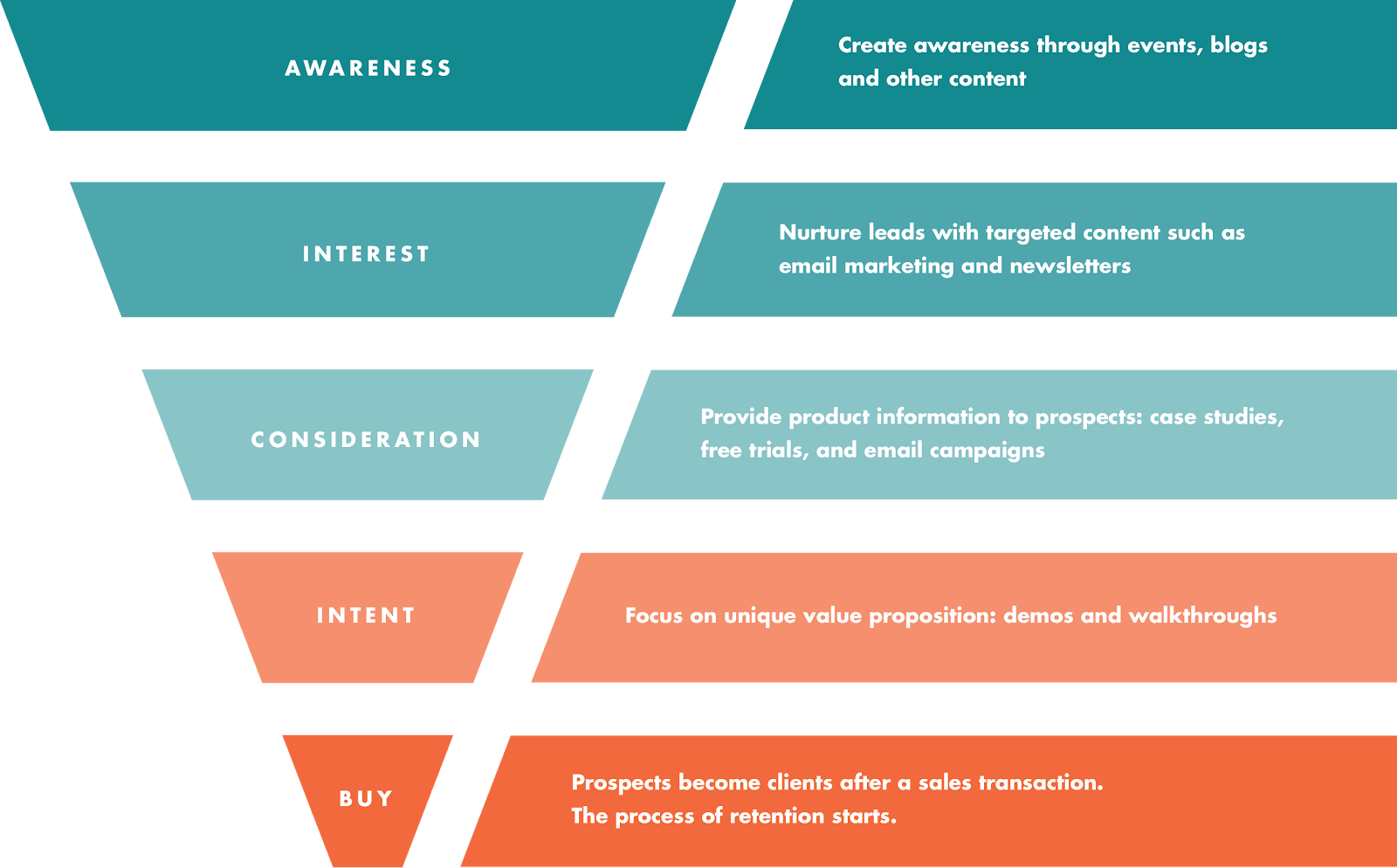
I recommend creating a separate journey for each persona. It makes it easier to set up and run dedicated campaigns for each group of customers.
Search intent
Users' needs are expressed through search queries. When someone types a query into a search engine, they have a specific intent, and if your content, products, or services do not satisfy it, your strategy will fail.
That's why it's important to perform keyword research from the very beginning and capture the topics, keywords, and questions your audience uses throughout the journey, from awareness to purchase.
What about social media, where people don't search?
It's true that people browsing Facebook or Instagram may not have a specific intent in mind, but they have a particular profile. To reach the right people, you can build custom audiences from your website visitors and customer lists and use them to create lookalike audiences on Meta's platforms.
Use the following resources to learn more about digital marketing.
- How to learn digital marketing: a step-by-step guide with learning resources to help you understand how digital marketing works.
- Best digital marketing courses: the best online digital marketing courses to follow.
- Digital marketing certificates: programs to follow to get certified in digital marketing.
6. Choose Your Digital Marketing Channels
With your goals, audience, and journey defined, you can choose the digital marketing channels that will get you there. Don't try to be everywhere. It's better to do two or three channels well than seven badly.
Group your options into three types:
- Owned media: Channels you control, such as your website, blog, email list, and social media profiles.
- Earned media: Visibility you earn, such as search rankings, mentions in AI answers, reviews, shares, and press coverage.
- Paid media: Visibility you buy, such as search ads, social media ads, and sponsored content.
The table below shows what each main channel is best for.
| Channel | Best for | Speed of results |
|---|---|---|
| SEO | Long-term traffic and leads from Google and AI search | Slow (months) |
| Content marketing | Awareness, trust, and supporting every other channel | Slow to medium |
| Search ads | Reaching people who are ready to buy | Fast (days) |
| Social media ads | Awareness and demand for consumer products | Fast (days) |
| Social media (organic) | Community, brand awareness, and customer service | Medium |
| Email marketing | Turning subscribers into customers and repeat buyers | Medium (once you have a list) |
| Video (YouTube, short-form) | Awareness, education, and trust | Medium |
Here is how I approach the most important channels.
Start with SEO as early as possible
SEO is one of the most effective digital marketing channels, but it takes time to work. Google itself says that some changes take effect in a few hours, while others could take several months.
That's why most businesses start with faster channels, such as paid ads. That's a reasonable approach, but the common mistake is forgetting about SEO and only coming back to it after realizing they can't build a successful digital marketing campaign on paid ads alone.
A better strategy is to allocate part of your budget to SEO from the very beginning and run your paid campaigns in parallel.
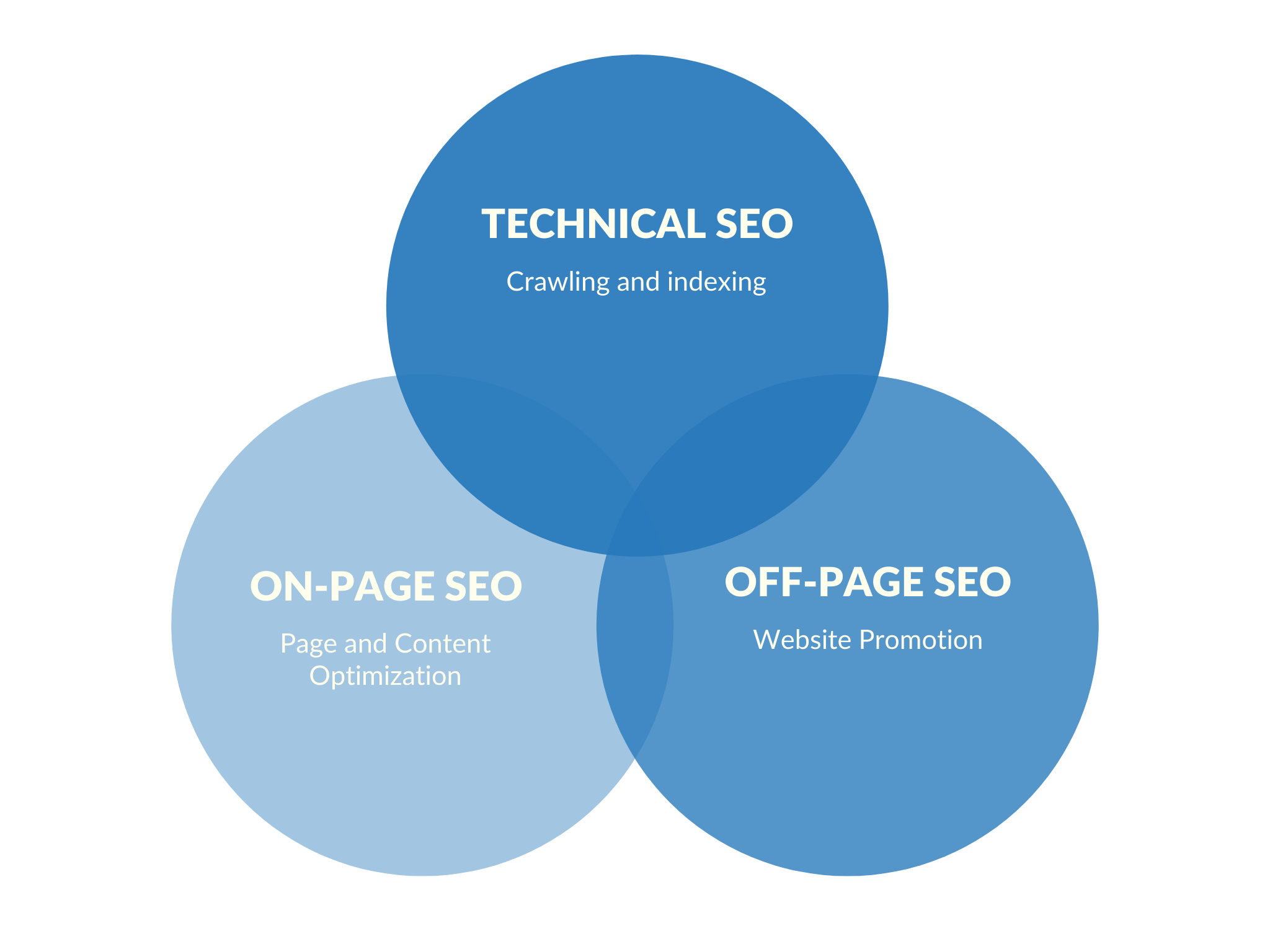
SEO is important because it brings a steady flow of visitors who are actively looking for what you offer. SEO has three parts: technical SEO (making sure search engines can crawl and index your site), on-page SEO (optimizing your content and landing pages), and off-page SEO (earning links and mentions from other websites).
Today, SEO also includes being visible in AI search engines such as ChatGPT and Google's AI Overviews, which draw on the same well-structured, trustworthy content.
If you haven't done SEO before, you can learn it yourself or assign it to SEO experts. These resources will help:
- SEO Checklist: follow the checklist to fully optimize your website for search engines.
- SEO Course: our complete SEO training, from beginner to advanced.
- SEO Guide: a beginner's guide to search engine optimization.
Use paid ads for speed and testing
When you start an online business, a large part of your budget will probably go to paid ads, because they bring results in days rather than months. But not all ad platforms suit every audience:
- Google Ads: The most reliable way to reach people who are actively searching for your products or services. It also covers YouTube, Gmail, and Google's partner websites and apps.
- Meta Ads (Facebook and Instagram): Ideal for consumer products and brand awareness, with detailed audience targeting.
- TikTok Ads: Suitable for reaching younger audiences with short-form video.
- LinkedIn Ads: Strictly for business-to-business advertising. Use it to reach decision-makers by job title and company.
- Microsoft Advertising: Search ads on Bing and partner sites, often with less competition than Google.
For example, if you have an ecommerce store selling to consumers, Meta Ads and Google Shopping ads are usually a good start. If you target business executives, LinkedIn and Google search ads are more appropriate.
Build an email list
The end goal of a digital marketing strategy is revenue, but most people won't buy on their first visit. That's why you need micro-conversions: smaller actions that move people closer to buying.
I know from my own statistics that a good percentage of the people who join my list eventually buy. Email marketing works best with segmentation and automation. Segmentation means grouping subscribers by interest and sending each group relevant content. For example, people who download my SEO checklist receive different emails from people who subscribe to my blog updates. Automation sends the right email at the right time without manual work.
Use retargeting
Most visitors leave without converting. Retargeting and remarketing let you show ads or send emails to people who already visited your website or engaged with your brand, but haven't bought yet.
For example, you can show a reminder, or a discount code, to people who added a product to their cart but didn't check out. Retargeting should be part of your plan from the start, because it increases the return on every dollar you spend on ads and SEO.
Test new channels
Every year brings new channels and ad formats. Short-form video, AI search, Google's Demand Gen campaigns, and creator partnerships through influencer marketing are examples of channels that are still less crowded for many businesses. Test them with small pilot campaigns before moving budget from channels that already work.
7. Plan Your Content
Every channel you choose needs content. Your content library is the collection of assets you'll use across your website, search, social media, email, and ads: blog posts, guides, videos, images, case studies, landing pages, and lead magnets.
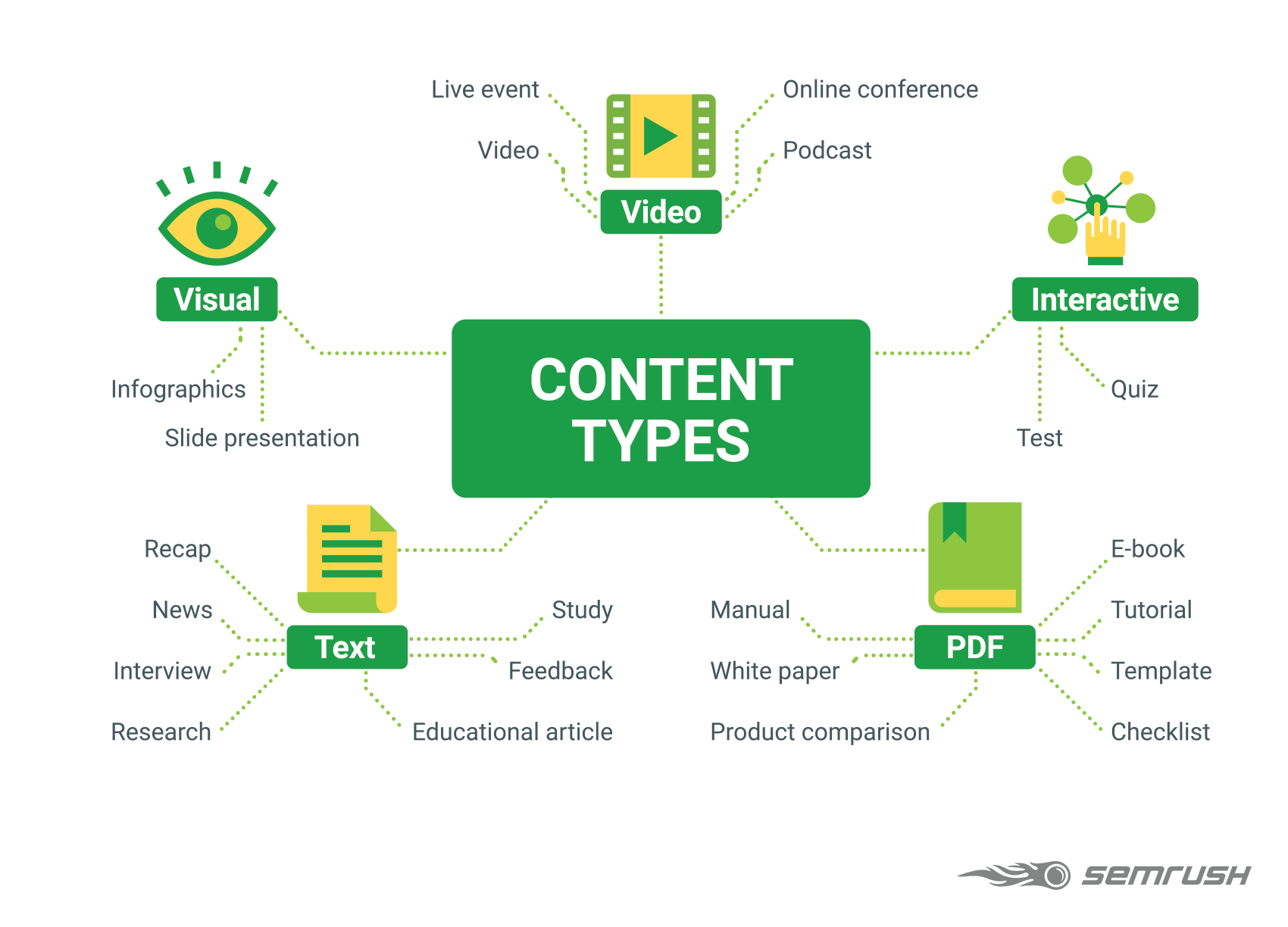
This is what content marketing is all about: deciding what content to create, for whom, and where to publish it. To plan it:
- List the questions and keywords from step 5 for each stage of the journey.
- Decide which format suits each topic and channel (a guide for search, a short video for social media, a case study for the decision stage).
- Audit what you already have, and update or reuse it before creating something new.
- Put everything into a content calendar with owners and deadlines.
I prefer to create a pool of content assets before running any campaigns, because it's more efficient than creating content every time a campaign is about to start. It also makes it easier for different team members to work in parallel.
Use the following resources to learn more about content marketing.
- Content Marketing Guide: how content marketing works and how to use it to support your other channels.
- Content Marketing Courses: the best courses to teach yourself content marketing.
8. Set Your Budget and Resources
A strategy without a budget is a wish list. Decide how much money and time you can invest, then split it across your channels.
Start by answering these questions:
- How much can you spend per month? Base it on your revenue goal and what a customer is worth to you, not on what competitors spend.
- How much goes to paid ads vs. organic channels? Paid ads need an ongoing budget. SEO, content, and email need mostly time and skills.
- Who does the work? Decide what your team handles, what you outsource, and which tools you need.
- What is your cost per acquisition limit? Know the maximum you can pay for a lead or a sale and still make a profit.
The 70-20-10 rule
A useful way to split your budget is the 70-20-10 rule. Spend about 70% on channels and campaigns that already work, 20% on improving or expanding them, and 10% on testing new ideas. This keeps your results stable while you keep learning.
If you're just starting and have no proven channels yet, spend more on testing at first, and move budget to the winners as your data grows.
Finally, assign clear owners and deadlines to every channel. A strategy fails more often because nobody is responsible for it than because the ideas were wrong.
9. Build a Timeline and Launch Pilot Campaigns
Turn your strategy into a plan with a timeline. Break the year into quarters, set targets for each quarter, and schedule the main activities for each channel.
Run pilot campaigns first
The best way to decide which channels deserve most of your budget is to run small pilot campaigns before committing to them.
A common mistake is to put the whole budget into one channel because it's popular, without testing the alternatives. Run small campaigns on two or three channels, compare the cost per lead or sale, and then scale the ones that perform best.
Use your pilot campaigns to test your value proposition, your offers, and your ad creative as well. Small changes in the message can make a large difference in results.
10. Measure, Optimize, and Review
The final step is to track your results, improve what's not working, and review your strategy regularly. Digital marketing changes constantly, so your strategy is never finished. These digital marketing best practices help you run and improve it day to day.
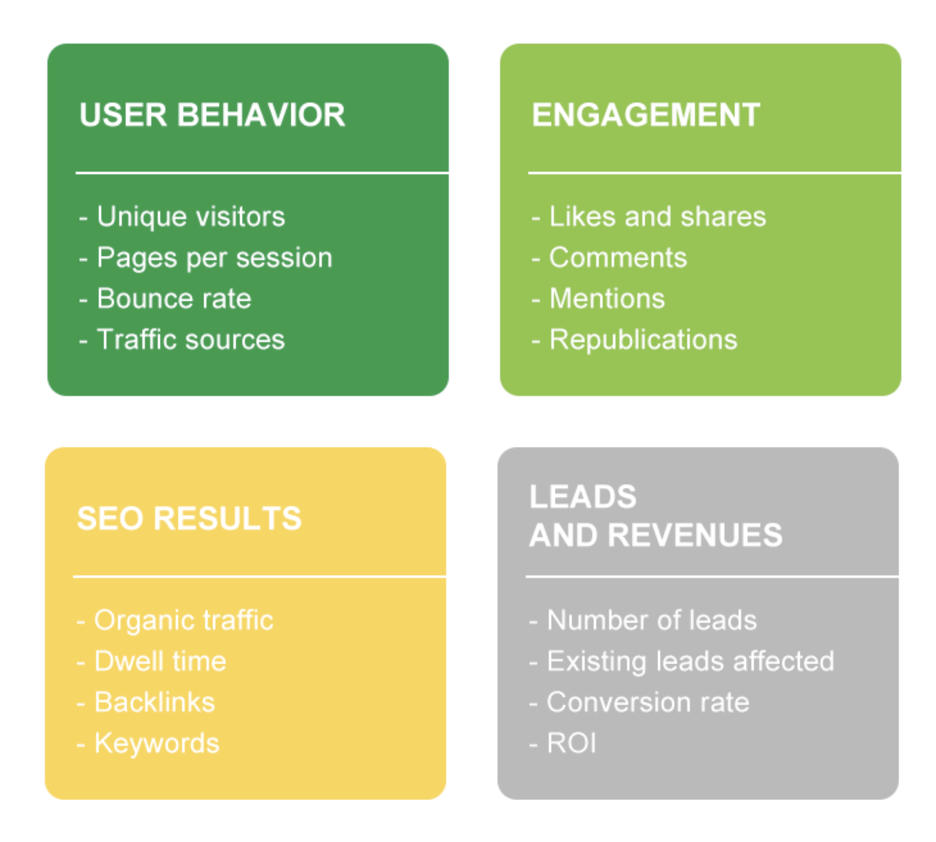
Choose a few key performance indicators (KPIs) for each stage of the funnel:
| Funnel stage | KPIs to track |
|---|---|
| Awareness | Impressions, reach, website sessions, organic traffic, new users |
| Consideration | Engagement rate, average engagement time, email signups, click-through rate |
| Decision | Conversions, conversion rate, cost per acquisition, revenue |
| Retention | Repeat purchases, email open and click rates, customer lifetime value |
Track these in Google Analytics 4 and the reporting tools of each ad platform, and connect every KPI back to the goals you set in step 1.
Work on conversion optimization
In my experience, most campaigns focus on getting traffic and forget about converting it. Conversion optimization means improving your website so that a higher percentage of visitors take the action you want.
This includes your landing pages, calls to action, forms, checkout process, and page speed. A/B testing lets you compare two versions of a page or ad and keep the one that converts better. Test one change at a time so you can measure its effect accurately.
I advise my team to optimize a campaign for traffic first, getting as many relevant visits as possible at a reasonable cost, and then start testing landing pages and messages for conversions. To go deeper, see these conversion rate optimization courses.
Review your strategy regularly
Review your campaign data monthly and your overall strategy every quarter. In each review, ask:
- Are we on track to reach our goals?
- Which channels bring the best results for the lowest cost?
- What should we stop, start, or scale?
- What have our competitors changed, and which new channels should we test?
Digital Marketing Strategy Template
Use this one-page template to write down your strategy. The example column shows how an online store selling handmade candles might fill it in.
| Section | What to write | Example |
|---|---|---|
| Business goal | The business result you want | Grow online revenue from $10K to $15K per month |
| Marketing goals (SMART) | Measurable targets with a deadline | 300 online orders per month and 5,000 email subscribers by December |
| Target audience | Your two to four buyer personas | Gift buyers aged 25-45; home decor enthusiasts |
| Competitors and SWOT | Main competitors, your strengths, and gaps to use | Strength: unique scents. Gap: competitors don't publish gift guides |
| Value proposition | Why customers should choose you | Hand-poured, eco-friendly candles with scents you can't find in stores |
| Channels | Two or three main channels and one to test | SEO, Meta Ads, email; test: short-form video |
| Content plan | Content for each stage of the funnel | Gift guides and scent guides (awareness), reviews and bundles (decision) |
| Budget | Monthly budget and how it's split | $2,000 per month: 70% Meta Ads, 20% Google Shopping, 10% tests |
| Owners and timeline | Who does what, and by when | Owner: ads and email; freelancer: blog posts; quarterly milestones |
| KPIs and reviews | What you measure and how often you review | Orders, cost per acquisition, email signups; monthly and quarterly reviews |
How to Adapt Your Strategy to Your Business
The steps are the same for every business, but the emphasis changes depending on your main goal and business type.
By goal:
- Sales: Focus on decision-stage content, search ads, shopping ads, retargeting, and conversion optimization.
- Leads: Focus on lead magnets, landing pages, email automation, and follow-up. See these lead generation strategies for ideas.
- Brand awareness: Focus on content, social media, video, influencer partnerships, and PR. A promotional strategy with offers and events can speed things up.
By business type:
- Local business: Your Google Business Profile, local SEO, reviews, and local search ads matter most.
- Ecommerce store: Product page SEO, shopping ads, email automation (such as abandoned cart emails), and retargeting drive most sales.
- B2B company: Content that builds expertise, LinkedIn, SEO for problem-focused searches, and email nurturing work best, because the buying process is longer.
Common Digital Marketing Strategy Mistakes
- Starting with tactics: Running ads or posting on social media before defining goals and audience.
- Vague goals: Targets like "more traffic" that can't be measured or linked to revenue.
- Being everywhere: Spreading a small budget across too many channels.
- Ignoring SEO: Relying only on paid ads and paying for every visit forever.
- Forgetting conversions: Driving traffic to pages that don't convert.
- Never reviewing: Treating the strategy as a one-time document instead of updating it every quarter.
FAQ
What is the 70-20-10 rule in digital marketing?
The 70-20-10 rule is a way to split your marketing budget or content: about 70% on what already works, 20% on improving and expanding it, and 10% on new experiments. It keeps your results stable while you test new ideas.
What are the 5 main digital marketing strategies?
The five most widely used digital marketing strategies are search engine optimization (SEO), content marketing, social media marketing, email marketing, and paid advertising (PPC). Most businesses combine two or three of them. Read more about the types of digital marketing.
How long does it take for a digital marketing strategy to work?
Paid ads can bring results within days, while SEO and content marketing usually take several months to build momentum. Plan for quick wins from paid channels while your long-term channels grow.
How often should you update your digital marketing strategy?
Review your results every month and your overall strategy every quarter. Update it whenever your goals, budget, audience, or market change significantly.
Can you create a digital marketing strategy with a small budget?
Yes. With a small budget, focus on owned and organic channels such as SEO, content, email, and one social media platform, and use a small paid budget for pilot campaigns. Your time replaces money in the early stages.
What is the difference between a digital marketing strategy and a digital marketing plan?
The strategy defines your goals, audience, positioning, and channel choices. The plan turns the strategy into specific actions, owners, budgets, and deadlines. You need both, and the template above covers the two together.
Key Learnings
A digital marketing strategy is a plan that describes how to use online channels to reach your target audience and achieve measurable business goals.
To create one, start by setting SMART goals. Then define your buyer personas, analyze your competitors with a SWOT analysis, and decide on a value proposition that sets you apart.
Map what your audience needs at each stage of the customer journey, and choose the two or three channels most likely to reach them. Start SEO early, because it takes time, and use paid ads for speed and testing.
Plan your content, set a budget with clear owners, and launch pilot campaigns before scaling the channels that work. Finally, track the right KPIs, optimize for conversions, and review your strategy every quarter.