
- Is Google Digital Marketing Certification Worth It?
- What Is Google Digital Marketing Certification?
- Who Is This Certificate For?
- What You’ll Learn
- How Long Does It Take?
- How Much Does It Cost?
- Course Contents And Structure
- How Do You Get the Certificate?
- Where It Falls Short
- Other Digital Marketing Certifications Worth Considering
- Other Google Career Certificates
- Frequently Asked Questions

The Google Digital Marketing & E-commerce Certificate is worth it if you are a beginner who wants a structured, low-cost way into digital marketing. It costs $49 per month on Coursera, most learners finish in 3 to 6 months, and it is recommended for up to 9 college credits. It is not worth it if you already work in marketing, because the courses stay at an introductory level.
I took the certificate in May 2022, a month after it was released, and I have gone back through the lessons several times since to keep this review current. The biggest changes since then are the AI lessons added across the program, a new optional course on using AI for your job search, and shorter courses overall.
In this review, I'll explain what you learn in each course, how long it really takes, what it costs, where it falls short, and how it compares with other digital marketing certifications.
| Google Digital Marketing & E-commerce Certificate | At a glance |
|---|---|
| Provider | Google, on Coursera |
| Level | Beginner, no degree or experience required |
| Courses | 7 required + 1 optional AI job search course |
| Duration | 6 months at 10 hours per week (3–6 months is typical) |
| Cost | $49 per month after a 7-day free trial |
| College credit | ACE recommends up to 9 college credits |
| Rating | 4.8 out of 5 from 51,219 reviews |
| Enrolled | 1,530,745 learners |
| Registration | Enroll on Coursera |
Is Google Digital Marketing Certification Worth It?
Yes, for beginners. In my opinion, it is one of the best entry-level digital marketing certifications for building a broad base of job-ready skills, and one of the best Google certifications overall.
Here is why I recommend it to people starting out:
- It covers the whole field. You learn SEO, search ads, social media, email marketing, analytics and e-commerce in one program, which helps you decide what to specialize in.
- It is affordable. At $49 per month, finishing in 4 months costs $196 and finishing in 6 months costs $294. Coursera says most learners in the US complete it for less than $300.
- It is practical. You build a mock online store in Shopify, plan social media content, design an email campaign and present marketing data, so you finish with work you can show.
- It comes with career support. Graduates can connect with Google's employer consortium of more than 150 US companies, including Google, Deloitte, Target, Verizon and Infosys.
- It carries college credit. The American Council on Education (ACE) recommends up to 9 college credits for completing it.
Coursera reports that 75% of certificate graduates say they had a positive career outcome, such as a new job, promotion or raise, within six months of finishing.
That said, a certificate alone rarely gets you hired. Employers hiring junior marketers look for proof that you can run a campaign, so treat the certificate as a starting point and build real projects alongside it. I cover the limitations in where it falls short below.
What Is Google Digital Marketing Certification?
The Google Digital Marketing & E-commerce Professional Certificate is an entry-level online program created by Google and delivered on Coursera. It is designed to prepare people with no experience or degree for their first job in digital marketing or e-commerce.
The program has seven required courses taught by Google employees. All courses are 100% online and self-paced, and the program is available in several languages.
Google has added AI training throughout the program, covering how to use AI tools for marketing strategy, market research, writing emails and testing website copy. Google also gives new enrollees 3 months of access to Google AI Pro (terms apply).
When you finish, you receive a certificate and a digital badge from Google that you can add to your resume and LinkedIn profile. It is a certificate of completion, not a proctored exam: you earn it by passing the graded assignments in each course.
Who Is This Certificate For?
It's an entry-level certification aimed at beginners without experience in digital marketing or e-commerce. The Google trainers do a great job explaining all the concepts from scratch, and the lesson structure is well-designed and easy to follow.
It suits you if you are:
- Changing careers into marketing and need a structured starting point
- A student or recent graduate who wants practical skills a degree didn't cover
- A small business owner who wants to market your own business or online store
It is not a good fit if you already work in marketing, or if you want deep expertise in one channel such as SEO or paid ads.
The first five courses focus on digital marketing, and the last two concentrate on e-commerce. After finishing, you can apply for entry-level roles such as:
- Digital Marketing Coordinator or Junior Digital Marketing Specialist
- Social Media Coordinator
- Email Marketing Specialist
- Junior E-commerce Specialist
- Marketing Assistant
Google puts the median salary for digital marketing and e-commerce jobs with 0 to 5 years of experience at more than $75,000, based on 2025 US job postings (Lightcast). Entry-level salaries are usually lower than that median. For more options, see what you can do with a digital marketing certificate.
What You'll Learn
It's a comprehensive program covering the main areas of digital marketing and e-commerce. Throughout the courses, you'll learn how to:
- Create a digital marketing and e-commerce strategy
- How SEO works and how to use Google Search Console
- How search engine marketing and display advertising work
- How to use social media to connect and engage with customers
- How to plan, run and measure email marketing campaigns
- How to measure marketing performance with Google Analytics and Google Ads
- How to build, launch and manage an online store
- How to use AI tools in marketing work
You'll also get hands-on practice with popular tools, including Canva, Constant Contact, Google Ads, Google Analytics, Hootsuite, HubSpot, Mailchimp, Shopify and X (Twitter).

How Long Does It Take?
Coursera estimates 6 months at 10 hours per week, and Google says most learners finish in 3 to 6 months. The seven required courses add up to about 113 hours of content on Coursera, plus about 6 hours for the optional AI job search course.
If you have some knowledge of online marketing, you can finish faster. I completed it in 2 months, skipping some optional lessons. You can do the same, provided that you complete all graded assignments.
Because you pay per month, finishing faster also makes the certificate cheaper.
How Much Does It Cost?
The Google Digital Marketing & E-commerce Certificate costs $49 per month on Coursera in the US and Canada, after a 7-day free trial. The total depends on how long you take:
| Time to finish | Total cost |
|---|---|
| 2 months | $98 |
| 3 months | $147 |
| 4 months | $196 |
| 6 months | $294 |
Prices in other countries are set in local currency and are often lower. The certificate is also included in a Coursera Plus subscription, which is worth considering if you plan to take more than one program.
It is not free, but Coursera offers financial aid to learners who can't afford the fee. Start the 7-day free trial to review the course material before you pay.
Course Contents And Structure
To earn this Google certificate, you must complete all seven required courses. The eighth course is optional.
- Foundations of Digital Marketing and E-commerce
- Attract and Engage Customers with Digital Marketing
- From Likes to Leads: Interact with Customers Online
- Think Outside the Inbox: Email Marketing
- Assess for Success: Marketing Analytics and Measurement
- Make the Sale: Build, Launch, and Manage E-commerce Stores
- Satisfaction Guaranteed: Develop Customer Loyalty Online
- Accelerate Your Job Search with AI (optional)
| Course | Modules | Hours |
|---|---|---|
| 1. Foundations of Digital Marketing and E-commerce | 4 | 11 |
| 2. Attract and Engage Customers with Digital Marketing | 4 | 14 |
| 3. From Likes to Leads: Interact with Customers Online | 5 | 21 |
| 4. Think Outside the Inbox: Email Marketing | 5 | 19 |
| 5. Assess for Success: Marketing Analytics and Measurement | 4 | 18 |
| 6. Make the Sale: Build, Launch, and Manage E-commerce Stores | 4 | 15 |
| 7. Satisfaction Guaranteed: Develop Customer Loyalty Online | 4 | 15 |
| 8. Accelerate Your Job Search with AI (optional) | 4 | 6 |
Hours as estimated by Coursera, September 2026.
1. Foundations of Digital Marketing and E-commerce
This is the first course on your path to becoming a Google Digital Marketing certified professional. It's an introductory course that starts with an overview of digital marketing and e-commerce and explains the topics covered in the rest of the program.
You'll also meet your course instructors, all marketing professionals working in various positions at Google.

The course takes about 11 hours. If you already have some experience with online marketing and are willing to study for a couple of hours per day, you can finish it in a week.
| Module | Topic | Time To Complete |
|---|---|---|
| Module 1 | Introduction to foundations of digital marketing and e-commerce | 3 hours |
| Module 2 | The customer journey and the marketing funnel | 3 hours |
| Module 3 | Digital marketing and e-commerce strategy | 3 hours |
| Module 4 | Measure performance success | 2 hours |
2. Attract and Engage Customers with Digital Marketing
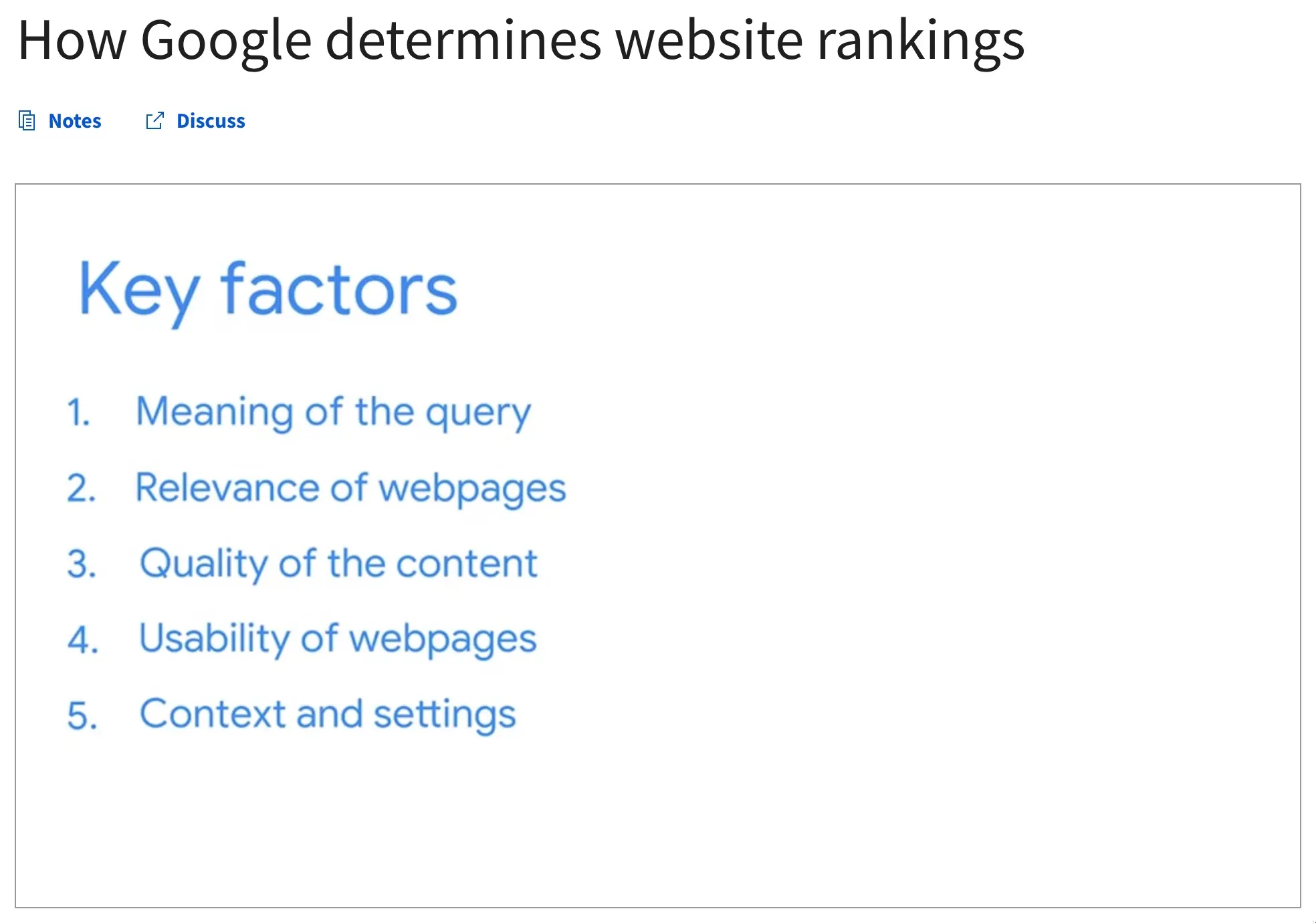
The second course, Attract and Engage Customers with Digital Marketing, is the most interesting because it covers one of the most effective digital marketing channels, SEO, along with search ads and display advertising.
Many people assume that this course makes you a Google-certified SEO expert, but that's not the case. Google does not offer an official SEO certification, and this course covers only the basic SEO principles, including how to use Google Search Console.
If you're a beginner, you'll find a lot of value in this course because it will help you understand how SEO works and why it's important. If you already have a basic knowledge of SEO, it won't teach you much. Other SEO certifications are more practical and cover both basic and advanced SEO.
The course takes about 14 hours.
| Module | Topic | Time To Complete |
|---|---|---|
| Module 1 | Attract and engage customers | 4 hours |
| Module 2 | Understand search engine optimization (SEO) | 3 hours |
| Module 3 | Apply search engine optimization (SEO) | 3 hours |
| Module 4 | Search engine marketing (SEM) and display advertising | 4 hours |
3. From Likes to Leads: Interact with Customers Online
From Likes to Leads: Interact with Customers Online is the third course and covers social media marketing.
Through the lessons, you'll learn why social media matters for building a brand and how to use social platforms to find and engage with potential customers. It's a practical course with examples, case studies and guides on tools such as Canva for designing social media posts.
In the final module, you'll learn about paid ads on social media. It mentions Facebook, but it doesn't cover Facebook and Instagram advertising in detail. That's a disadvantage, because Meta ads are part of almost every real social media campaign. If you want those skills, continue with a dedicated Facebook Ads course.

This is the longest course in the program, at about 21 hours.
| Module | Topic | Time To Complete |
|---|---|---|
| Module 1 | Introduction to from likes to leads: interact with customers online | 2 hours |
| Module 2 | Social media strategy, planning, and publishing | 4 hours |
| Module 3 | Listening and engagement on social media | 8 hours |
| Module 4 | Social media analytics and reporting | 3 hours |
| Module 5 | Paid social media | 4 hours |
4. Think Outside the Inbox: Email Marketing
The fourth course is about email marketing, which is still one of the best ways to increase conversions for any kind of business.
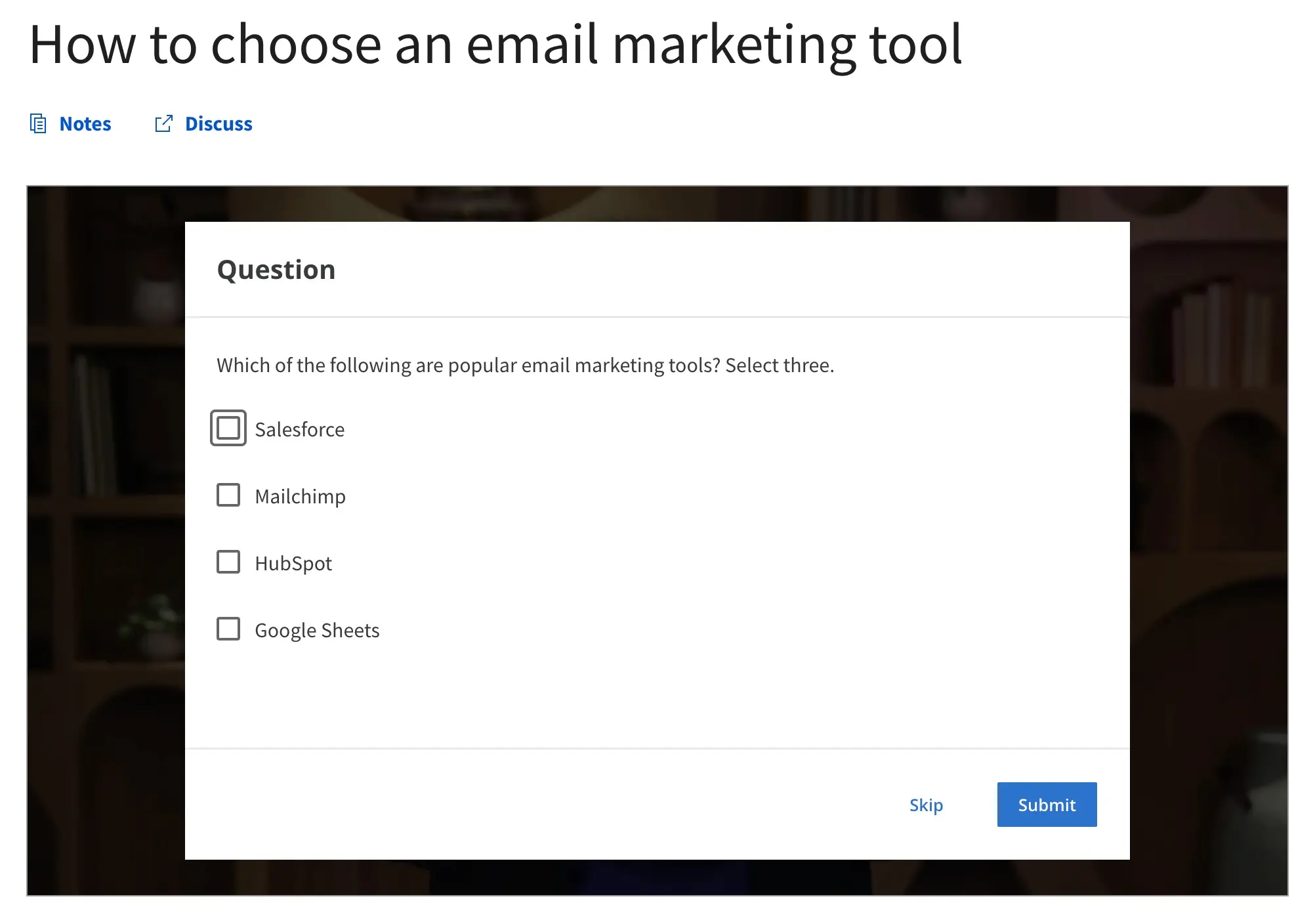
The lessons cover the most important email marketing concepts: choosing an email marketing platform, segmenting your contact list, setting goals, and designing, running and measuring campaigns. In the final module, you run your own email campaign.
Overall, this is a complete introduction for anyone who wants to learn email marketing, and it's also useful if you want to refresh your skills.
The course takes about 19 hours.
| Module | Topic | Time To Complete |
|---|---|---|
| Module 1 | Introduction to think outside the inbox: email marketing | 3 hours |
| Module 2 | Types of email marketing | 3 hours |
| Module 3 | Useful tools for email marketing | 6 hours |
| Module 4 | Collect and analyze email campaign data | 3 hours |
| Module 5 | Run your own email marketing campaign | 4 hours |
5. Assess for Success: Marketing Analytics and Measurement
The fifth course is about marketing analytics. Digital marketers need to gather and analyze data from different sources and present their findings in a meaningful way.
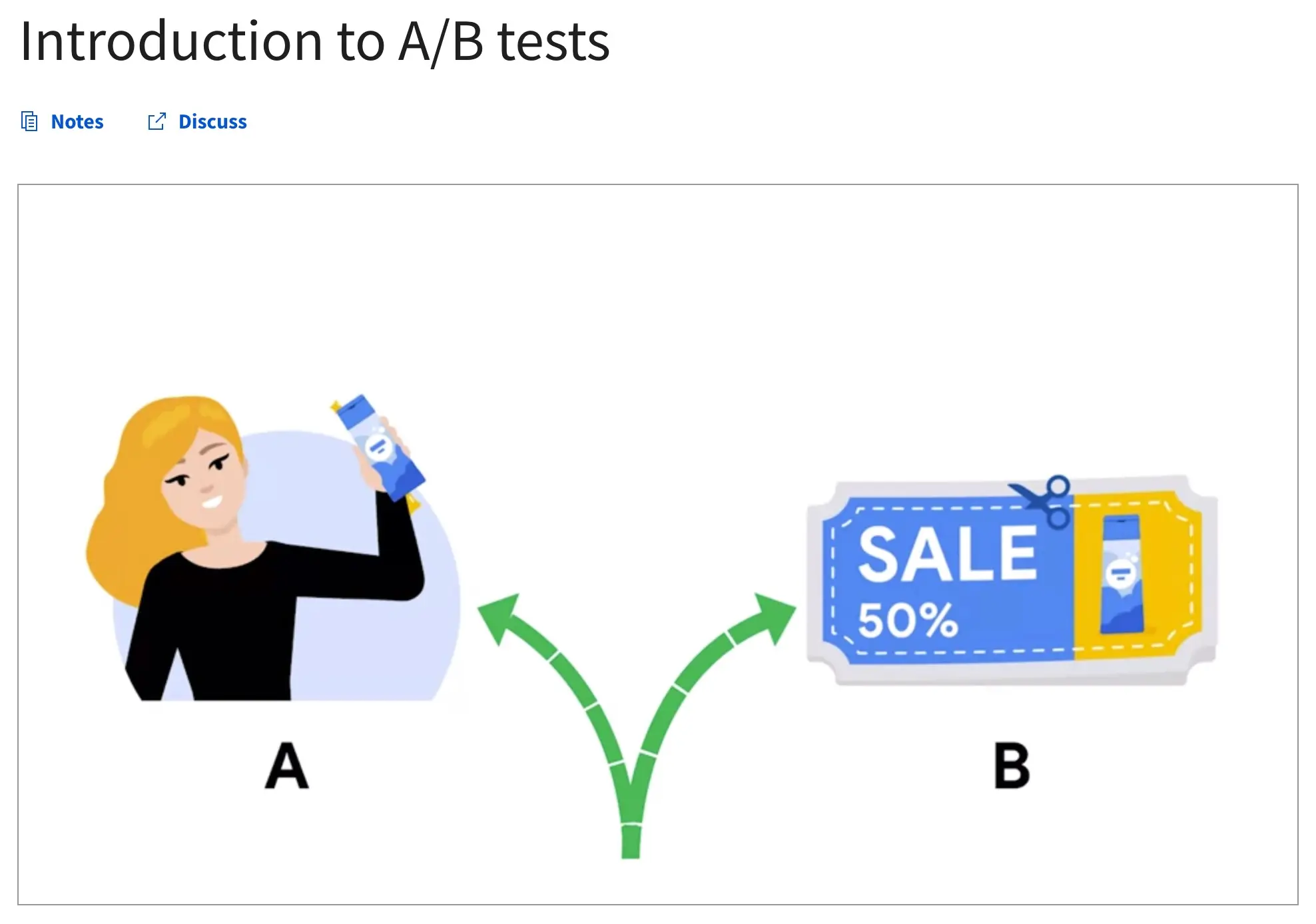
What I like about this course is that it walks through every step of a marketing analysis, which helps beginners understand which KPIs matter and where to find them. You also learn how to run and analyze an A/B test.
On the other hand, to get hands-on experience with some of the tools you have to go through the additional reading material. For example, the course uses Google Ads reports but doesn't cover in detail how to optimize a Google Ads campaign based on your analysis. If you want to work in paid search, take the free Google Ads certification or a dedicated Google Ads course.
The course takes about 18 hours.
| Module | Topic | Time To Complete |
|---|---|---|
| Module 1 | Introduction to assess for success: marketing analytics and measurement | 4 hours |
| Module 2 | Use metrics from Google Analytics and Google Ads | 4 hours |
| Module 3 | Measure the success of marketing campaigns | 4 hours |
| Module 4 | Share metrics and insights with stakeholders | 6 hours |
6. Make the Sale: Build, Launch, and Manage E-commerce Stores
Make the Sale: Build, Launch, and Manage E-commerce Stores is the sixth course and the first one focused on e-commerce.
To clear up a common misconception: completing this course does not give you a Google E-commerce Certificate. There is no separate Google e-commerce certificate. You get a course completion certificate, and you need to complete all seven courses to earn the Google Digital Marketing & E-commerce Certificate.
The course teaches you how to use e-commerce platforms, and Shopify in particular, to build an online store and set up product listings. You'll also learn how to promote a store with Google Shopping campaigns and how to improve the customer experience to increase sales. If e-commerce is your main interest, see our list of e-commerce courses.
The course takes about 15 hours.
| Module | Topic | Time To Complete |
|---|---|---|
| Module 1 | Introduction to make the sale: build, launch, and manage e-commerce stores | 5 hours |
| Module 2 | Learn about online stores | 3 hours |
| Module 3 | Ads and campaigns in e-commerce | 4 hours |
| Module 4 | Engage customers with an online store | 3 hours |
7. Satisfaction Guaranteed: Develop Customer Loyalty Online
This is the final required course. Once you get here, you're about 15 hours away from the Google Digital Marketing & E-commerce Certificate.
You can take the courses in any order, but it's best to finish courses 1 to 6 first, because the activities at the end of this course build on everything before it.
The course covers customer loyalty and how to market to existing customers, then shows you how to analyze trends for an online store using data, including identifying underperforming products and reviewing customer feedback. In the third module, you apply your skills by creating a marketing report presentation. The last module reviews the whole certificate.

The course takes about 15 hours.
| Module | Topic | Time To Complete |
|---|---|---|
| Module 1 | Introduction to satisfaction guaranteed: develop customer loyalty online | 3 hours |
| Module 2 | Analyze trends for an online store | 6 hours |
| Module 3 | Apply your skills | 3 hours |
| Module 4 | Certificate review | 3 hours |
8. Accelerate Your Job Search with AI (Optional)
Accelerate Your Job Search with AI is an optional course that Google has added to all of its Career Certificates. Job search preparation, which used to be part of course 7, is now covered here instead.
In about 6 hours, you learn how to use AI tools such as Gemini and NotebookLM to identify your transferable skills, plan your job search, tailor your resume, manage applications and practice for interviews. I recommend taking it if you plan to apply for jobs after finishing the certificate.
| Module | Topic | Time To Complete |
|---|---|---|
| Module 1 | Uncover your transferable skills with AI | 1 hour |
| Module 2 | Plan your job search with AI | 2 hours |
| Module 3 | Manage your job applications with AI | 1 hour |
| Module 4 | Prepare and practice for interviews with AI | 2 hours |
How Do You Get the Certificate?
To earn the Google Digital Marketing & E-commerce Certificate, you have to complete all seven required courses and pass their graded assignments. There is no final proctored exam.
Graded work includes multiple-choice quizzes, module challenges and practical activities where you apply what you learned, such as planning social media content, segmenting an email list or creating a marketing report. If you go through the lessons carefully, you should have no problem passing on the first attempt.
When you finish, Google issues a certificate and a digital badge through Credly that you can share on LinkedIn and add to your resume.
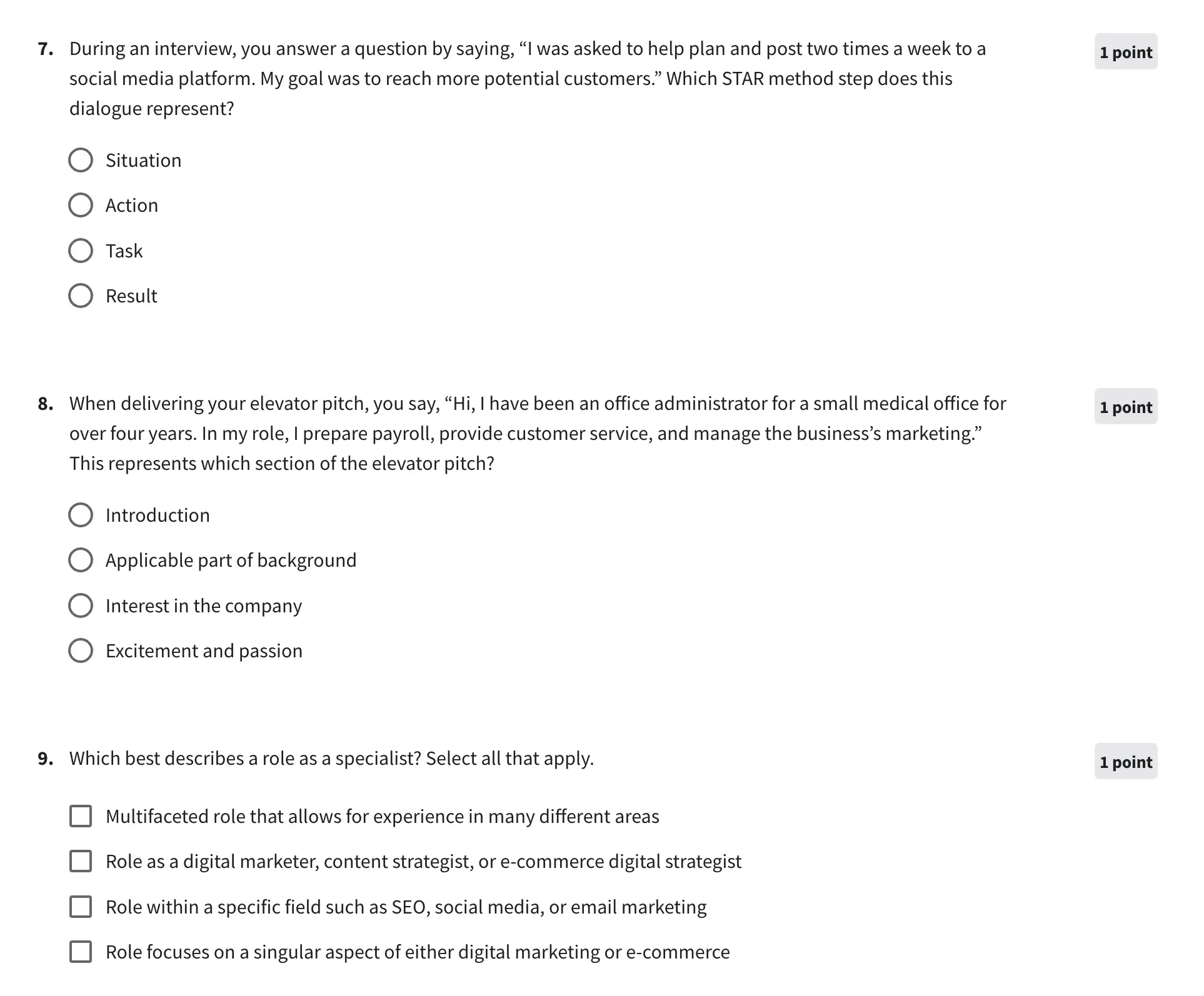
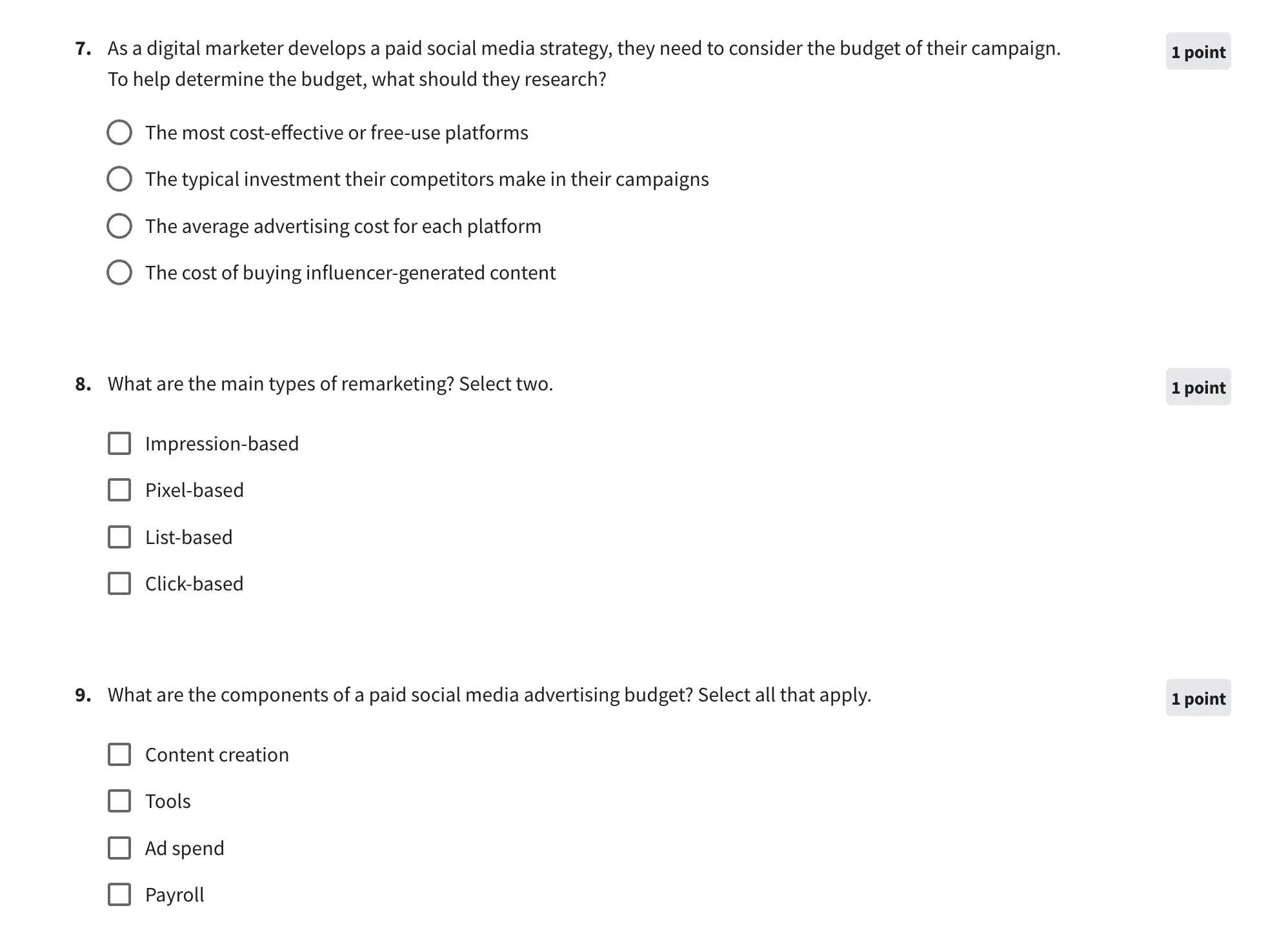
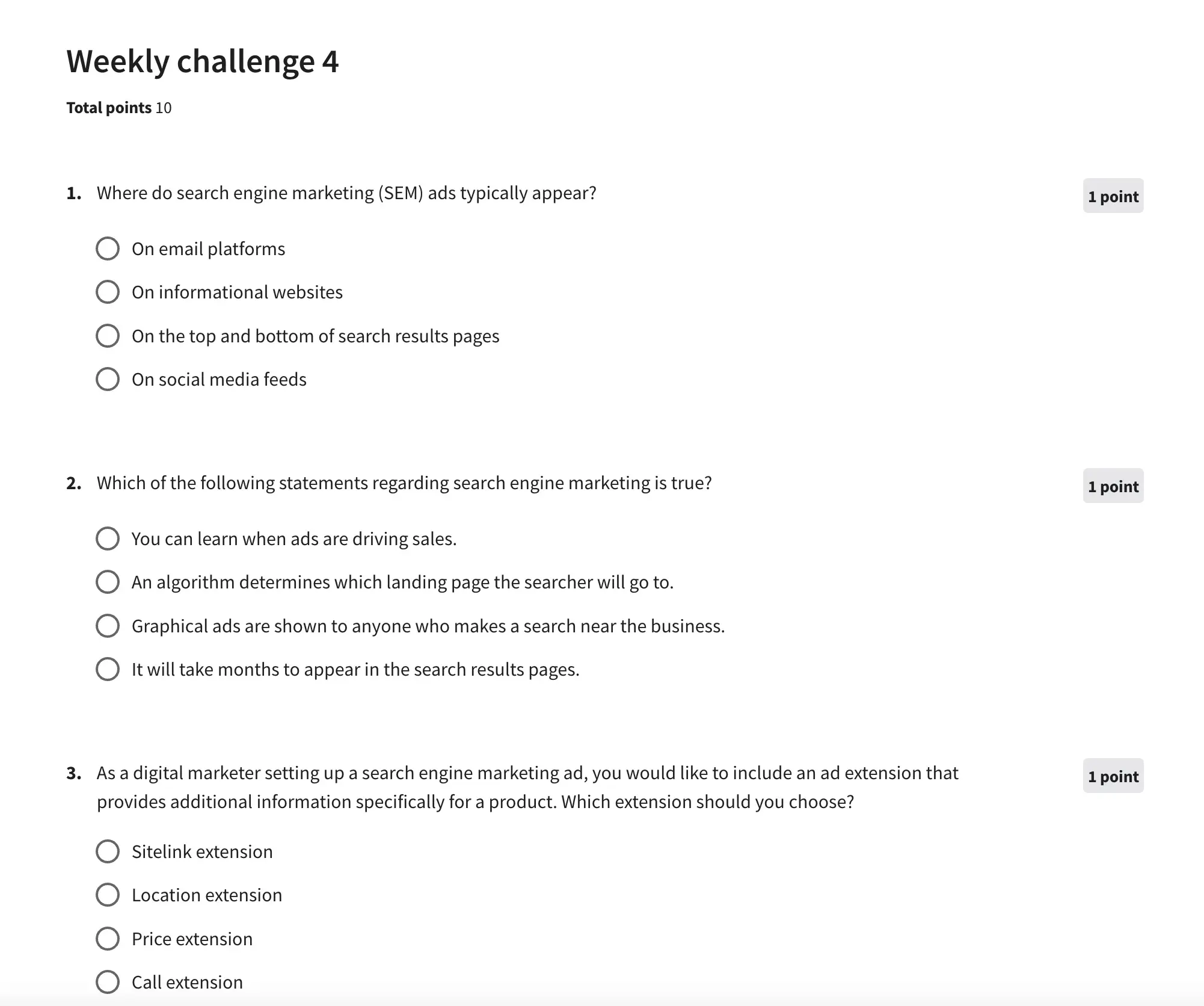
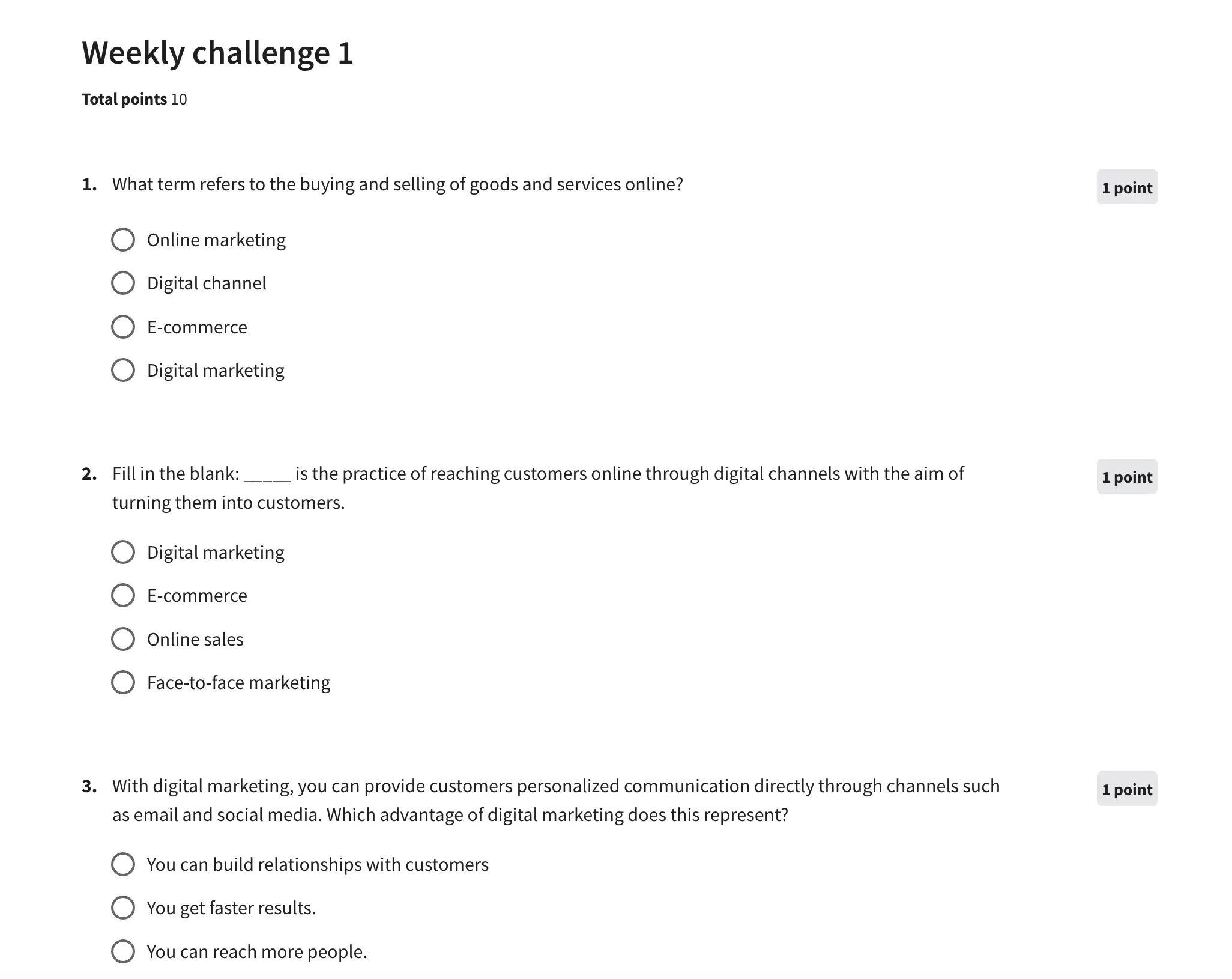
You can see below some sample exam questions to get an idea of what the quizzes look like.
Where It Falls Short
The certificate is a good introduction, but it has clear limits:
- It stays at beginner level. It covers many channels, so none of them in depth. You won't finish as an SEO, Google Ads or Facebook Ads specialist.
- Paid social is thin. Facebook and Instagram ads get only a brief mention, although they are part of most real campaigns.
- Google Ads optimization is mostly in optional reading. The main lessons show you reports, not how to improve a campaign.
- It doesn't prove experience. Graded assignments are not a proctored exam, and hiring managers will still want to see real campaigns or a portfolio.
- The monthly fee rewards speed. If you study slowly, the cost goes up every month.
Other Digital Marketing Certifications Worth Considering
Google is not the only company offering digital marketing training. Here's how the Google certificate compares with three popular alternatives:
| Certification | Cost | Length | Best for |
|---|---|---|---|
| Google Digital Marketing & E-commerce Certificate | $49/month | 7 courses, 3–6 months | Beginners who want a broad foundation |
| Meta Social Media Marketing Professional Certificate | Coursera subscription | 6 courses, 5 months | Social media and Meta ads |
| HubSpot Digital Marketing Certification | Free | 10 lessons, 3h 24m | A quick free overview |
| Reliablesoft Digital Marketing Full Course | $127 one-time | 21 courses, 140 lessons | Going deeper into SEO, ads and AI |
The Meta Social Media Marketing Professional Certificate is the closest competitor. It goes much deeper into Facebook and Instagram advertising, is also recommended for 9 college credits, and prepares you for Meta's proctored Digital Marketing Associate exam.
The HubSpot Digital Marketing Certification is free and takes an afternoon, so it's a good way to check whether marketing interests you before paying for a longer program.
You can also consider our Digital Marketing Full Course. It includes 21 courses that cover topics the Google certificate skips or only touches on, such as AI SEO, keyword research, Facebook ads, Google Ads, YouTube marketing, affiliate marketing and retargeting, and it comes with two certifications.
For more options, see our lists of the best digital marketing courses and digital marketing certificate programs.
Other Google Career Certificates
The Google Digital Marketing & E-commerce Certificate is one of several Google Career Certificates, which also cover fields such as data analytics, IT support, project management, UX design and cybersecurity. If digital marketing is not the right career for you, read our guide to the Google Career Certificates to compare them.
Frequently Asked Questions
Is the Google Digital Marketing Certificate recognized by employers?
Yes. Google's employer consortium includes more than 150 US companies, such as Deloitte, Target and Verizon, that consider graduates for entry-level roles. For most employers, though, it works best alongside a portfolio of real work rather than on its own.
Can I get a job with the Google Digital Marketing Certificate?
You can, especially for entry-level roles such as digital marketing coordinator or social media coordinator. Coursera reports that 75% of graduates had a positive career outcome within six months. Your chances improve if you also build projects, such as running a small ad campaign or growing a social account.
Is the Google Digital Marketing Certificate free?
No. It costs $49 per month on Coursera after a 7-day free trial, and Coursera offers financial aid. Google's free option is the Fundamentals of Digital Marketing course on Skillshop, which is shorter and less hands-on.
How long does it take to get the Google Digital Marketing Certificate?
Coursera estimates 6 months at 10 hours per week, and Google says most learners finish in 3 to 6 months. With some marketing experience and more study time per week, you can finish in about 2 months.
Does the Google Digital Marketing Certificate count for college credit?
Yes. The American Council on Education (ACE) recommends up to 9 college credits for completing the certificate. Whether a college accepts them is up to that college.