

PPC specialists help companies run successful paid advertising campaigns. The demand for PPC experts grows as more businesses turn to digital marketing channels.
In this guide, you'll learn how to become a PPC specialist.
What Does a PPC Specialist Do?
PPC specialists are responsible for planning, creating, and optimizing pay-per-click (PPC) advertising campaigns.
They often work at digital marketing agencies, managing campaigns for multiple clients. You can also find PPC specialists working for a company or as freelance digital marketing professionals.
The position has a wide variety of responsibilities. Some of the main functions of a PPC specialist include:
- Keyword research - PPC specialists research keywords for targeting in their ad campaigns.
- Creating campaigns - PPC specialists build out different parts of campaigns, including ads, bidding strategies, and targeting settings.
- Monitoring campaigns - PPC specialists actively monitor advertising campaigns to see if they hit the desired benchmarks.
- Optimizing campaigns - PPC specialists use the insights they find when analyzing data to adjust their campaigns.
- Designing landing pages - Landing pages play an important part in the success of advertising campaigns. PPC specialists work to create landing pages that lead to high conversion rates.
Skills Needed to Become a PPC Specialist
PPC specialists need diverse skills to perform various job responsibilities. Let’s examine some of the most important skills needed to become a PPC specialist:
Analytical skills - As a PPC specialist, you need strong analytical thinking. Successful campaigns often require tweaking before you see the best results. PPC specialists must be able to analyze data and make adjustments to optimize performance.
Communication - PPC specialists must be able to communicate with their team members and clients clearly. This ensures that the PPC campaigns are aligned with the business goals and overall marketing strategy.
Creative skills - As a PPC specialist, you need to know how to use compelling ad copy and visuals to make your ads interesting to your audience.
PPC ad networks - PPC specialists must be familiar with different ad networks like Google Ads and Microsoft Advertising and know how to use their platforms.
Time management - PPC specialists need to stay organized and manage their time effectively. This is especially true for agency employees managing campaigns for multiple clients at once.
10 Steps to Become a PPC Specialist
These are the 10 steps to follow to become a PPC expert.
- Understand What PPC is and How it Works
- Build Your Copywriting Skills
- Get a Google Ads Certification
- Study to Become a Microsoft Advertising Certification Professional
- Get the Meta Blueprint Certification
- Practice on Your Own Properties
- Learn How to Use PPC Tools
- Learn How Conversion Optimization Works
- Stay Informed About the Latest Trends in PPC
- Get an Entry-Level PPC Job
1. Understand What PPC is and How it Works
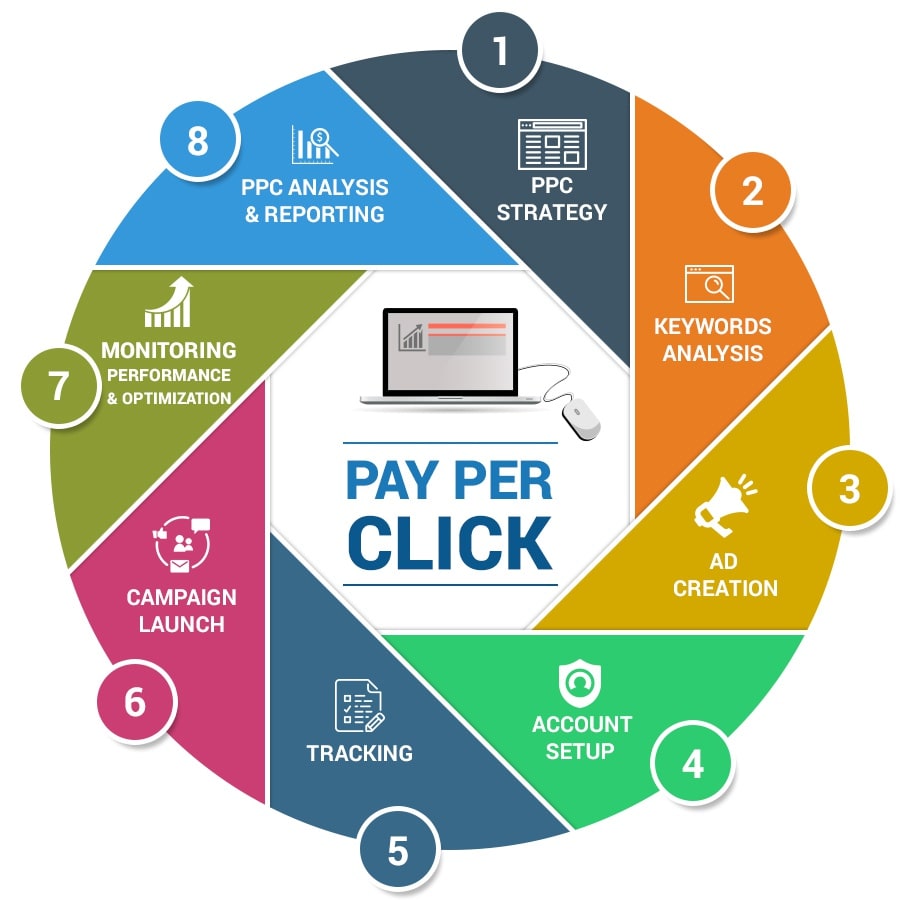
The first step you want to take is to understand what PPC advertising is, and the benefits it can offer for all kinds of businesses.
In simple terms, it is an advertising model where advertisers pay an advertising platform each time a user clicks on one of their ads. The PPC model functions using an auction system. Advertisers set bids for how much they are willing to pay for a click on their ads.
The amount of this bid is one of the main factors in determining which ads will appear when multiple advertisers target the same users.
PPC campaigns can be used for all kinds of marketing goals including increasing brand awareness, generating leads, and driving sales. You can run PPC ads in a variety of formats and on several types of platforms. This includes:
- Search advertising - This form of advertising allows advertisers to bid for ad placements on the results pages for queries entered into a search engine.
- Display advertising - With display advertising, marketers bid to have visual ads placed on websites across the internet.
- Social media advertising - Marketers bid to show a variety of ad formats to users on social media platforms like Facebook and Instagram.
- Shopping ads - Shopping ads allow you to run PPC ads for your e-commerce products. They can appear in the regular SERPs on Google and Bing and the Shopping page.
One of the most important factors in successful PPC campaigns is determining who you want to target with your ads.
For search campaigns, this involves finding search terms you want your ads to show for. On social media platforms like Facebook, it involves setting an audience based on personal characteristics and previous brand engagement.
The fastest way to understand PPC is by pursuing a PPC marketing certification and taking one or more courses.
2. Build Your Copywriting Skills
Copywriting is writing made to drive action. As a PPC specialist, you do a lot of it.
Ad copy is a key factor in getting a user to click on your ad.
If you want to generate a high number of clicks, you need to be able to grab people’s attention. With most ad formats, you will not have a lot of space to do it. Most PPC copy is short-form like a headline or a simple call to action.
PPC copywriting also requires you to know how to use keywords effectively. Including the keywords you are targeting in your copy makes your ads more relevant to users.
With Google, more relevant ads can improve your Quality Score, lowering costs per click.
You can use them to see real-life examples of effective copywriting and the results that they brought. Some even come with a digital marketing certificate you can use to showcase your abilities.
3. Get a Google Ads Certification
Google Ads is the most popular PPC advertising platform.
There are billions of searches on Google daily and millions of websites in the Display Network. This creates an incredible opportunity for marketers to reach their target market.
That said, creating profitable Google Ads campaigns requires skill. If you want to be successful, you’ll need to learn how to use the platform.
One of the best ways to become a Google pay-per-click expert is by getting a Google Ads certification.
Along with teaching you how Google Ads works, certifications validate that you understand what is needed to create successful campaigns. This can help you throughout your career.
You can become certified in the following areas of Google Ads:
- Google Search
- Google Display
- Google Shopping
- Google Ads Measurement
- Google Ads Video
Each certification requires you to pass a knowledge exam. Skillshop provides free online training courses you can use to prepare for the exam.
Each exam is timed and you need to score 80% or higher to pass. The question count and time limit vary by certification, so check the exam page on Skillshop before you book.
If you fail, you’ll have to wait 24 hours before you can take it again. Once you pass, a link to a digital certificate will be added to your Skillshop account.
You can add this link to your LinkedIn profile or resume to showcase your achievements. Certifications are valid for one year. To keep yours active, you must retake the exam and pass it again.
4. Study to Become a Microsoft Advertising Certification Professional
As a PPC specialist, Google isn’t the only search engine you must master.
You’ll also need to understand Bing and the Microsoft Advertising platform.
Becoming a Microsoft Advertising Certified Professional will help you build the skills you need to master the platform.
To earn the certification, you must pass an exam showing you know how Microsoft Advertising works.
Microsoft offers a variety of advertising training courses you can use to prepare for the exam.
Some of the topics covered in the courses include:
- Choosing keywords and how to do keyword research
- Microsoft Advertising budgeting and billing
- Microsoft Advertising Editor campaign optimization
- Detailed reporting in Microsoft Advertising
- Setting up shopping campaigns
The exam contains 100 questions, and there is no time limit. You must score 80% or higher to pass.
You are not required to take the exam in one sitting. You can close the test and reopen it later, picking up where you left off.
5. Get the Meta Blueprint Certification
The next step to becoming a PPC specialist is to get a Meta Certification.
Blueprint is Meta’s official online training program, and its certifications validate your proficiency in planning and running ad campaigns across Facebook, Instagram and Messenger.
They are among the most respected digital marketing certificates you can earn, and they can help you stand out from others in your field.
The following certifications are available:
- Digital Marketing Associate
- Marketing Science Professional
- Creative Strategy Professional
- Media Planning Professional
- Media Buying Professional
- Community Management
- Business Marketing Strategy
I recommend getting the Digital Marketing Associate certification first as it covers the foundations of advertising across Meta’s platforms. Each certification requires you to pass an exam. You can take the exam online (monitored by a proctor) or in person at a testing location.
The number of questions and the amount of time you have to complete the exam varies depending on the certification. There is a fee for each exam which you will have to pay again if you fail and need to retake it.
Once you pass the exam, you will receive a digital badge verifying your certification.
Meta certifications expire and have to be renewed by passing the exam again. Check the validity period on the exam page before you book, because it differs between the role-based and skill-based tracks.
6. Practice on Your Own Properties
Concepts may work in theory, but you never know if they’ll work for real unless you try them. A great way for you to get real-world knowledge and experience is to practice running campaigns on your own projects.
Come up with something to promote and create a website. Determine your goals and create the campaign. You can practice different techniques for writing ads, structuring campaigns, targeting keywords, and more.
Along with building your skills, experimenting on your own projects can help you get noticed early in your career. The best way to stand out to potential employers is to show them the results of successful campaigns you have run in the past.
This is obviously a challenge when you are new to PPC marketing. Many PPC consultants find themselves in a chicken or egg scenario where prospective jobs or clients want to see some form of proven experience.
Without results to show, how can you ever get in the position to gain the required experience? Running successful campaigns for your own projects before having any work experience can help solve this problem.
7. Learn How to Use PPC Tools
PPC specialists must know how to use a wide range of tools, including platforms for keyword research, analytics, ad creation, and more.
Let’s take a look at some of the most important tools you’ll want to know how to use:
Google Ads Editor - Google Ads Editor is a tool for creating and editing Google Ads campaigns. The interface allows you to create your ads and campaigns faster than using your Google Ads account through a browser.
It is quite helpful if you need to make changes in bulk. Google Ads Editor also allows you to track important performance metrics for your campaigns.
Semrush - Semrush offers a suite of digital marketing solutions. Several of these solutions are useful for running PPC campaigns. One is the Semrush Competitive Analysis tool. You can use it to gain detailed insights into your competitors’ ad campaigns. You can see what paid search terms they are bidding on and what channels they are prioritizing.
Live ad examples show you exactly what copy and landing page your competitors use for their campaigns.
Google Analytics - Google Analytics tracks the actions of all your website visitors and provides you with detailed performance metrics. As a PPC specialist, you need to know how to configure Google Analytics so that it collects accurate data properly. You must also know how to analyze the data to improve your campaign performance.
Google Keyword Planner - Google Keyword Planner is a keyword research tool that enables you to find search terms relevant to your business. When you search a primary keyword you are given a list of related keywords along with their average CPC and monthly search volume.
Keyword Planner allows you to save the keywords that you find in your advertising plan for future reference.
8. Learn How Conversion Optimization Works
Conversion rate optimization (CRO) is the process of optimizing your ad campaigns to yield the highest possible conversion rate. It is an important part of PPC marketing, as increasing conversion rates leads directly to higher returns on your advertising investment.
The CRO process involves testing different variables to see what produces the best results. In PPC advertising, one of the most important areas to test and optimize is your landing pages. The design of your landing pages can greatly impact your conversion rates.
Here are some of the key areas of your landing pages that you should know how to optimize:
- Headline: Headlines should be relevant to the keyword while compelling visitors to explore the page further.
- Sign-up form: Sign-up forms should be prominently placed, allowing users to enter their information without friction.
- Call-to-actions (CTA): The CTA button and text should stand out visually.
- Copy: Your landing page content should communicate what your business offers. Like headlines, body copy should be relevant to the target keywords.
- Images: Strong visuals can make your pages more engaging. They are especially important if you have an e-commerce website. When running ads to your category and product pages, the quality of your images plays a significant factor in whether a visitor converts.
One of the most effective ways to learn CRO is to enroll in a conversion rate optimization course. Here is a list of the best CRO courses available online.
9. Stay Informed About the Latest Trends in PPC
Digital marketing moves quickly, and paid advertising moves fastest of all. Google and Microsoft both ship bidding, targeting and reporting changes several times a year, and a campaign structure that worked last year can quietly stop performing.
The practical habit is to follow the platform release notes directly, read a couple of independent industry blogs, and keep learning across the rest of your digital marketing career rather than PPC alone.
Our blog is a good starting point as we post weekly and update our content to stay current with industry trends.
10. Get an Entry-Level PPC Job
After you’ve developed your PPC skills, it’s time to get an entry-level PPC job.
PPC specialist is an entry-level position, so it will likely be where you start in PPC. Similar job titles for entry-level PPC roles include:
- Paid Ads Manager
- Paid Search Tech
- Entry-Level Paid Search (SEM) Coordinator
- Digital Advertising Specialist
As an entry-level employee, you’ll be able to learn from seasoned PPC professionals who understand how the industry works.
Senior PPC specialists will assign you tasks until you are ready to handle your campaigns.
Here are some popular job sites to find entry-level PPC positions.
- Indeed
- ZipRecruiter
- Glassdoor
What the Job Is Actually Like
The role is more accountable than most marketing jobs, and that cuts both ways.
Every decision you make has a number attached to it within a day or two. When a campaign works you can point at the revenue it produced, which is a rare thing in marketing and it makes the work easy to justify at review time. When it does not work, that is equally visible, and you are usually spending someone else’s money while it happens.
The parts people find hardest are rarely the technical ones. Managing several client accounts at once means constant context switching. Budgets get cut with little notice. Platforms change bidding and reporting rules on their own schedule and you inherit the consequences. If you dislike being measured weekly, this is not the role for you.
The parts people stay for are the speed and the portability. You see results in days rather than months, the skill transfers directly to freelance and consulting work, and the numbers you produce travel with you to the next job in a way that softer marketing work does not.
How Much Do PPC Specialists Make?
The average base salary for a PPC specialist in the United States is $66,621 a year, based on 108 salaries taken from job postings on Indeed and last updated in September 2026.
The spread matters more than the average. The same data puts the low end at about $43,500 and the high end at roughly $102,000, so where you work and who you work for moves the number by more than double.
Location is the biggest single factor. Los Angeles and Tampa both average in the mid $80,000s, while several large markets sit closer to $50,000. Specializing helps too: Amazon PPC roles are currently advertised at $80,000 to $90,000, which is well above the general average.
How to Hire a PPC Specialist
Not everyone reading this wants the job. If you are on the other side of it and looking to hire, the same skills list tells you what to test for.
You have three options and they cost very different amounts. An in-house specialist makes sense once your ad spend is large enough that someone needs to be in the account daily. A freelancer suits a single platform and a defined budget, and usually bills hourly or on a small monthly retainer. An agency costs more but gives you cover when someone leaves and experience across more accounts than one person will ever see.
Whichever route you take, four questions separate people who can run campaigns from people who can talk about them:
- Which accounts have you run, and at what monthly spend? Managing $2,000 a month and managing $200,000 a month are different jobs.
- Show me a campaign that failed and what you changed. Anyone can present a winner. The useful answer describes a diagnosis.
- How do you measure success? If the answer is clicks or impressions rather than cost per acquisition or return on ad spend, keep looking.
- Who owns the ad account? It should be you. Agencies and freelancers who keep the account on their own ID can take your data and history with them.
Certifications are worth checking but they are a floor, not a signal of quality. A current Google Ads certification proves someone sat an exam. The account history is what proves they can spend your money well.
Key Learnings
PPC specialists help companies run successful paid advertising campaigns. They can work directly for a brand or at a digital marketing agency, managing campaigns for multiple clients.