


A website is a great marketing tool. It represents your business on the Internet and is one of the most important digital marketing channels you can use to get more traffic or make more sales.
The best way to market your website is to combine several channels rather than rely on one: make the site itself convincing, get found in search and AI answers, bring visitors in through content, social media and ads, and then turn them into leads and customers with clear offers and email.
In this post, you’ll learn what website marketing is, why you need a website marketing strategy, the 10 strategies to follow to grow your business with your website, and how to adapt them to your type of business.
What is Website Marketing?
Website marketing is the practice of using your website as the hub of your online marketing: attracting visitors, earning their trust, and converting them into leads or customers. It is one of the channels in your overall digital marketing strategy, and most of the other channels (search, social media, ads, email) send people to it.
A website marketing strategy has three goals:
- Increase traffic - bring the right people to your site through search, AI answers, social media, paid ads and email.
- Build trust - show clear information, real reviews and a professional, secure site, so visitors feel confident dealing with you.
- Drive conversions - turn visitors into buyers, subscribers or enquiries with clear calls to action.
Traffic on its own is not the goal. A site that attracts thousands of visitors and converts none of them has a marketing problem, not a traffic problem.
Why Do You Need a Website Marketing Strategy?
As a Digital marketing manager, one of my tasks is to explain to my clients why they need a complete website marketing strategy and how to make it work for the benefit of their business.
It’s not about SEO and Social Media anymore.
A few years back, marketers thought about SEO when someone was talking about web marketing.
Later, that perception changed, and social media came into the picture; it is very common today to associate digital marketing with social media and SEO.
As you can see from the diagram below, digital marketing has many more pillars, including content marketing, PPC marketing, email marketing, and more. Social media and SEO are only part of the equation, and AI search tools like Google's AI Overviews and ChatGPT are now another place where people discover websites.
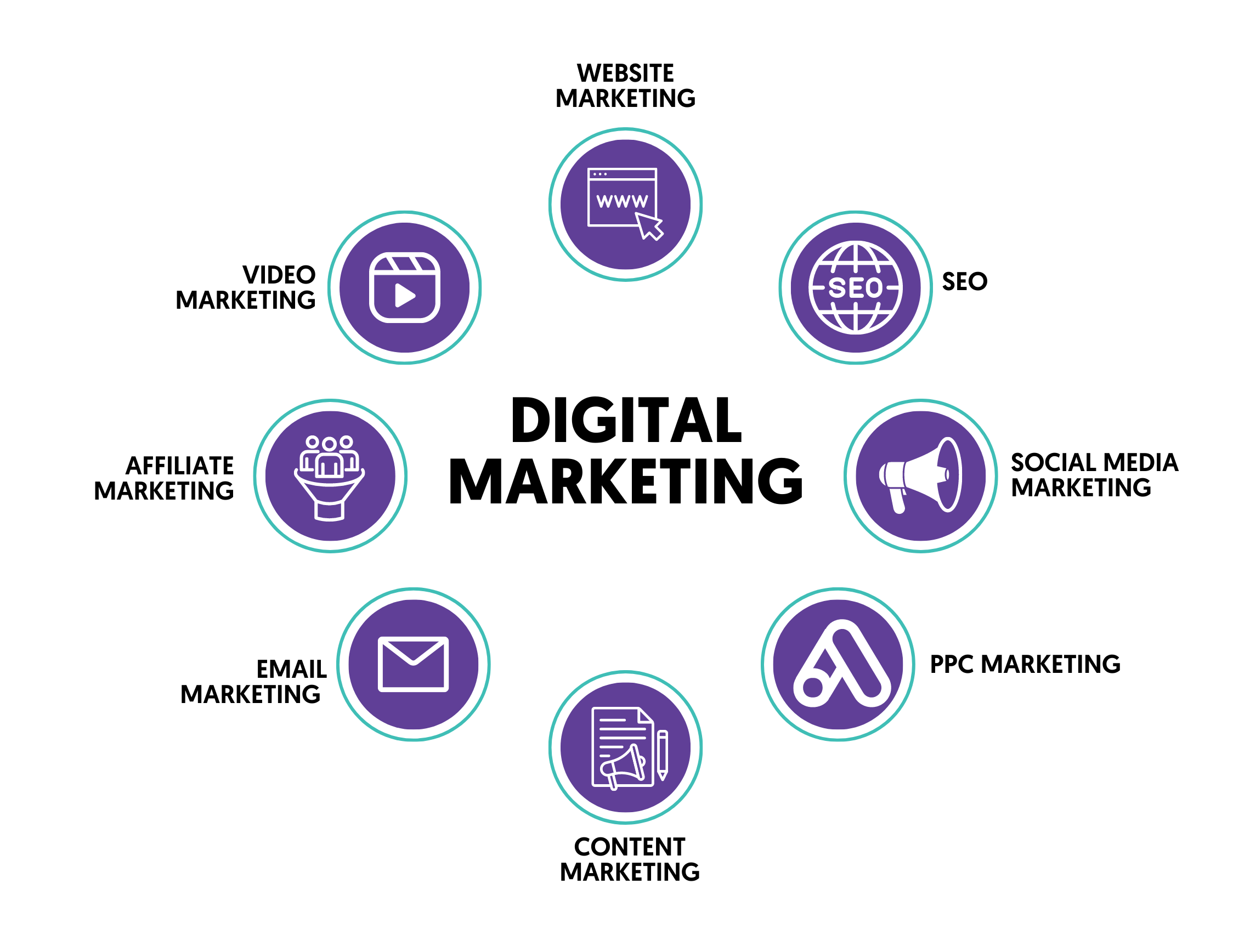
A well-planned digital marketing strategy will help you utilize all available channels for promoting your business online.
You need a strategy and a plan.
If you don’t write down your web marketing strategy that includes what you want to achieve online and how to do it, it’s like driving with your eyes closed.
By preparing a strategy together with a plan, you will know exactly which tools to use, how to use them, and what to expect as realistic results from each tool.
In addition, a plan makes it easier to communicate your goals within your business so that all departments are aligned with your strategy.
Do it before the competition.
Most of your competitors are already marketing online, and the ones who do it with a plan take the best positions in search, the cheapest ad clicks and the attention of your shared audience. The best place to catch up is a written web marketing strategy.
To successfully promote your website online, you need a solid strategy to take advantage of all digital marketing channels.
The Digital Marketing Full Course will teach you how to create a digital marketing strategy from scratch to increase traffic and sales in 60 days or less.
How to Do Website Marketing?
Here are the 10 strategies to follow for a successful website marketing plan.
- Perform a Website Design Review
- Optimize Your Website For SEO and AI Search
- Optimize Your Website For Social Media
- Create a Content Marketing Plan
- Promote Your Website on Social Media Networks
- Use Paid Ads to Reach More Customers
- Capture Leads and Use Email Marketing
- Use Remarketing to Get Users Back to Your Website
- Keep Your Website And Content Up-To-Date And Move Forward
- Measure, Analyze, Rinse, And Repeat
1. Perform a Website Design Review
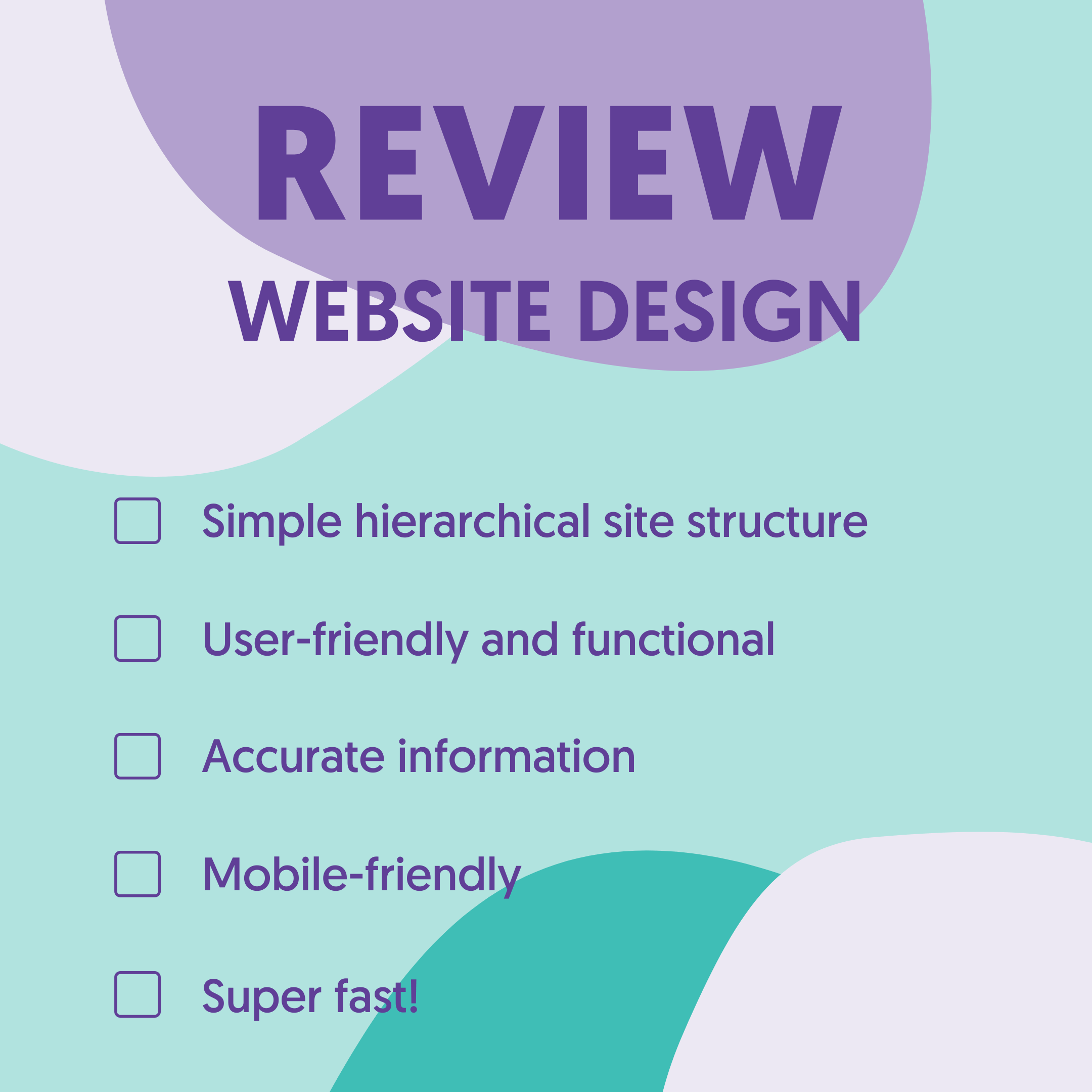
The first step is to create a website that accurately represents your business. This is not directly related to the visual aspect of it (i.e., how it looks) but to the quality of the information provided.
Your website is the same as your shop window. It should look good on the outside, and when customers enter your shop, everything should be organized and in place.
Before starting any campaigns, take some time and review your website and make sure that:
It has a simple hierarchical site structure - A good site structure helps users and search engines navigate a website to find the information they need quickly. As a rule of thumb, any page on your site should be accessible from the homepage in 3 clicks or less.
It’s user-friendly and functional - Evaluate your website’s friendliness using the principles of SEO-friendly web design and try to remove design elements that add complexity or are not needed.
It has accurate information about your company and products - Make sure it provides users with everything they need to know about your company and products. Make use of visual elements to get the attention of your users.
It’s fast and mobile-friendly - The majority of your users will come from mobile devices, so test your website on mobile and optimize the experience of the user in the best way possible.
It earns trust - Show customer reviews and testimonials, clear contact details, who is behind the business, and a secure (HTTPS) connection. Visitors decide in seconds whether a site looks trustworthy.
Every important page has a clear next step - Each key page should have one obvious call to action, such as buy, book, request a quote or subscribe. If visitors have to look for it, most of them will not.
2. Optimize Your Website For SEO and AI Search
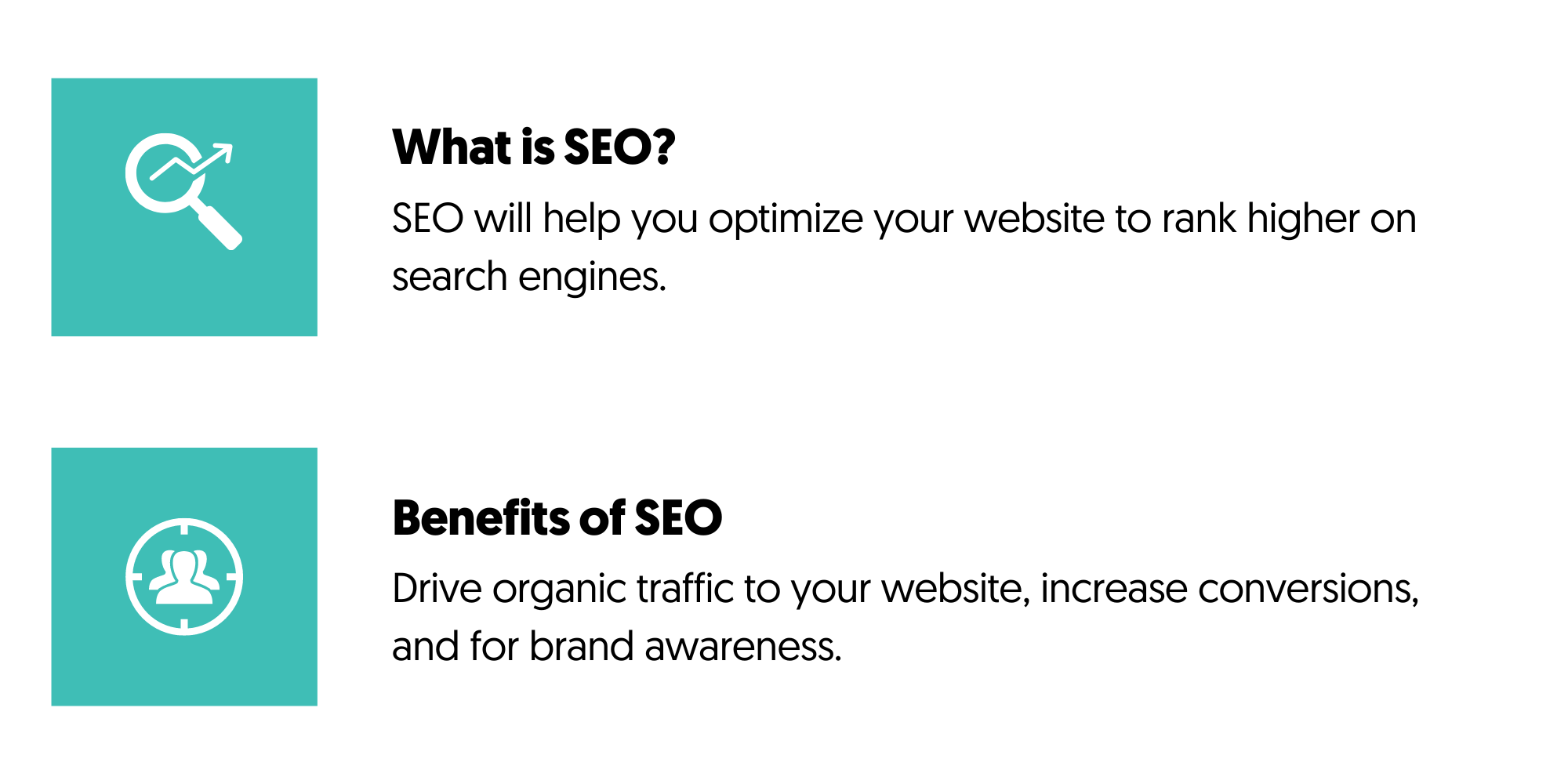
The next step is to start thinking about your SEO strategy. A well-defined SEO plan will eventually increase your rankings and traffic from search engines.
SEO is the process of increasing your website’s visibility in search engines, and it consists of several steps:
Technical SEO - Making sure that your website is free of crawl errors and other issues that might keep search engines from indexing your website properly.
On-Page SEO - Make your webpages SEO-friendly and your content easily read by search engine crawlers.
SEO Content - Writing content that satisfies the user's intent.
Off-Page SEO - Promoting your website to get high-quality links from other websites.
Local SEO - Optimizing your website and Google Business Profile for location-aware searches and for getting more clients to your brick-and-mortar store.
AI search - Google now shows AI Overviews above the regular results for many searches, and many people ask tools like ChatGPT instead of searching. Google says there are no special requirements to appear in its AI features beyond being indexed and eligible to show in Search, so the SEO work above is also the foundation for AI visibility. On top of it, answer common questions clearly near the top of your pages, add what AI summaries cannot (your own experience, data and examples), and check how visible your brand is in AI platforms.
3. Optimize Your Website For Social Media
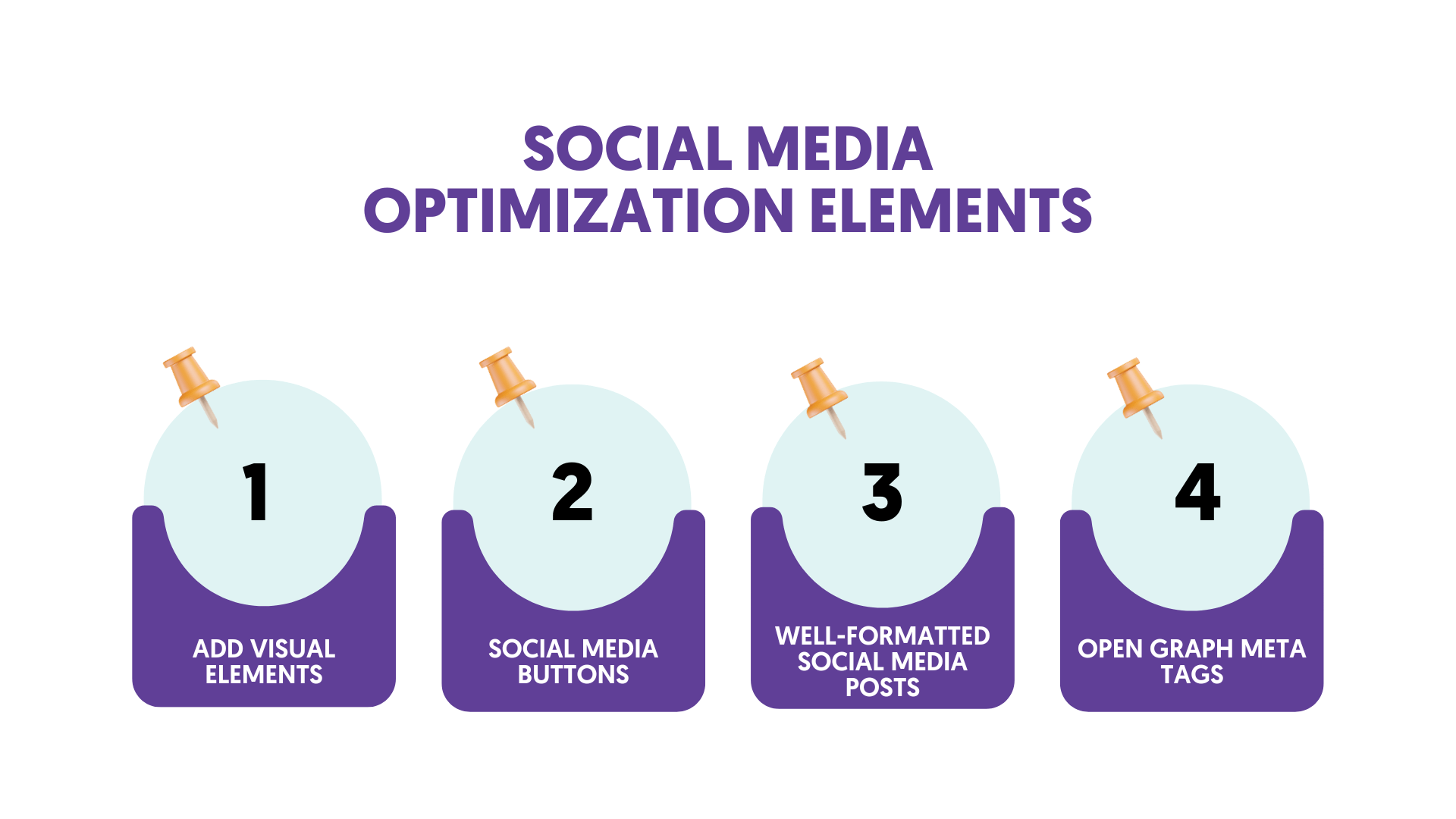
The next step is to optimize your website for social media. This is not the same as social media marketing (we’ll talk about this in step 5), but it has to do with the following:
- Having visual elements (images, video) on your website that can be shared on social media networks.
- Adding social media sharing buttons on the pages you want to be shared on social networks.
- Ensure that when a user clicks the share button (or shares your URL directly), the generated snippet is well-formatted.
- Adding the necessary open graph meta tags and using image sizes and formats supported by all major networks is recommended.
Many webmasters skip this step, and it’s a mistake that can negatively affect your social media promotion efforts.
While it looks like it’s more technical and not marketing-related, it does play an important role. If your website does not allow users to share your content properly, don’t expect any social media exposure.
4. Create a Content Marketing Plan
The next step in your website marketing plan is to design a content marketing strategy.

When you promote a website online, you essentially promote your website’s content, which is why it is referred to as content marketing.
The main purpose of content marketing is to help you create the right type of content to attract new users to your website and keep them engaged.
To create a good strategy, you first need to:
- Do your keyword research and determine which keywords to target with your content.
- Perform competitor analysis and find out what is working for your competitors.
- Analyze Google search results to determine what type of content Google wants for your target keywords (length of content, images/video, etc.).
Once you have a list of topics/keywords, you should create a content marketing calendar to specify when each piece of content will be published, who will write it, and how it will be promoted after publication.
Companies that manage to have an ongoing content marketing campaign have more chances of succeeding online than companies that publish content occasionally without a plan.
5. Promote Your Website on Social Media Networks
Now that you have a constant flow of generated content, the next step is to start promoting your website on different social networks.
Follow the steps below:
Create Business Accounts on Social Networks
Your first action is creating business pages in the social networks relevant to your business.
These are the networks that your potential customers might be using. The most common are Facebook, Instagram, LinkedIn, TikTok, YouTube, Pinterest and X (formerly Twitter). You do not need all of them: start with the one or two your customers use most.
Complete your Social Profiles
Next, make sure that your business pages are correctly configured and that all information is appropriately filled in.
Link your website and social media pages
Then, add links to your social pages on your website (in the footer) and also add the relevant schema (this will help search engines associate your website and the business pages together).
Grow your social media following
Having a business page with no followers does not benefit your business.
You need to spend some time to find and connect with people who might be interested in your business and also influencers in your niche.
Create a social media calendar
Social media success is based on the quality of your postings. You need to fetch your social media networks high-quality content regularly. That’s the best way to get users' attention and create an audience for your brand.
A good way to start is to create a social media calendar (the same way you did with step 4 above) and specify what type of content to publish and when.
6. Use Paid Ads to Reach More Customers
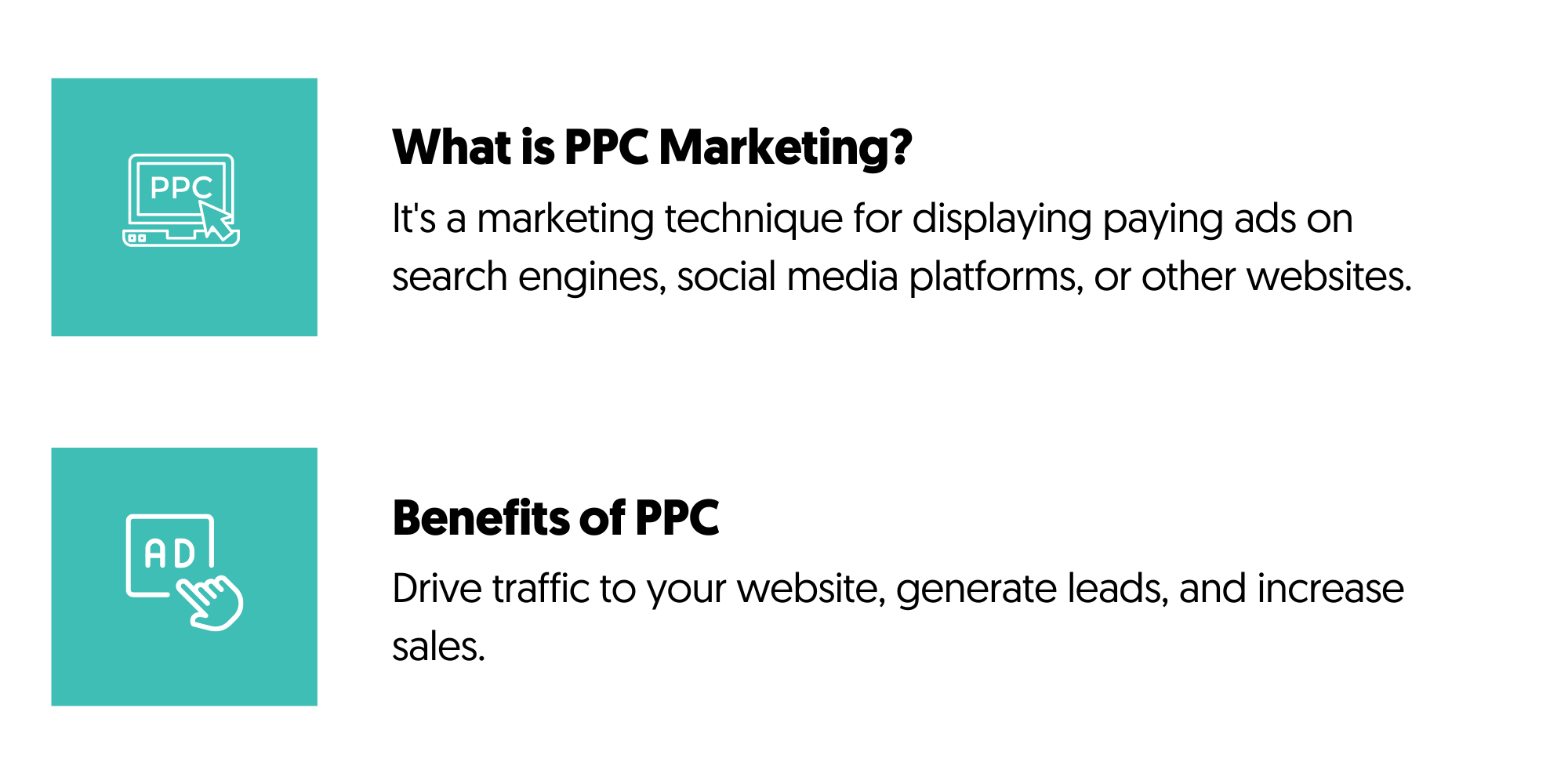
As soon as you get started with SEO and social media marketing, you’ll realize one thing. It takes time for SEO to work and to get a decent number of followers on social media organically.
This means that if you want results faster, you need to add one more ingredient to your website marketing, and that is paid advertising.
With paid advertising, you can get targeted traffic fast and start making sales or conversions.
There are various advertising platforms you can use, but the most common are:
Google Ads - Target people based on the search terms they use on Google or show your ads on other Google properties (YouTube, Gmail) and websites that participate in Google AdSense.
Meta Ads - Promote your posts or ads to people using Facebook, Instagram, Messenger or WhatsApp, targeted by interests, demographics and behavior.
Both methods are very effective, but you should be careful not to waste much money on advertising without a return. Better start with a low budget, measure the effectiveness of your campaigns, and add more money as long as there is a positive ROI.
7. Capture Leads and Use Email Marketing
Most visitors will not buy on their first visit. If they leave without giving you a way to reach them, you have paid for that visit and lost it. That is why lead capture belongs in every website marketing plan:
- Offer something useful in exchange for an email address - a checklist, a discount, a free consultation or a short guide.
- Keep forms short - ask only for what you need now. Every extra field loses sign-ups.
- Make contact easy - a visible phone number, a contact form on key pages, or live chat for businesses where people have questions before they buy.
- Test and improve - small changes to headlines, offers and buttons can change conversion rates noticeably. Conversion rate optimization is the discipline of testing them properly.
Once people are on your list, email becomes one of your most effective sales channels, because you are talking to people who already asked to hear from you.
Having an active email list is a great way to get people back to your website, let them know of new content, or directly sell them a product. Make no mistake; email is not yet dead.
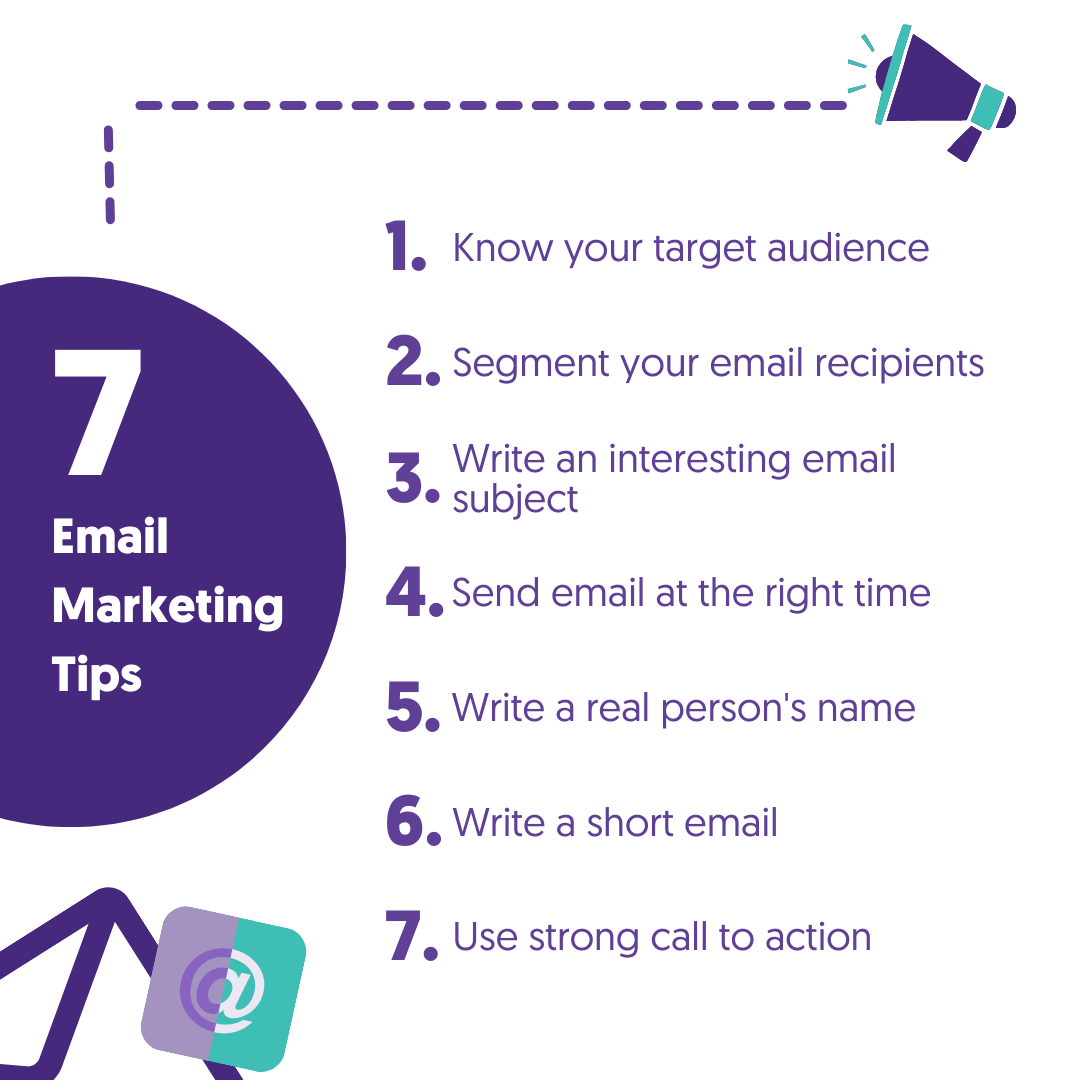
To make the most of your campaigns, follow these email marketing tips:
- Make it easy for users to subscribe to your list - add the newsletter sign-up box in places that are visible while users are browsing the website.
- Give them incentives (like a free ebook or free resources) - Freebies can make a big difference in how many people will sign up for your newsletter.
- Keep your promises - if you promise weekly updates, make sure that you send an email with new tips weekly.
- Don’t abuse their trust - Users trust you with their email addresses, and while you can use automation to send personalized mass emails, don’t abuse their trust. Everyone’s inbox is already full of promotional emails, so think about when to send them another.
8. Use Remarketing to Get Users Back to Your Website
Do you know what the rule of 7 is?
It’s a rather old marketing rule that states that a potential client should see or hear an ad (or message) at least 7 times before they’ll take action to buy a product or service.
This applies to internet marketing as well. In website marketing terms, you need to get users to revisit your website several times before they proceed to the next step of your digital marketing funnel.
Publishing new content frequently and using social media marketing and email marketing are all great ways to achieve this, but there is one more method that is highly effective, and this is remarketing.
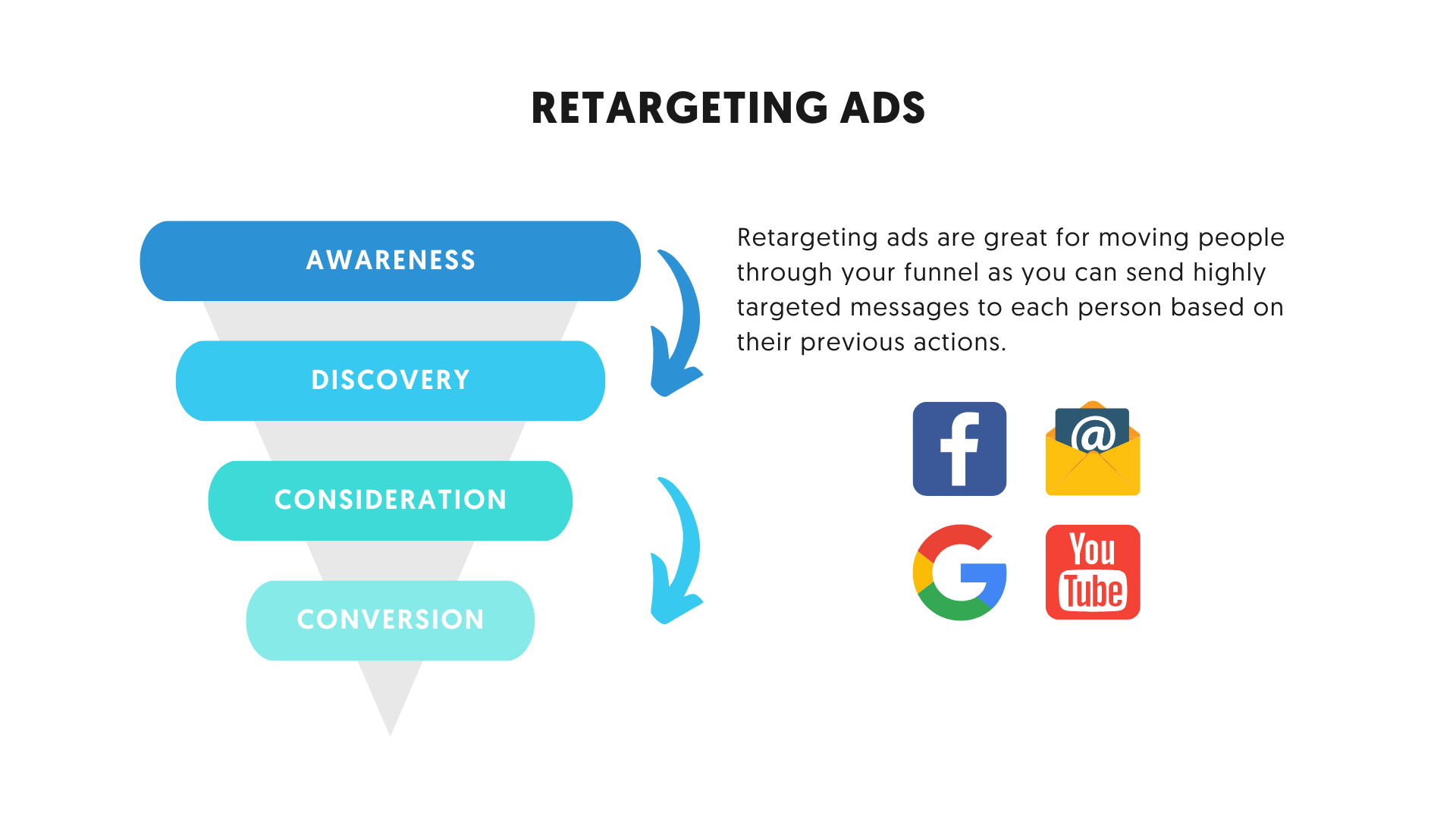
With remarketing, you use advertising platforms such as Google Ads, Meta Ads or LinkedIn Ads to re-connect with people who visited your website at least once.
This has several advantages, including more targeted traffic, lower advertising costs, and higher conversion rates.
9. Keep Your Website And Content Up-To-Date And Move Forward
When you do website marketing, you should not forget two important things:
First: To keep your website up-to-date
This means upgrading your website software to the latest version, ensuring that your website is secure and uses the latest technologies.
Second: To keep your content fresh and relevant
Besides publishing new content targeting specific keywords and increasing your organic reach, you also need to go back and audit your existing content.
As your website gets bigger and older, some of your content will become outdated, which is not good for users or search engines.
The first step of the process is to find thin content pages. These are pages that have no rankings, backlinks, or traffic.
Maybe the content on those pages is good, but since they don’t rank for anything, they don’t offer any real value to your website. As part of the audit, you should decide to either:
- Update and republish them
- Remove them and redirect the URL to other related pages on your website
- Merge them with other pages
The second step is to review your Google Analytics and Google Search Console reports and find out which are the most popular pages of your website.
A page with high rankings now does not mean it will maintain those rankings forever. The competition is big, and chances are that new pages are published daily targeting exactly the same topics.
To ensure you will not lose your rankings, you need to review your top pages once every few months and ensure the content is still relevant and up-to-date.
10. Measure, Analyze, Rinse, And Repeat
No marketing strategy is complete without proper monitoring. Everything can be measurable and analyzed in the digital marketing world, so having the right tools and metrics in place is important.
In most cases, you can get the data you want from Google Analytics 4 and Google Search Console, so make sure both are installed on your website and properly configured.
Track the same three goals your strategy started with:
- Traffic - visitors by channel (organic search, social, paid, email, referral), and your search performance in Search Console.
- Trust and engagement - engaged sessions, returning visitors and reviews over time.
- Conversions - sales, sign-ups and enquiries, set up as key events in Google Analytics 4 so you can see which channels and pages produce them.
Look at these regularly and let them decide where your time and budget go next.
For example, if you notice that posts covering certain topics perform better than others, you should focus your marketing efforts on creating content around those topics.
How to Adapt the Strategy to Your Business
The 10 strategies apply to almost every website, but the order and the emphasis change with your type of business and with where you are starting from.
E-commerce stores - Put product and category page SEO, product reviews, Google Shopping and Meta ads, and abandoned-cart emails first. Remarketing (strategy 8) usually pays back faster here than anywhere else, because visitors have already looked at a specific product.
Local service businesses - Start with local SEO and your Google Business Profile, then collect reviews. A clear phone number and booking or quote form on every page matter more than a blog. Most of your customers search, call and decide within a day.
SaaS and B2B - Buying cycles are long, so content marketing, lead capture and email (strategies 4 and 7) do most of the work. Offer something worth an email address, such as a free trial, a demo or a useful template, and nurture leads until they are ready to talk to sales.
Starting from scratch - Get the foundations right before you spend on promotion: a clear, fast, trustworthy site (strategy 1), technical SEO and analytics in place (strategies 2 and 10), and one or two social channels. Paid ads can bring early traffic and data while SEO builds up.
Improving an existing site - Start with the data. Find the pages that already get traffic and improve their conversions, then update content that is losing rankings (strategy 9) before you create anything new. It is usually cheaper to grow what already works than to start another channel.
Key Learnings
A website is a great marketing tool, but only when it does three jobs: attracts the right visitors, earns their trust, and turns them into customers.
Before starting a web marketing promotion campaign, review your website and make sure that it represents your business. A good website is mobile-friendly, fast, trustworthy, has a simple hierarchical structure, and gives every visitor a clear next step.
Next, spend time on SEO. This is a critical success factor for any online marketing campaign, and it is also the foundation for appearing in AI answers. If you can get your SEO right and start ranking for keywords that matter for your business, everything else becomes easier.
While waiting for SEO to work, jump into social media marketing and paid advertising. These two channels can drive targeted traffic to your website faster than any other method.
When traffic starts to flow in, capture leads and put your email marketing and remarketing strategies to work. Both channels can convert traffic into customers better than any other channel.
Last but not least, don’t forget to go back and review your website and content and ensure that it’s always up-to-date and relevant to satisfy the user intent.