
Digital marketing is how businesses use the internet to communicate with their audience and promote their products and services.
In this guide, you'll learn the different types of digital marketing, how each one works, an example of each, and which one to start with.
There is no official number of types. Most lists run from 6 to 12, because some sources fold types together: SEM with PPC advertising, or influencer marketing with social media. What they share is the goal of promotional marketing: getting your products in front of the right people, through a different channel each time. For how to choose and combine them, see our guide to digital marketing channels.
Types of Digital Marketing
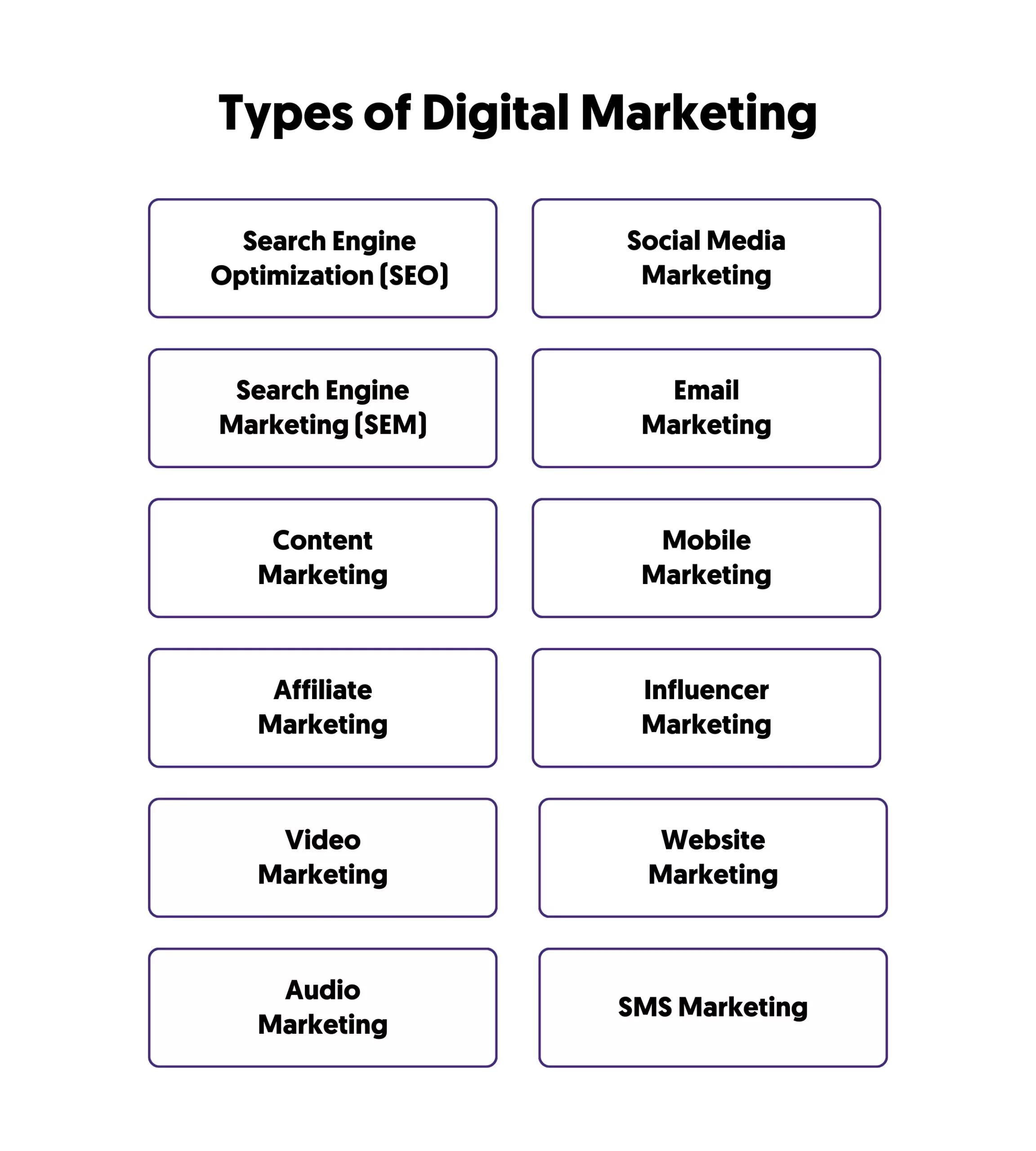
Digital marketing can be broken into 12 main types.
- Search Engine Optimization (SEO)
- Search Engine Marketing (SEM)
- Social Media Marketing
- Content Marketing
- Email Marketing
- Affiliate Marketing
- Mobile Marketing
- Video Marketing
- Influencer Marketing
- Audio Marketing
- Website Marketing
- SMS Marketing
1. Search Engine Optimization (SEO)
People worldwide use the internet to answer their questions and find new items. The primary way they do this is through search engines.
When someone types words into a search engine such as Google, they receive a list of web pages that match what they seek.
SEO is how businesses get their website to show up in these results. It is one of the best types of digital marketing as it can bring a steady flow of visitors who are highly interested in your products or services.
What is SEO?
Search engine optimization (SEO) is structuring your website and content so that your pages rank at the top of the results for search terms relevant to your business.
There are countless pages, all trying to show for the same searches (keywords). Google must compare all these pages to decide which ones to show where.
With SEO, businesses can improve where their pages rank. They can do so by strategizing effectively and optimizing content according to what Google wants.
How does SEO Work?
To understand how SEO works, you must first know how Google and other search engines find and rank content.
Search engines like Google seek to provide users with the most relevant answers to their search queries.
They do so by sending little robots known as crawlers across the internet. These bots “crawl” different websites and pages to analyze their content.
They then add the pages they find to Google’s index. The index is a giant record of all the pages the search engine has discovered. Only indexed pages can show up for search results.
Once pages are in the index, Google weighs them against other pages to determine which ones to show for different search queries.
There is a long list of factors Google evaluates when ranking pages. These are broadly characterized as on-page or off-page factors.

On-page factors are the elements on your website and web pages that impact search rankings. Some important examples include:
- Headings
- Meta titles and descriptions
- Image alt text
- Page content (keywords used, readability, length, etc.)
- URL structure
- Page speed
Off-page factors are the external factors that contribute to your page rankings. These factors mostly center around how authoritative your site is.
In short, Google favors more authoritative sites and prefers to rank its pages ahead of less popular sites.
A website’s authority is determined largely by the number and quality of other sites that link to it.
SEO tool providers have their own scores that estimate this, such as Moz's Domain Authority and Ahrefs' Domain Rating. Both are based mostly on backlinks.
Here is a quick overview of the steps needed to execute an SEO strategy:
Choose your target keywords
An SEO strategy begins with keyword research. You want to find all the relevant search terms that your target audience uses. When you discover relevant search terms, you should add them to a list.
This list should include the estimated number of times a keyword is searched each month and how difficult it is to rank for the keyword. Popular SEO keyword research tools provide this data.
Create content optimized for those terms
Once you have found your keyword targets, you can create optimized pages for those terms. This involves creating high-quality content that matches search intent while following SEO best practices.
Set up Google Search Console and monitor your performance
Google Search Console is a platform that you can use to manage your website’s SEO performance. It provides useful data, including what pages are currently indexed, which have errors, where pages rank, and how much traffic they generate.
You can use the insights to track your SEO performance over time. If you see a page’s rankings dropping, you will know that you need to make improvements.
Example: a local plumber publishes a page for “emergency plumber in Austin” and ranks on the first page of Google, bringing in calls without paying for each visit.
Resources to Learn More
2. Search Engine Marketing (SEM)
Getting to the top of the organic search rankings isn’t the only way to market your business through a search engine.
Search engines also allow companies to pay for ads that are shown on results pages.
This type of digital marketing is known as search engine marketing. It accounts for a large portion of the digital marketing budgets for many organizations.
What is SEM?
Search engine marketing (SEM) is the process of using search engines to market your business.
SEM is similar to SEO in that it presents your business through the same platform; however, there is a fundamental difference between the two.
The difference between SEM and SEO is that SEM focuses on paid advertising.
These ad placements are highly valuable as they often appear at the top of the results before the organic (unpaid) listings.
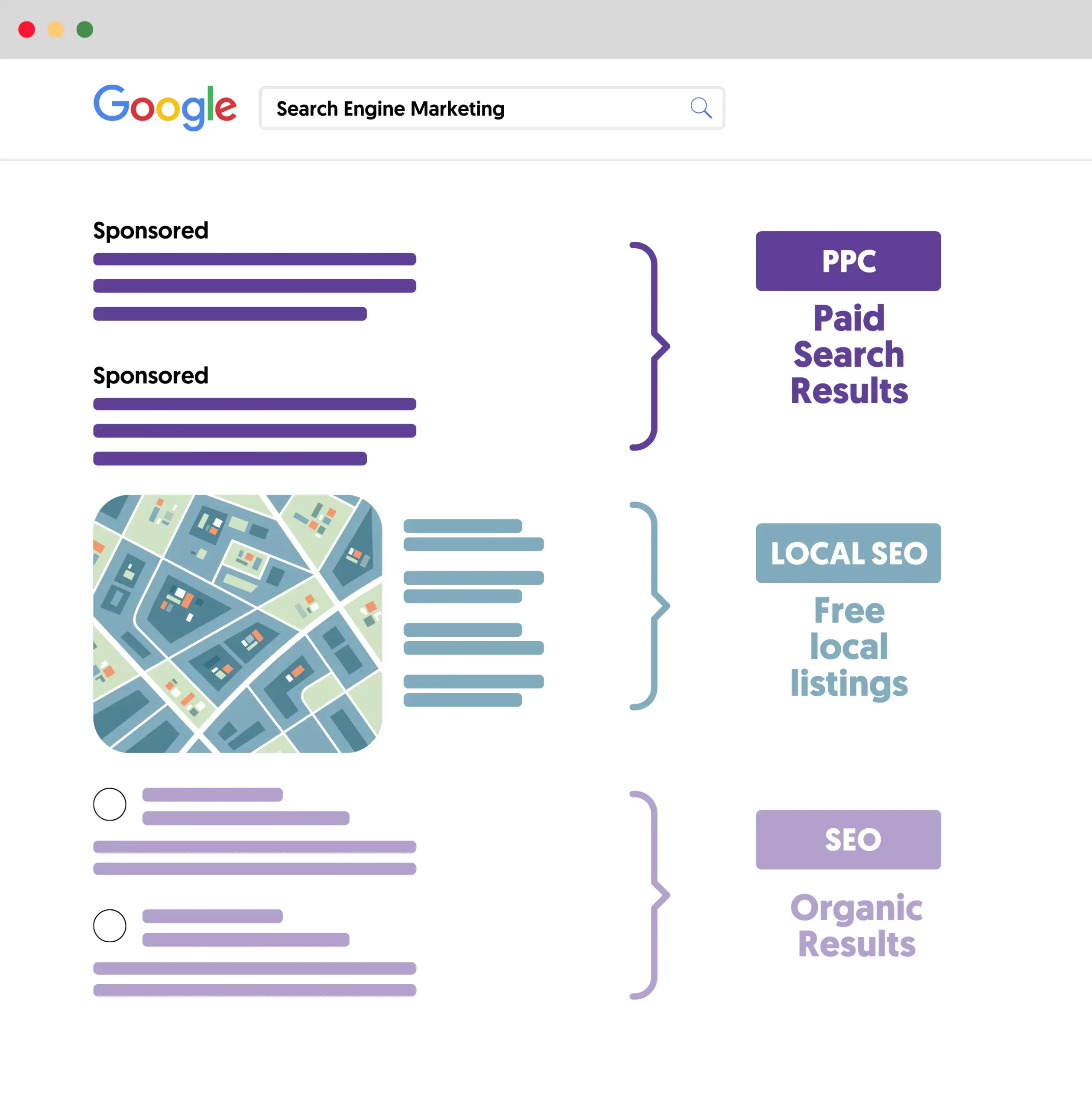
One of the most common forms of SEM is pay-per-click (PPC) advertising. With this advertising model, businesses bid against one another to have their ads show for different keywords.
After someone clicks on an ad, the business pays the advertising platform (Google) for the visitor.
When used properly, SEM campaigns can be a great way to build brand awareness and find new customers.
How does SEM Work?
SEM marketing centers around PPC advertising campaigns. This type of advertising is based on an ad auction.
Different businesses set bids for how much they are willing to pay for someone to click on their ad. They are only charged for the ad after someone clicks it.
The ad auction happens in real-time every time someone searches a keyword. Google determines the ad auction winner by evaluating several factors including your maximum bid and the quality score for your ad.
Building an SEM strategy starts along the same lines as an SEO campaign. You first need to know what keywords your target audience is using.
Once you’ve identified your keyword targets, you can begin setting up your advertising account.
A Google Ads account uses the following hierarchical structure:
- Campaigns: These are the highest-level groupings of your ad account. Each campaign has an objective, bid strategy, budget, and targeting settings.
- Ad groups: ad groups exist within campaigns. They let you organize your campaigns into different themes. For example, you can create different ad groups for different types of products.
- Ads: each ad group has its own set of advertisements that are displayed to visitors.
- Keywords: ad groups also have their own keywords that are used for audience targeting.
When you create a campaign, it is common to follow a top-down approach.
Start with the campaign objective, budget, and bidding strategy. You can move on to segmenting different ad groups and choosing their respective keywords and creating the ads themselves.
When your campaigns are up and running, you can track the performance of your ad campaigns directly within your Google Ads account. You can also connect your Google Ads and Google Analytics accounts to get more detailed data about the performance of your ads.
Example: an online shoe store bids on “buy running shoes” so its ad appears above the organic results, and pays only when someone clicks.
Resources to Learn More
3. Social Media Marketing
People across all demographics use various social media networks to connect with others and discover new products.
Businesses can use the active engagement offered by social platforms to get in front of their target audience.
What is Social Media Marketing?
Social media marketing is a form of digital marketing where businesses use social media platforms to engage with their audience and find new customers. For how it fits into the bigger picture, here is how social media marketing differs from digital marketing.
SMM consists of both organic and paid methods.
Organic SMM involves actively posting content and engaging with the community to build a following.
Paid SMM involves running various forms of advertisements to drive people to your website before ultimately turning them into a customer.
How does SMM work?
SMM starts by understanding the user base for different social networks so that you can know what platforms your audience is using.
Each platform is popular among different types of users. For example, Pew Research found in 2025 that 55% of US women use Instagram, compared with 44% of men, while TikTok and Instagram skew younger than Facebook.
With an understanding of which platforms your target audience will use, you can begin crafting a social media strategy and creating content.
Your content should be specific to each channel that you are using. This will make it more effective as it will resonate more with that particular following.
The goal for your SMM doesn’t necessarily need to be bringing in more sales. Instead, you can use your social media profiles to engage your audience and improve brand awareness.
For a more sales-driven approach, you can run paid advertisements on social media platforms. Like SEM campaigns, most social media advertising campaigns tend to follow a PPC model.
Social media advertising differs from SEM advertising in that there are many more ad formats at your disposal. With social media, you can use video ads, image ads, gallery ads, stories, and more. Short-form video, on TikTok, Instagram Reels and YouTube Shorts, is now the format most platforms push hardest.
Targeting for social media campaigns focuses more on audience characteristics rather than keywords. You can define your target audience by a variety of criteria including age, gender, location, and interests, among others.
You can also create custom audiences to target a specific group of people such as those who have visited your website but haven’t made a purchase.
Social media advertising platforms provide in-depth data and performance metrics so that you can closely monitor the success of your campaigns.
Example: a bakery posts short videos of new cakes on Instagram and TikTok, and runs a small ad targeting people within 10 miles of the shop.
Resources to Learn More
4. Content Marketing
Content marketing is the jack-knife of digital marketing. Most other forms of digital marketing, whether it is SEO, social media, or email, will involve some use of content.
Content is how you provide value to your audience. You can use it to strengthen your connection with prospects and stand out from the competition.
What is Content Marketing?
Content marketing is a type of digital marketing where a business creates valuable content and distributes it to its target audience to build a connection and move prospects through its sales funnel.

Content can come in a wide range of forms including blog posts, listicles, videos, social media posts, downloadable resources, and more. Our content marketing guide covers each one.
Content marketing is an important component of any digital marketing strategy because traditional forms of advertising are less effective with some people.
Many have been bombarded with ads for years and are no longer interested in hearing a brand’s commercial messaging.
Content marketing provides a solution to this challenge by giving organizations a natural way to communicate with their audience.
How does Content Marketing work?
The main purpose of content marketing is to provide your audience real value while also keeping them engaged with your business.
Like other types of digital marketing, you need to clarify your strategy before you begin creating content. Your objective will ultimately determine what type of content is best and how you should promote it.
The objective of your content marketing strategy could be to increase brand awareness by increasing social followers or it could be to educate your audience about a topic that is important to them.
Once you’ve established your content marketing strategy objective, you can determine what type of content will best help you reach your goals. If you want to nurture leads, this could be resources like eBooks or how-to blog posts. If you want to build brand awareness, it could be a set of posts on social media.
When you know what type of content you want to create, you can then decide what channels you will use to distribute the content.
Oftentimes, the type of content you use will determine this for you. If you want to create a series of social posts, you can only do this through social platforms.
Content marketing tends to be tied closely to SEO. If you want to use your content to bring visitors to your website it will likely be heavily focused on targeting specific keywords.
Example: an accounting software company publishes a free guide to small business tax deadlines, which ranks in Google and collects email sign-ups.
Resources to Learn More
5. Email Marketing
Email marketing is one of the oldest types of digital marketing. With its many benefits, it is still commonplace among businesses today.
What is Email Marketing?
Email marketing is a type of digital marketing where businesses engage with their audience through email.
Customers sign up for a business’ email list, giving the company permission to contact them via email.
Businesses can then send various types of email messages including promotional offers, educational material, or just general updates.
How does Email Marketing work?
Email marketing begins and ends with your list of email subscribers. You need a list of people to market to before you can begin your campaigns.
The best way to grow your email list is to place sign-up forms across your website. You can embed these forms in your pages, add them to your sidebar, or display them in a popup.
A common practice businesses use to increase the rate at which people opt in to their email list is to create lead magnets.
A lead magnet is a free resource or gift that you give to a visitor in exchange for their contact information. For example, a lead magnet could be a discount for a product or an eBook explaining how to do something specific.
Once a subscriber joins your email list, you have the ability to contact them with marketing messages directly.
One of the best parts of email marketing is the ability to set up automated campaigns.
With an email autoresponder software, you can configure a campaign to automatically send subscribers a predefined sequence of messages.
This is a highly effective way to move people through your digital marketing sales funnel as you can send them content related to each stage of their buying journey.
Here are some common examples of automated email campaigns:
- Abandoned cart campaigns - You can send a follow-up email to people who add a product to their shopping cart but leave your site without completing a purchase.
- Weekly newsletter campaigns - You can send a recurring email series to your subscribers with any updates and new offers.
- Win back campaigns - You can send an email sequence to someone who has purchased from your business in the past but hasn’t returned for a while.
- Remarketing campaigns - You can send a follow-up message to someone after they view a product on your site.
Another major advantage to email marketing is the level of control you have over your list.
Most email marketing software lets you group different types of subscribers into segments.
These segments can be based on any criteria that you specify. For example, you could create a segment for people in a specific geographic area. Or you could create a segment for people that have engaged with your business a certain number of times.
This lets you send personalized messages that often result in higher conversions.
Example: an online clothing store emails shoppers who left items in their cart, with a reminder and free shipping if they complete the order within 24 hours.
Resources to Learn More
6. Affiliate Marketing
One of the best ways to market your business is to have other people do it for you. This is the focus of affiliate marketing.
By creating an affiliate program, businesses can leverage the effort of others to reach new audiences and grow their customer base.
What is Affiliate Marketing?
Affiliate marketing is a type of digital marketing where third parties promote another business’ products in exchange for a portion of any sales revenue that they bring to the business.
These affiliates promote the business by marketing unique promotional links. When someone completes a purchase after clicking the link, the affiliate receives credit for the sale. They then earn whatever commission is agreed upon in their affiliate agreement.
How does Affiliate Marketing work?
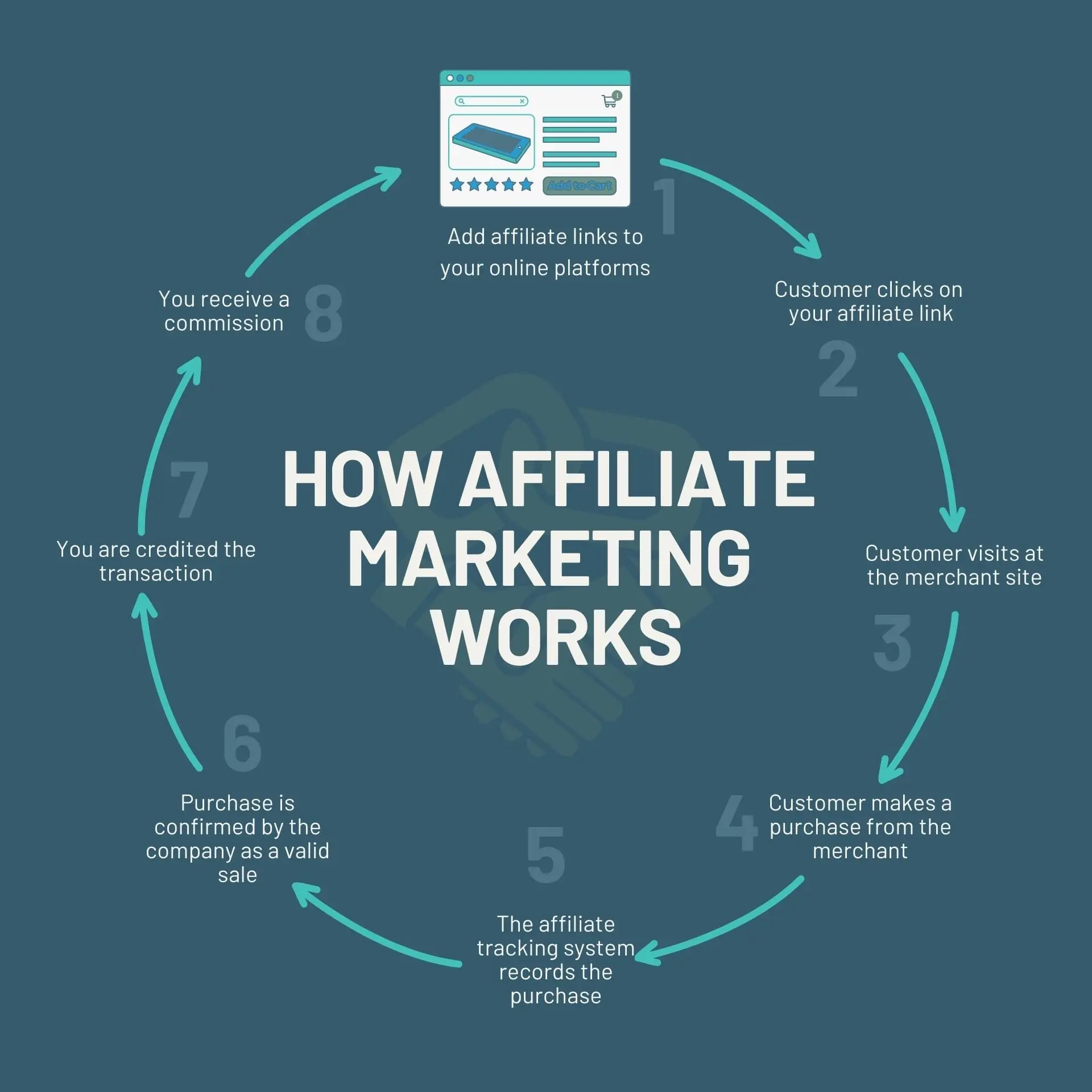
Companies that want to use affiliate marketing must first create an affiliate program. The program defines the terms affiliates must follow and specifies the details of how much they can earn.
Businesses must also create an interface for affiliates to view and manage their accounts.
A business can choose to host their affiliate program themselves or partner with an affiliate network to host it for them. Popular affiliate networks include Awin (which absorbed ShareASale in 2025), CJ Affiliate and Impact.
Running an affiliate program through an affiliate network helps the business offload some of the administrative burdens of having an affiliate program.
From the affiliate’s perspective, networks offer the advantage of centralized management. Affiliates can often join multiple programs within one network and manage them from a single account.
After an affiliate joins a program they are given unique affiliate links. These links are used to track the traffic that the affiliate brings to the business’ website.
The affiliate places these links across their marketing channels, typically a blog or social media profile. Many affiliate programs do not let affiliates bid on the brand’s own name in search ads.
Over time, visitors will view the affiliate’s web properties and click the affiliate links. When a visitor completes a transaction after clicking the link, the affiliate is rewarded a commission for the sale.
Commissions can either be a flat dollar amount or a percentage of the order value. The size of commissions varies wildly depending on the program and the type of product sold.
Note: Most affiliate programs have a cookie duration. This is the amount of time in which a visitor must complete a purchase after clicking the link for the affiliate to be rewarded with the sale.
For example, let’s say you’re part of an affiliate program that has a cookie duration of 30 days. If someone were to buy from the link 27 days after clicking it, you would receive a commission. However, if they complete the purchase 31 days after clicking the link, you will not receive a commission.
Example: a fitness blogger reviews a pair of headphones and links to the store with an affiliate link, earning a percentage of every sale it brings.
Resources to Learn More
7. Mobile Marketing
About half of all web traffic worldwide now comes from mobile devices, according to StatCounter. Because of this, businesses have needed to adapt their digital marketing practices to prioritize mobile users.
Mobile marketing is one of the ways companies can optimize their marketing efforts for audience members on mobile devices.
What is Mobile Marketing?
Mobile marketing is a digital marketing strategy designed to target users on mobile devices.
It can involve various communication methods, including SMS messages, push notifications, in-app advertisements, and more.
It can also involve more traditional forms of digital marketing, such as search ads, display ads, and social media ads.
How does Mobile Marketing work?
Mobile marketing is a rather dynamic digital marketing discipline. How it works varies greatly depending on how the business uses it.
Let’s examine some of the common ways businesses implement mobile marketing:
Location-based marketing
Businesses can show mobile ads to users that are within a certain geographic area by using Google Ads location assets (formerly location extensions), which pull your address from your Google Business Profile.
For example, if you have a restaurant and are targeting keywords such as “local restaurant”, you can use the extension to show your restaurant’s location on a map beneath the ad for nearby people who are searching on a mobile device.
In-game and in-app advertisements
Businesses can partner with game creators and app developers to promote their products within applications.
These ads can appear as pop-ups, banners, full-screen images, or even embedded into the content itself.
Example: a coffee chain sends a push notification through its app with a discount when a customer is near one of its stores.
8. Video Marketing
Videos are highly engaging and a great way to market your business.
You can add them to your website, offer them as a free resource on YouTube, or use them to bring more life to your advertisements.
What is Video Marketing?
Video marketing is the practice of using videos to promote your products or services to your audience. Videos can serve several use cases including advertisements, educating potential customers, or increasing brand engagement.
Here are some of the types of videos you can make:
Video ads - You can create quick short-form videos showcasing your products or services. You can then display these videos in campaigns across Facebook, Instagram, TikTok, or YouTube.
Educational and how-to videos - You can create videos that provide your audience with some useful knowledge on a subject that is valuable to them. You can display these videos on your website or on a free platform like YouTube.
Demo and tutorial videos - You can make videos explaining how to use your products or services. This can include simple explainer videos that you list on a feature or product page or a step-by-step tutorial on a specific topic for current customers. You can also have tutorial videos made for you with AI.
Webinars and lead magnets - You can record a webinar as a lead magnet and then offer it to visitors in exchange for a subscription.
How does Video Marketing work?
Like any other type of digital marketing, video marketing begins with a strategy.
You first need to define the goals you want to achieve with your videos. You should consider how you are going to use video at different stages of your marketing funnel.
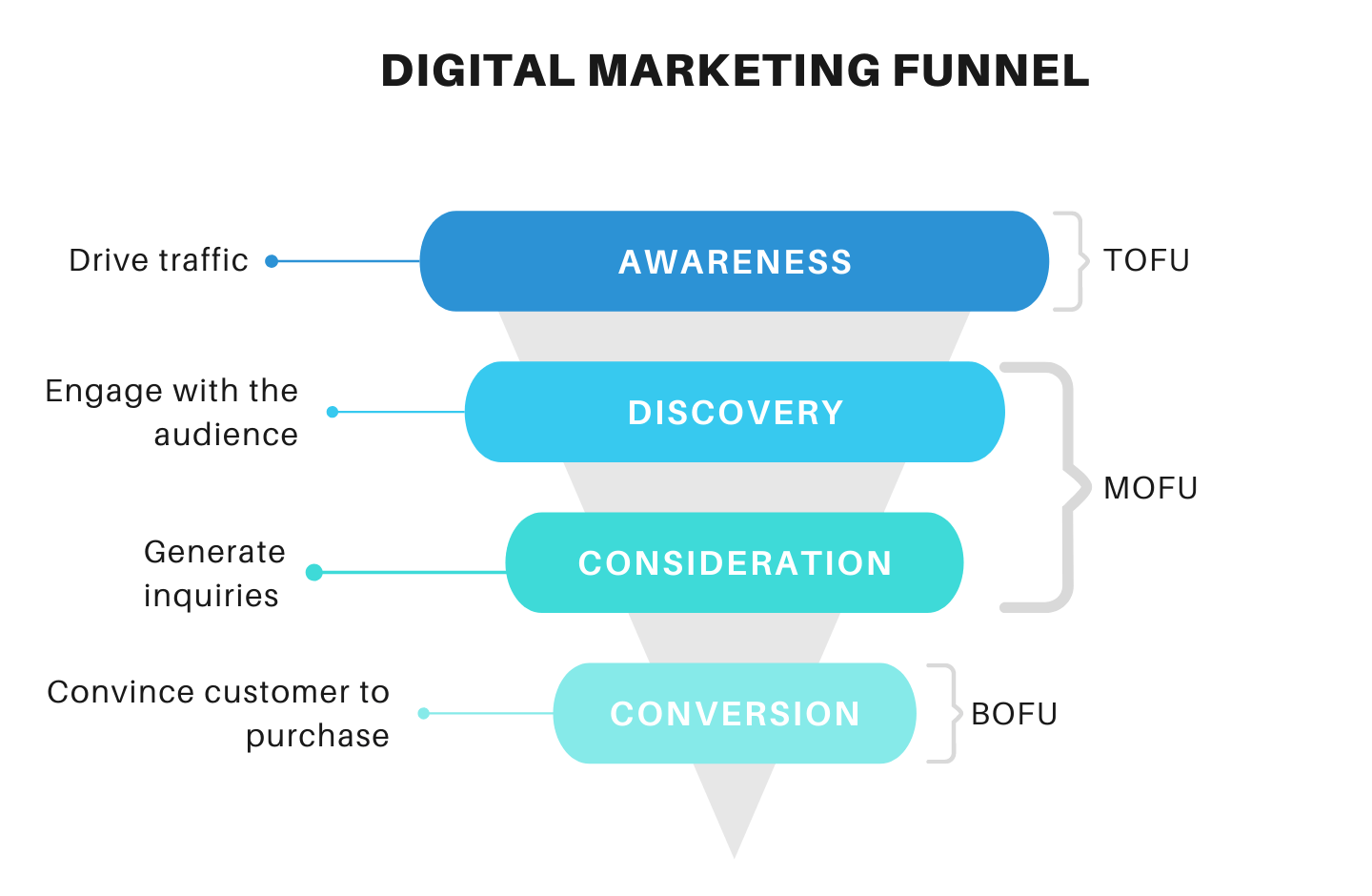
You also want to clarify your target audience before you begin creating your videos.
This will give you insights into how to design videos that are engaging and meaningful.
After you define your audience, you can begin making your videos. How long this process takes depends on the type of video you are making. If you only need a short-form video, the recording process won’t take too long.
The same applies to tutorial videos. You can have someone knowledgeable about your business walk through an explainer in one sitting.
You’ll also need to consider the budget for your videos. Different types of videos and features incur different costs so it’s important to plan for what you can afford.
Once you’ve created your videos you can distribute them through the appropriate channels. You want to closely monitor the engagement of your videos to see if your audience enjoys them.
Example: a software company posts a two-minute YouTube tutorial on its most-used feature, and cuts it into short clips for YouTube Shorts and LinkedIn.
Resources to Learn More
9. Influencer Marketing
Companies have long used celebrities and popular figures to market their products. As social media has blossomed, it has given rise to another type of endorsement: influencer marketing.
What is Influencer Marketing?
Influencer marketing is a type of digital marketing where companies can promote their products or services through endorsements or recommendations from popular figures known as influencers.
An influencer does not need to be a celebrity but simply someone with some authority in a niche and the ability to influence others’ decisions.
Because they often have massive social followings, an influencer can get their promotions in front of many people.
Many people look up to influencers and will quickly purchase an item after seeing someone they admire connected to it.
How Does Influencer Marketing Work?
Influencer marketing begins with finding influencers to promote your business.
There are several different approaches you can take. You can start with a social media platform you want to grow your presence on and start searching for relevant influencers with a strong following.
If you want to establish yourself in your niche, you can start by searching for industry authorities regardless of their primary platform.
Many influencer programs essentially serve as a middleman between businesses and influencers. You can connect with one of these services to find relevant influencers in your niche.
Once you find influencers worth working with, there are various approaches you can take to structure your partnership.
You can pay the influencer a flat retainer upfront, pay them per post/promotion, or pay them based on the results they bring.
The influencer will promote your products to their followers, and you should see a good amount of highly engaged web traffic as a result.
Similar to affiliate marketing, it is important to have tracking links. This will let you attribute any sales and conversions to your influencer campaign so that you can be clear on the results it is generating.
Example: a skincare brand sends products to ten creators with 20,000 to 50,000 followers each and gives each one a discount code to track the sales they drive.
10. Audio Marketing
What is Audio Marketing?
Audio marketing is a type of digital marketing that uses audio content to reach people: your own podcast, ads on other podcasts and music streaming services like Spotify, and appearances as a guest on shows your audience listens to.
It works well for building trust, because listeners spend long stretches of time with a voice they come to know, often while commuting or exercising when they can't read a screen.
How does Audio Marketing work?
Here is a quick overview of how to create an audio marketing strategy:
- Identify Your Target Audience: Determine who your podcast is for and understand their interests, digital habits, and preferred platforms.
- Optimize for SEO: Use relevant keywords in your podcast title, description, and website to improve visibility in search engine results.
- Create a Dedicated Website: Develop a website for your podcast with show notes, transcripts, and a blog to enhance engagement and SEO.
- Leverage Social Media: Promote your podcast on social media platforms where your audience is active. Use engaging posts, snippets, quotes, or audiograms from episodes.
- Collaborate with Guests and Influencers: Invite guests to your podcast and leverage their networks for promotion. Also, collaborate with influencers in your niche.
- Leverage Podcast Directories: Submit your podcast to popular directories like Apple Podcasts, Spotify, and YouTube Podcasts to reach a wider audience.
Example: a marketing agency runs a weekly 20-minute podcast interviewing small business owners, then publishes each episode on YouTube and quotes from it on LinkedIn.
11. Website Marketing
Website marketing is the process of promoting a website on the Internet. It forms an integral part of the overall digital marketing strategy with the primary goal of attracting more visitors to the website.
How Does Website Marketing Work?
Your website is where most of the other types of digital marketing send people, so website marketing is about two things: getting visitors there, and turning them into customers once they arrive.
It usually covers:
- A clear, fast website: pages that load quickly, work on mobile, and make it obvious what you offer.
- Traffic: SEO, paid ads, social media and email, all pointing to the right pages.
- Conversion: landing pages, calls to action and forms that turn visitors into leads or sales.
- Measurement: analytics that show which traffic sources bring customers, not just visits.
Example: a dental clinic rebuilds its homepage around a “book an appointment” button, adds a page for each treatment, and tracks how many bookings each page produces.
12. SMS Marketing
SMS marketing works similarly to email marketing because you need someone to subscribe to your marketing list by providing their phone number.
Once someone is on your list, you can send them all sorts of promotional messaging. SMS campaigns get great engagement.
This is largely to do with notifications from text messages being more visible than email notifications.
Because texts feel personal, consent matters more than with email. In the US, the Telephone Consumer Protection Act requires a subscriber's prior express written consent before you send automated marketing texts, and you must stop when someone opts out. Other countries have their own rules, so check them before you start.
Example: a restaurant texts subscribers a same-day lunch offer on quiet weekdays, with a short link to order online.
Which Type of Digital Marketing Should You Start With?
There is no single best type of digital marketing. The right one depends on your goal and your budget:
- More website traffic over time: start with SEO and content marketing. They are slow to build but keep bringing visitors without paying for each one.
- Sales quickly: use search ads (SEM) or social media ads. You pay for every click, but results start as soon as the campaign runs.
- Brand awareness: social media, video and influencer marketing put you in front of people who don't know you yet.
- Repeat customers: email and SMS marketing keep you in touch with people who have already bought from you.
- Little or no budget: SEO, content, organic social media and email cost time rather than money.
Most businesses end up combining two or three types that support each other, for example content that ranks in Google, is shared on social media, and grows an email list. If you are a beginner, our guide on how to learn digital marketing shows you where to start.
Key Learnings
From paid advertisements to creating social media posts, you can use digital channels to grow a business in many ways.
Each type of digital marketing serves its own purpose and plays a unique part in creating a complete digital marketing strategy. Start with the one that matches your first goal, measure the results, and add the next when the first is working.