

Search Engine Optimization, or SEO, is a complex process with several different types. All SEO types have the same goal: To optimize a website for greater visibility in search engines.
It is important to understand that these SEO subsets are not different processes; they are just a way of breaking down a complicated process into several smaller parts that are easier to manage. The most important SEO types are technical SEO, on-page SEO, and off-page SEO.
Types of SEO
How many types of SEO are there? There are three core types of SEO: technical SEO, on-page SEO, and off-page SEO. Many guides add local SEO as a fourth. The other types in this list are specialized areas that apply only to certain websites, such as online stores or multilingual sites.
Here is a quick summary of each type and which websites need it:
| Type of SEO | What it covers | Who needs it |
|---|---|---|
| Technical SEO | Crawling, indexing, speed, site structure | Every website |
| On-page SEO | Titles, headings, content, internal links | Every website |
| Content SEO | Content quality and keyword targeting | Every website that publishes content |
| Off-page SEO | Backlinks, brand mentions, promotion | Every website |
| Local SEO | Google Business Profile, local listings, reviews | Businesses with a physical location or service area |
| Mobile SEO | Mobile usability and speed | Every website |
| eCommerce SEO | Category and product pages, product data | Online stores |
| Video SEO | Video titles, descriptions, thumbnails, captions | Websites and channels that publish video |
| Image SEO | Alt text, file names, image size | Websites that rely on images |
| International SEO | Language and country versions, hreflang | Multilingual or multi-country websites |
| AI search SEO | Being cited in AI Overviews and AI assistants | Every website that wants visibility in AI answers |
If you run a blog, start with the core types and content SEO. A local business should add local SEO, an online store should add eCommerce SEO, and a multilingual site should add international SEO.
- Technical SEO
- On-Page SEO
- Content SEO
- Off-Page SEO
- Local SEO
- Mobile SEO
- eCommerce SEO
- Video SEO
- Image SEO
- International SEO
- AI Search SEO
1. Technical SEO
Technical SEO is exactly what the name implies, i.e., technical factors that affect the visibility of a website in search engines. The main goal of technical SEO is to ensure that search engine crawlers can crawl and index a website without any problems.
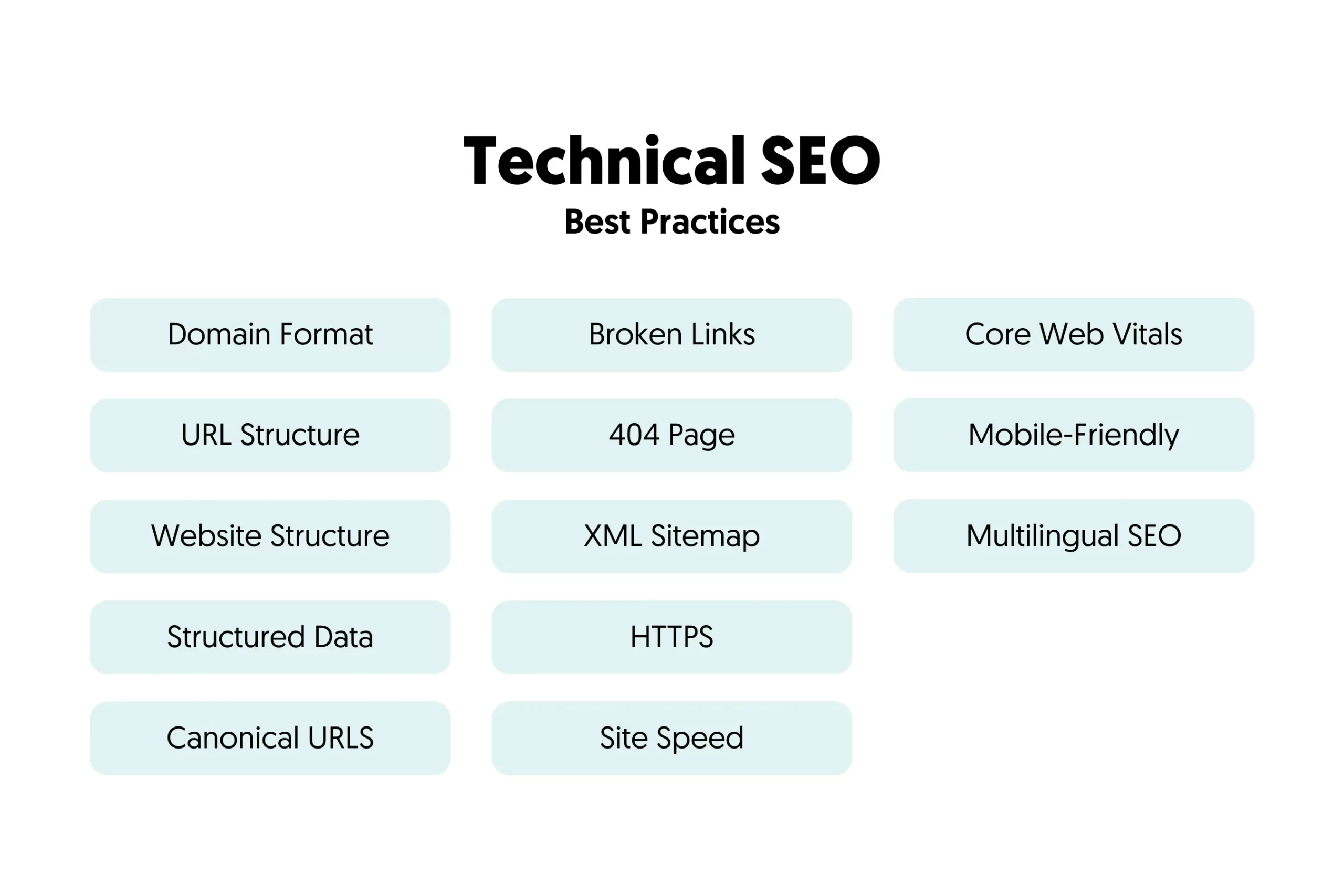
The most critical technical SEO techniques are:
- Check and optimize your robots.txt to ensure search engines can access your website correctly.
- Set canonical URLs to avoid content duplication issues.
- Create an XML Sitemap and submit it to all major search engines.
- Optimize your site structure and URL structure.
- Create websites that load fast on both desktop and mobile devices.
- Optimize your website to pass the core web vitals test.
- Fix broken links and optimize your 404 page.
To learn more about technical SEO and how it works, read our guide on the best technical SEO courses.
2. On-Page SEO
On Page SEO (aka On-Site SEO), has to do with the page content and how to make it friendlier to search engines and users.
It should be noted that while search engines look at a website as a whole, ranking is performed on a page-level basis. That’s why it’s important to pay attention to the optimization of each and every page on your website.
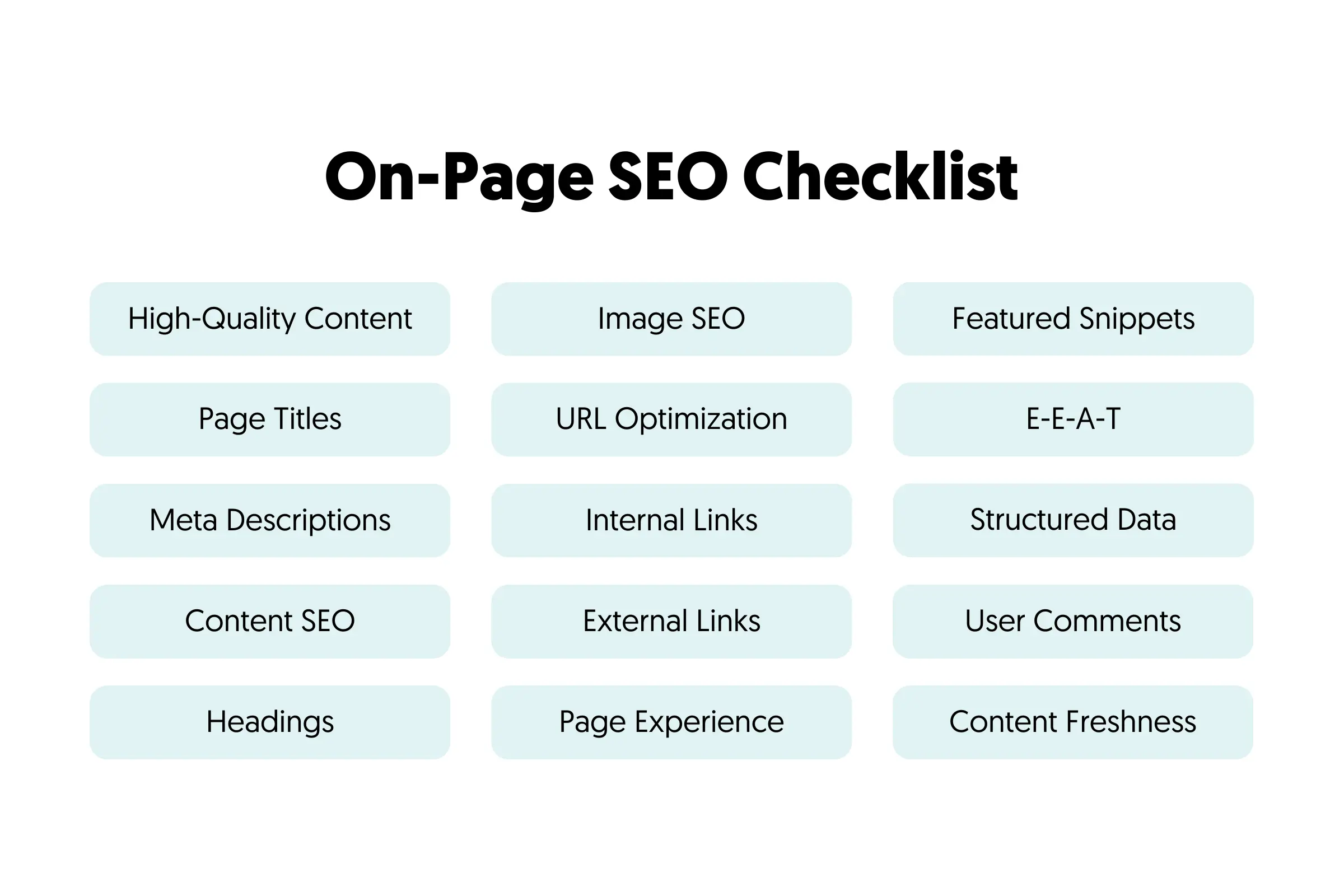
The most crucial on-page SEO techniques are:
Optimize your page titles. This is a critical SEO factor. Page titles are shown in the search results and should be interesting for users to click on. The title of a page should also give search engine bots enough clues on what the page content is all about.
Optimize your H1 Tag. While the page title is shown in the SERPS, the H1 tag is what is shown as the top heading of a page. An optimized page has only one H1 tag and usually has the same values as the page title.
Optimize your headings. Besides the H1 tag, a page needs to have subheadings (H2, H3) for the different sections. In the case of long-form content, subheadings make the page easier to read by users and scan by crawlers.
Page formatting. Publishing a page with text and images without spending time beautifying the content is not a good SEO practice. Although Google cannot ‘see’ a page like a human, they have ways to understand how a page looks or if it’s full of ads and popups, and this is taken into account during the ranking process.
To learn more about on-site SEO, check out our SEO Course, which includes step-by-step instructions on optimizing your on-page SEO.
3. Content SEO
Content SEO is a subset of on-page SEO. Content SEO is all about the quality of the content and how to make it better.
Because this is a very important SEO success factor, it is considered by many to be one of the types of SEO. In many cases, you can find content guidelines under on-page SEO, which is also a correct approach.
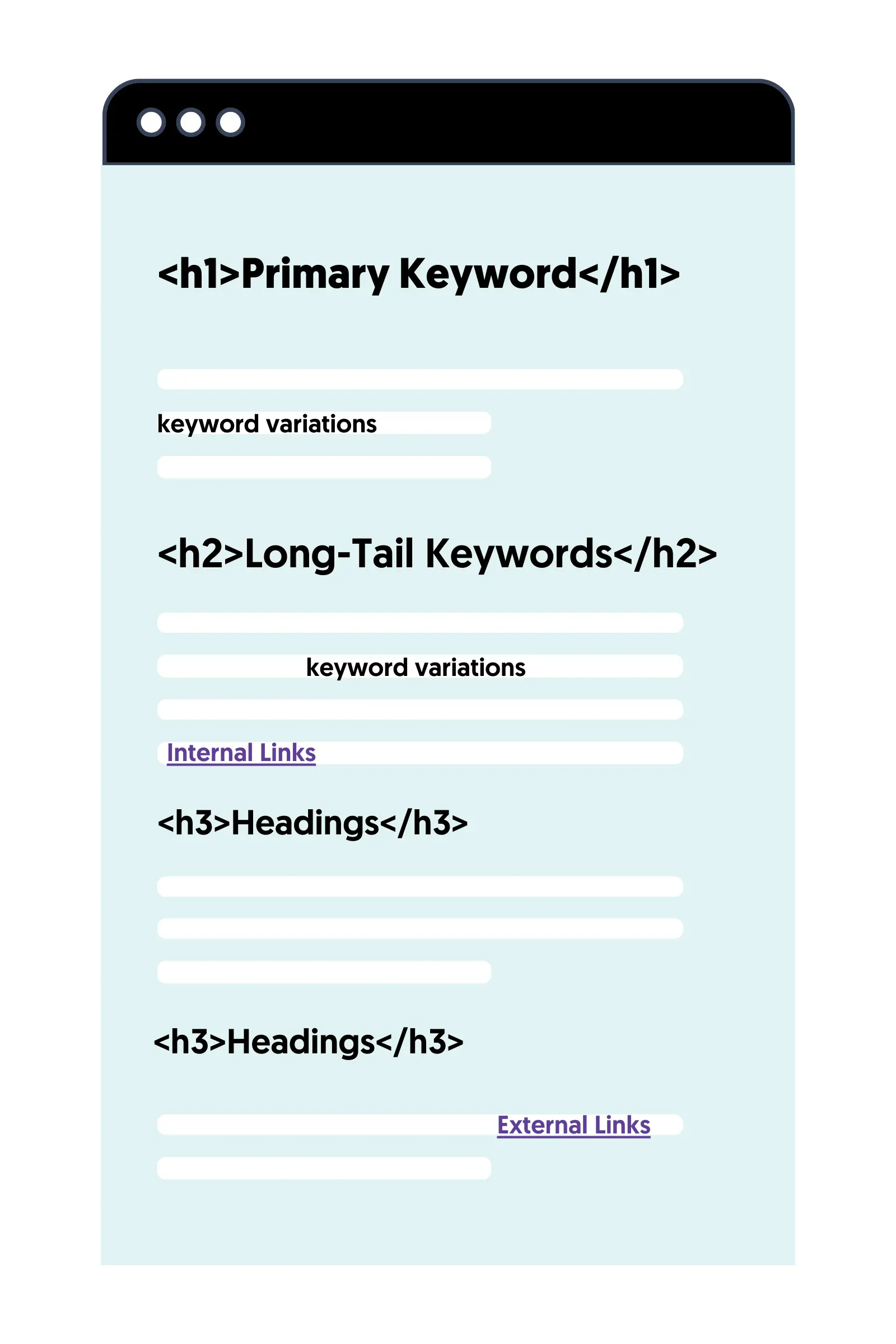
The winning combination is publishing great content that users love, and search engines can understand.
To achieve this, you can follow these tips:
- Start your content creation process with keyword research. Find the important keywords for your website and incorporate them into your content.
- Go one step further, look for long-tail and related keywords, and add them to your titles, headings, and main content.
- Publish content that is thorough and helpful to users while at the same time giving search engines signals to understand the context of your content.
- Link out to other high-quality websites (if it makes sense) and to other pages of your website to help users learn more about a topic.
- Using schemas and structured data to help search engines understand your content better.
4. Off Page SEO
Off-page SEO (aka off-site SEO) is all about website promotion. While the previous SEO types concentrated more on the website infrastructure and content, off-page SEO involves techniques you can use to promote your website online.
Popular websites are likelier to rank higher on Google than those of less popular websites.
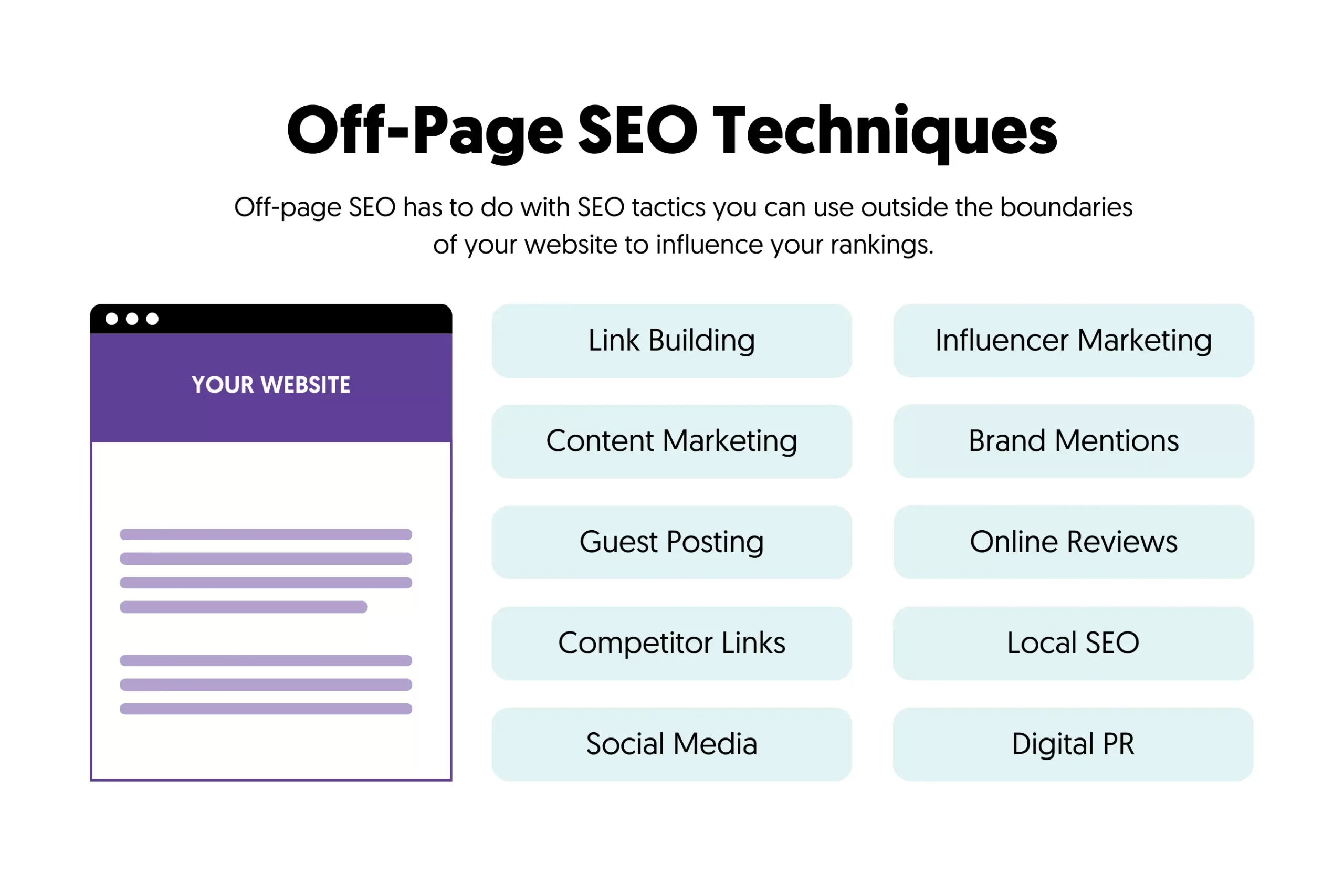
The most important off-page SEO methods are:
Link building. Link building is the process of getting backlinks from other websites. These backlinks act as ‘votes of trust’ and increase the authority of the target website (provided that they don’t have the nofollow attribute attached to the link).
Brand mentions. People trust brands they know, and well-known brands tend to earn more links, mentions, and branded searches. Besides promoting your website to get backlinks, work on promoting your brand and encourage conversations about it on social media networks and forums.
Content marketing. Using content marketing methods like publishing unique industry studies or content that journalists may find helpful is a great way to get exposure and mentions that can positively influence your Google rankings.
Social media and Influencer marketing. Another technique to promote your website is using social media platforms and influencers. These methods can generate more sales for your business and are good for your off-page SEO.
5. Local SEO
Local SEO is a type of SEO suited for local businesses only. If you have a website and your goal is to get clients to visit your local store, then you should optimize your website for local SEO.
Everything that is mentioned above is valid for Local SEO, with the addition of the following guidelines:
- Ensure you have your business name, address, and contact details on all website pages.
- Add the Local Business schema on your homepage.
- Create and optimize your Google Business Profile.
- Register your business with trusted directories such as Yelp, Bing Places, Apple Business Connect, and directories for your industry.
- Promote your website on local directories and websites (for example, online local newspapers).
6. Mobile SEO
Mobile SEO is not a different type but a subset of SEO specific for mobile devices. Most people now search on their phones.
This is also why Google uses mobile-first indexing: it primarily uses the mobile version of a website for indexing and ranking.
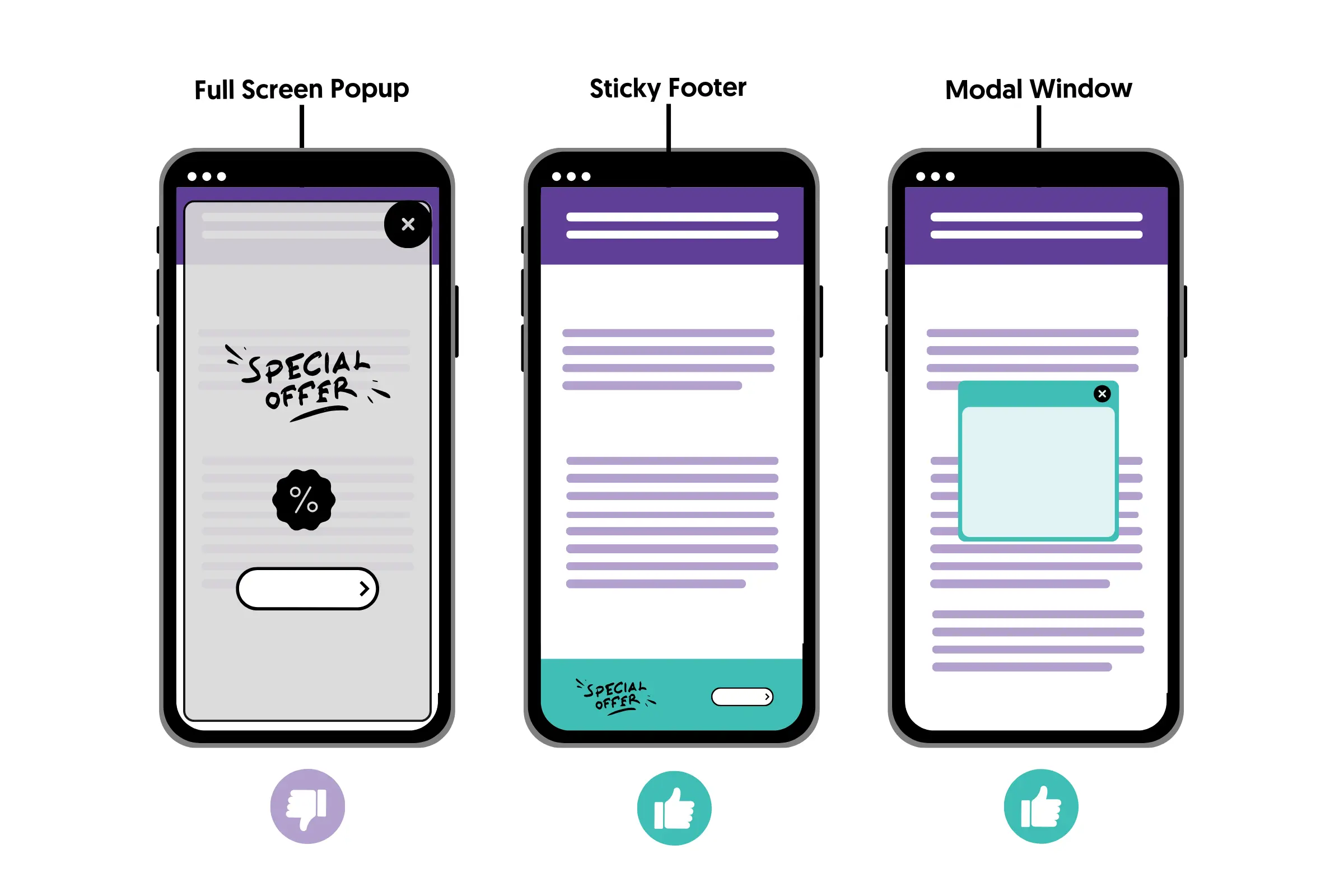
When working on Mobile SEO, you need to make sure that:
- Your website is mobile-friendly.
- The website loads fast on mobile.
- The website is easy to use on mobile.
- Your content is formatted for viewing on mobile devices.
- The user experience on mobile is not disturbed by interstitial banners, other methods of aggressive advertising, or popups.
7. eCommerce SEO
eCommerce is a huge industry. When it comes to search engine optimization, optimizing an e-commerce website is more complex than working on a blog or corporate website.
You have way more pages to optimize, and it’s much more challenging to promote an e-commerce website.
The most essential e-commerce SEO techniques are:
- Optimization of an online shop starts with the homepage and category pages. These pages must be properly optimized before you start working on your product pages.
- Optimize your product pages based on the results of your keyword research.
- Optimize ALL visual elements of your store (images, videos).
- Add the necessary structured data (product, offers, etc.).
- Promote your store on social media networks
- Think of creative ways to get people to link to your product pages
- Start a blog and publish content related to your products and how they can help people solve problems.
For more information on eCommerce SEO, visit our blog on how to learn eCommerce and our guide on the best eCommerce courses.
8. Video SEO
Video SEO is the process of optimizing video content to appear on the top positions of video platforms like YouTube, TikTok, and Instagram and also in Google search results.
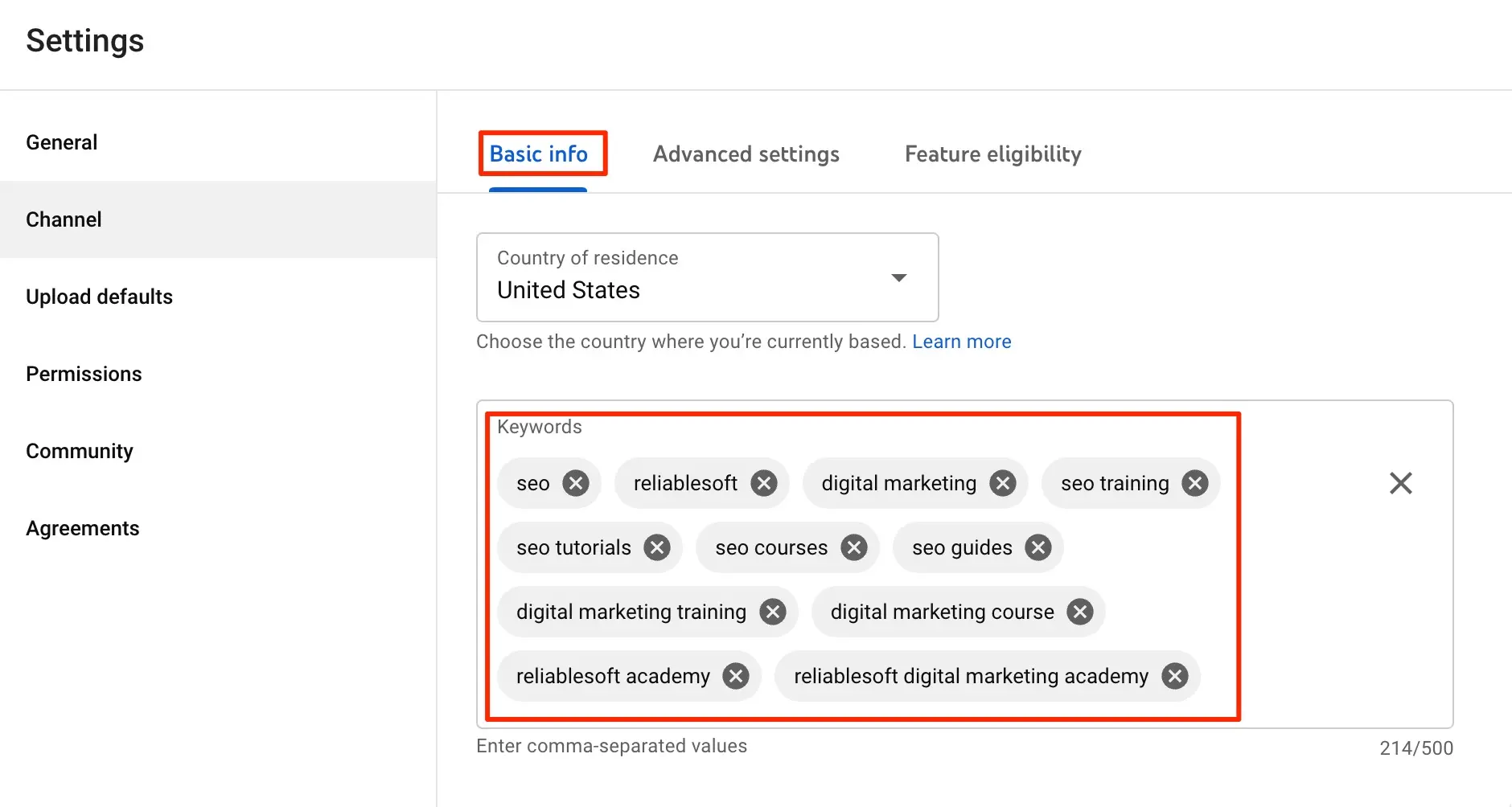
The most critical Video SEO elements are:
- Identify relevant keywords and phrases that viewers use to search videos and incorporate these into the video's title, description, and tags.
- Creating high-quality videos that satisfy the search intent.
- Optimizing your video thumbnails.
- Adding video transcriptions and captions to make the video content accessible to a wider audience.
- Adding video schema when embedding videos on your content.
For a step-by-step guide, read our YouTube SEO tips.
9. Image SEO
Image SEO is a type of SEO that deals with optimizing images. Besides the alt text, which is the most important SEO factor, there are other techniques you can use to make your images friendlier to search engines.
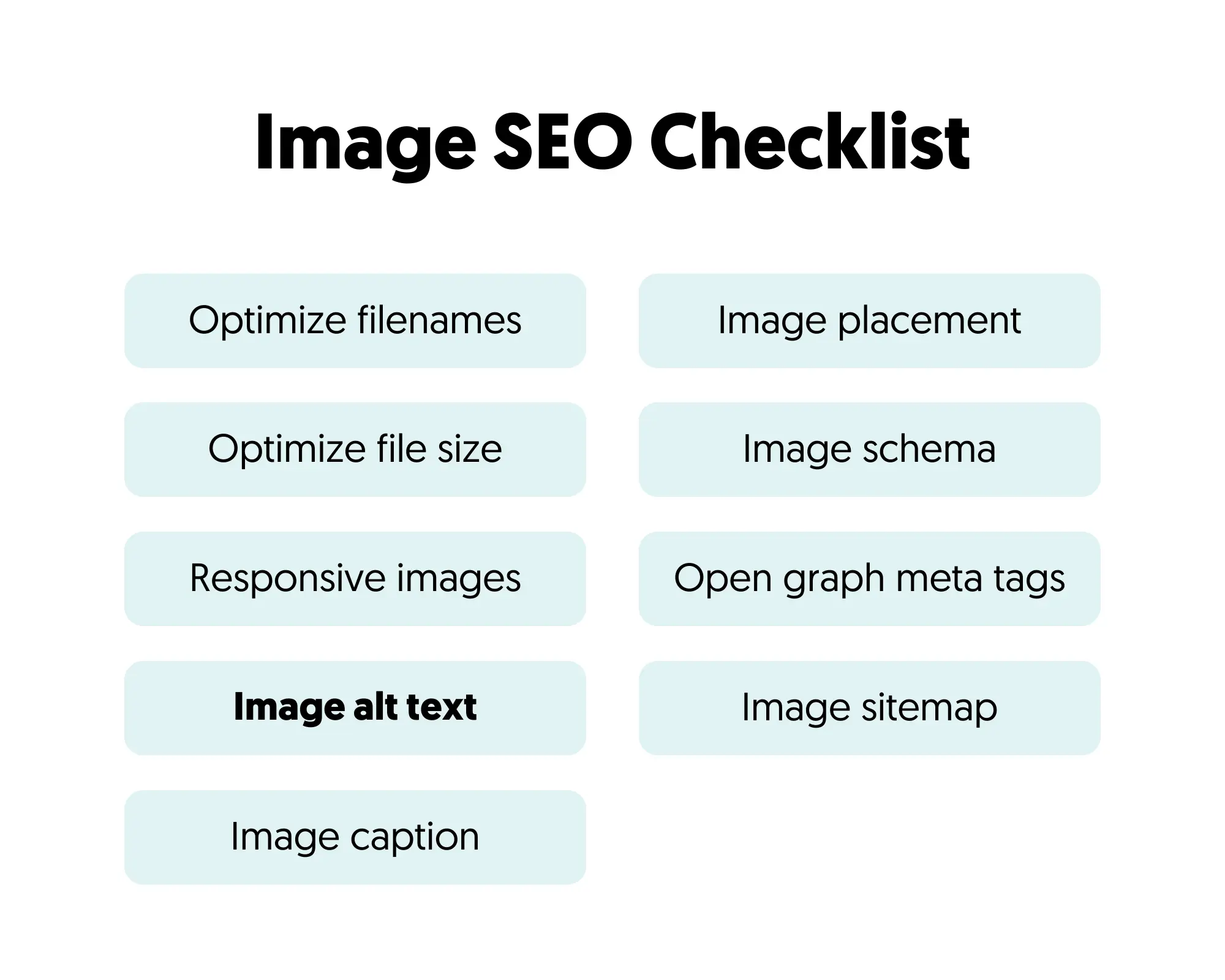
The most useful image SEO tips are:
- Providing filenames that describe the image.
- Reducing the image filesize by compressing all your images.
- Using responsive images to serve users the right size of images depending on their device.
- Add a caption below images embedded in the content.
- Creating and submitting an image sitemap to Google
10. International SEO
International SEO is the term used to describe SEO techniques suitable for multilingual websites. When a website provides content in multiple languages, some SEO-specific settings help search engines index the content better.
For example, with the hreflang attribute, you can tell Google about the different languages your content is available so that they can serve the right content to users and avoid any duplication issues.
If your website has only one language, you don't have to deal with this SEO type. You can learn more here.
11. AI Search SEO
AI search SEO, also called generative engine optimization (GEO), is about making your content easy for AI systems to understand and cite. It covers Google’s AI Overviews and AI Mode, as well as AI assistants like ChatGPT, Perplexity, and Gemini.
AI search SEO builds on the other types. AI systems draw on pages that search engines can crawl and trust, so technical SEO, helpful content, and a strong brand still come first. On top of that:
- Answer common questions clearly and early in your content.
- Use clear headings, lists, and tables that make your content easy to extract.
- Keep facts, prices, and dates accurate and up to date.
- Build brand mentions on trusted websites, since AI assistants often recommend brands that are widely discussed.
To see whether AI tools mention your business, read our guide on how to check your brand visibility in AI platforms.
White Hat SEO vs Black Hat SEO
Is black hat SEO a type of SEO?
Some people consider ‘black hat SEO’ a type of SEO that creates confusion for beginners. Black hat SEO is a term used to describe any actions taken to trick search engine algorithms outside Google guidelines.
For example, artificially creating links to improve a website's ranking on Google. These methods are against Google guidelines and should be avoided.
Another recent example is using AI tools to massively create and publish low-quality content to achieve high Google rankings.
Gray-hat SEO refers to SEO strategies that are between white-hat and black-hat SEO. They are more aggressive than white-hat SEO but they are questionable as to the extent they violate Google guidelines.
The only outcome from following black-hat or grey-hat techniques is to lose your Google rankings and trust, get penalized by Google, and diminish your chances of achieving any rankings in Google ever again.
All the SEO types described in this article are ‘White Hat SEO’ techniques, and if you follow them correctly, you will eventually be able to rank high on search engines and get a portion of the search engine traffic.
Key Learnings
SEO is one of the most powerful digital marketing tools for any website. An SEO-optimized website enjoys high visibility in Search engines and improves the user experience.
The SEO process is broken down into many sub-processes or types to make handling easier. The most important types are Technical SEO, On-Page SEO, and Off-Page SEO.
Types of SEO FAQ
What are the 3 main types of SEO?
Technical SEO, on-page SEO, and off-page SEO. Technical SEO helps search engines crawl and index your site, on-page SEO optimizes the content of each page, and off-page SEO builds your site’s authority through links and mentions.
What are the four types of SEO?
The four types most guides list are technical SEO, on-page SEO, off-page SEO, and local SEO. Local SEO matters mainly for businesses that serve customers in a specific area.
Which type of SEO is most important?
They work together, so you need all three core types. If your site can’t be crawled and indexed, nothing else works, so start with technical SEO, then focus on content and on-page SEO, and build links and mentions over time.
What are the best tools for SEO?
Start with the free tools from the search engines: Google Search Console and Bing Webmaster Tools. Paid tools like Semrush help with keyword research, competitor analysis, and site audits.
What are the types of digital marketing?
SEO is one of several digital marketing channels, alongside PPC, content, email, and social media marketing. See our guide to the types of digital marketing.