
- Digital Marketing Checklist For Small Businesses
- How to use the online marketing checklist?
- Digital Marketing Basics Checklist
- Strategy and Goals Checklist
- Website Marketing Checklist
- Search Engine Optimization Checklist
- Paid Advertising Checklist
- Content Marketing Checklist
- Email Marketing Checklist
- Social Media Marketing Checklist
- Digital Marketing Checklist FAQ


The best way to grow a small business is through digital marketing. Digital marketing can help you reach and connect with your potential customers through various online channels.
The problem is there are many channels and a lot of tasks to complete to run successful online marketing campaigns, and it’s easy to lose track of what is important to do.
That’s why we created the complete digital marketing checklist. Our marketing checklist includes all the important tasks you must complete to ensure you take full advantage of digital marketing to grow your business.
So, if you want to learn how to use digital marketing to boost your online presence, you’ll love this list.
Digital Marketing Checklist For Small Businesses
Use this quick checklist to track your progress. It lists all 36 tasks, grouped by area. Click any task to jump to the details.
- Digital Marketing Basics Checklist
- Strategy and Goals Checklist
- Website Marketing Checklist
- Search Engine Optimization Checklist
- Paid Advertising Checklist
- Content Marketing Checklist
- Understand what content marketing is
- Identify what content your target audience needs
- Match Content with Each Stage of the Customer Journey
- Create a realistic content marketing plan
- Create SEO-friendly Content
- Distribute your content on all possible digital marketing channels
- Publish thorough content based on research or statistical analysis
- Go back and update your existing content
- Email Marketing Checklist
- Social Media Marketing Checklist
How to use the online marketing checklist?
The best way to use this list is to review the items individually and determine which ones you need to add to your digital marketing strategy.
Online businesses have different goals, and not all items may apply to your case. For each item added to your list, make sure that you explore it in detail to learn exactly how you can use it to your advantage.
Each list item has a “resources to learn more” section to help you accomplish this task.
Where to start: every business should complete the strategy, website, and tracking tasks first. After that, a local business should prioritize its Google Business Profile, local SEO, and social media; an online store should prioritize SEO, paid search and shopping ads, and email; and a B2B or service business should prioritize SEO, content, email, and LinkedIn. If you need results fast, start with paid advertising while your organic channels (SEO, content, and social media) build up.
For ease of reference, you can also browse the checklist by digital marketing discipline:
- Digital Marketing Basics Checklist
- Strategy and Goals Checklist
- Website Marketing Checklist
- Search Engine Optimization Checklist
- Paid Advertising Checklist
- Content Marketing Checklist
- Email Marketing Checklist
- Social Media Marketing Checklist
Digital Marketing Basics Checklist
If you are new to digital marketing, the first thing to do is to get to know the basics. You need to understand what digital marketing is and how the different components of Internet marketing work.
1. Understand what is digital marketing
The definition of digital marketing is simple. Digital marketing is the process of marketing on the Internet. It’s a general term that includes using one or more online channels for marketing purposes.
The most important online marketing channels are website marketing, search engine marketing, pay-per-click advertising, content marketing, email marketing, and social media marketing.
Resources to Learn More
- Digital Marketing Guide For Beginners - an introduction to digital marketing for beginners.
- Digital Marketing Courses - online courses to learn digital marketing from experts.
- How to Learn Digital Marketing - a step-by-step guide to learn digital marketing on your own.
2. Choose your online marketing channels
Digital marketing has many channels that can be used to promote products or services. The channels are grouped into two main categories: online marketing channels and offline marketing channels.
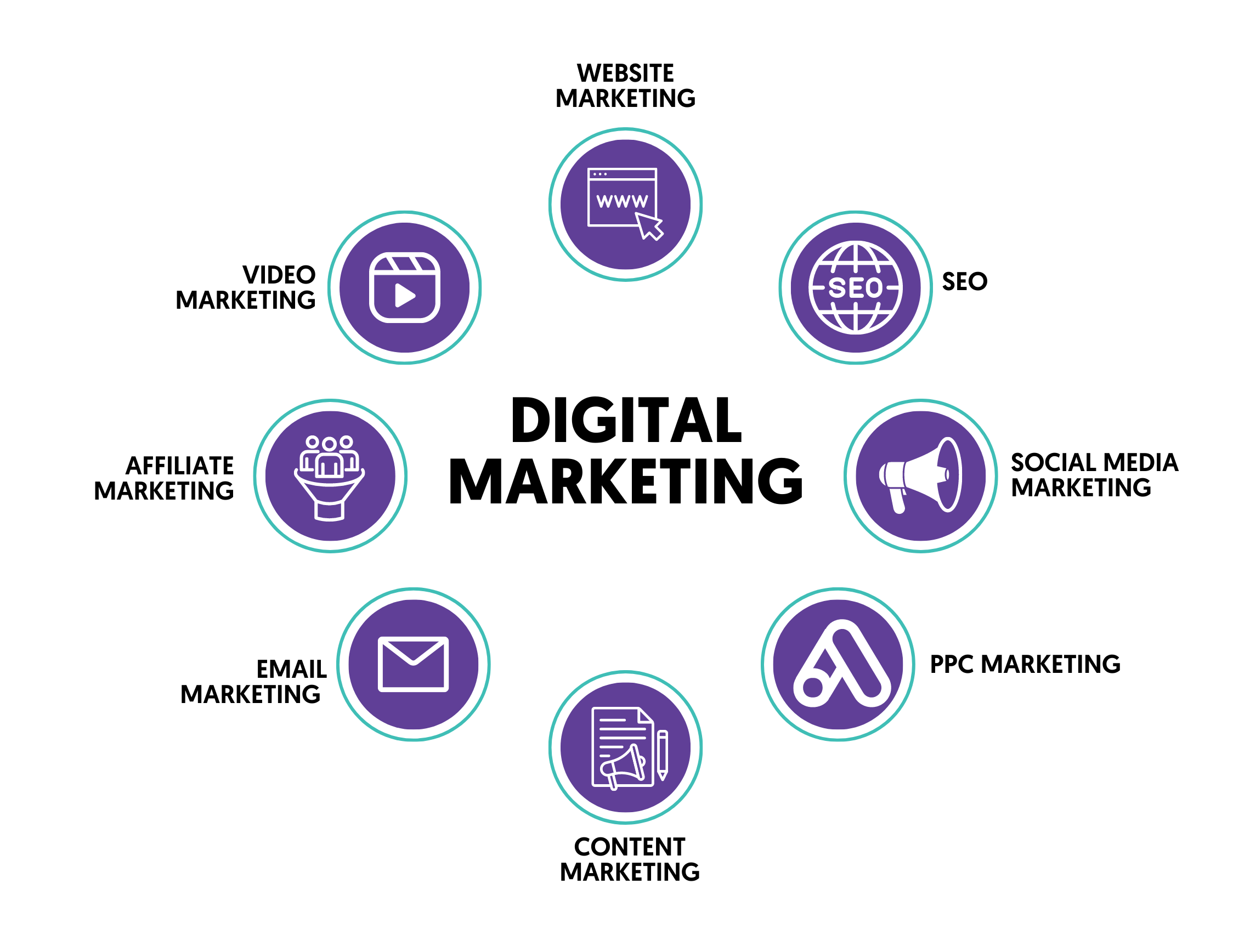
When planning your digital marketing campaign, you must decide which channels to use. You don’t have to use everything but those channels that are suited for your niche.
The most commonly used channels applicable for all businesses are SEM (including SEO and PPC), content marketing, and social media marketing.
3. Get a digital marketing certification
This step is optional but highly recommended.
You don’t have to become a digital marketing specialist to practice digital marketing, but going through the process of getting a digital marketing certification will help you learn digital marketing the proper way.
There are many great digital marketing courses (free and paid) that can teach you the principles of online marketing and take you through all the techniques you can use to promote your brand and market your products or services online.
One such course is the Digital Marketing Full Course. It includes 21 courses with tutorials, videos, and checklists to help you become a digital marketing pro and succeed in digital marketing.
If you are a small business owner, you can use the knowledge to run your own campaigns or manage the digital marketing agencies you work with (in case you outsource digital marketing).
If you are a freelancer, you can use the certification to boost your digital marketing career.
Whatever the case, getting proper training can only benefit your business and your personal development.
Strategy and Goals Checklist
Before you work on individual channels, decide what you want digital marketing to achieve, who you want to reach, and how much you can spend. These decisions shape every other item on this checklist.
4. Set SMART digital marketing goals
Your goals should be SMART: specific, measurable, achievable, relevant, and time-bound. “Get more customers” is not a SMART goal. “Get 30 new leads per month from the website by the end of the quarter” is.
Tie each goal to a business result, such as sales, leads, or bookings, and choose the metrics you will use to track it.
How to Create a Digital Marketing Strategy: a step-by-step framework with a one-page template.
5. Define your target audience and competitors
Describe the customers you want to reach: who they are, what problems they need to solve, and where they spend time online. Create one or two simple buyer personas to keep your messages focused.
Then look at your main competitors online. Check which channels they use, what content and offers they promote, and where they are weak. Those gaps are your opportunities.
How to Define Your Target Market: seven ways to find and describe your ideal customers.
6. Set your marketing budget
Decide how much you can spend each month and split it between organic work, such as SEO, content, and social media, and paid advertising. Organic channels take longer to show results but keep working over time, while paid ads bring faster results for as long as you pay.
A small business with a limited budget should usually focus on two or three channels first, measure the results, and then add more.
Website Marketing Checklist
The focal point of a digital marketing campaign is your website, which is your starting point. You need to review your website marketing and ensure that it is aligned with your digital marketing goals.
7. Review your website design
The first check you need to make is to review your website’s design to make sure that:
It accurately represents your brand: At the core of digital marketing is building and promoting online brands, and to do this, you need a website that represents your brand, company culture, and vision.
It’s easy to use and fast: Modern websites should be very easy to use and load fast on all devices. Websites with a simple design without unnecessary clutter always work best.
It has a clear description of your products, services, or offerings: Don’t forget that the primary reason you have a website is to use it to educate/inform users about your products or services, so make sure this information is easy to find on your site.
8. Optimize your website structure
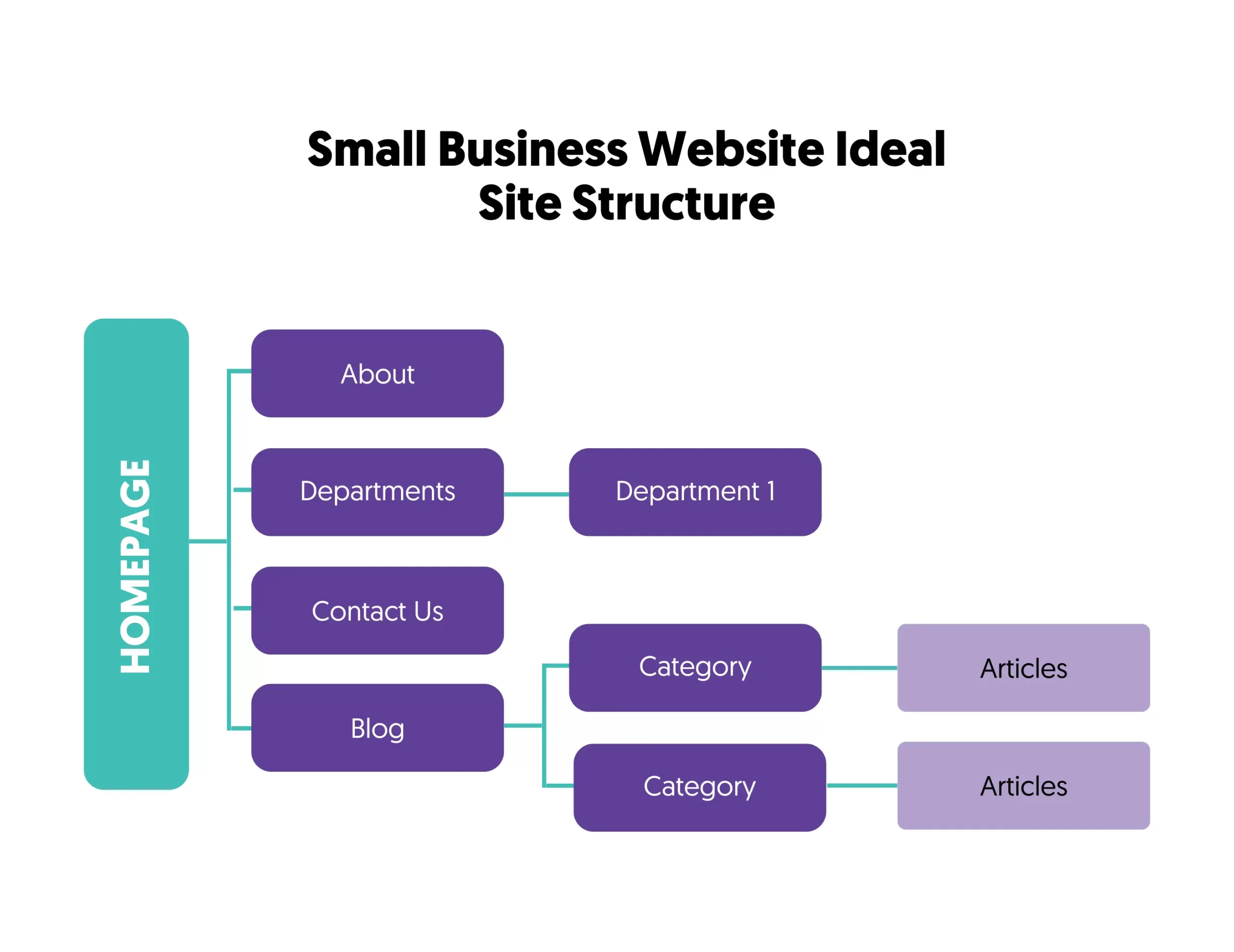
One of the checks to ensure that your website design is ‘correct’ is to optimize and review your website structure.
An optimized site structure will ensure that information is properly organized for users and search engines, generating several benefits, including more organic traffic and conversions.
9. Optimize your website for SEO
Having an SEO-optimized website is not optional but a critical factor for the success of any digital marketing campaign.
As you will read below, search engine optimization is not just about making your website friendlier to search engines, but it’s about making the whole user experience better.
10. Optimize your website for conversions
The primary goal of any marketing campaign is to generate conversions. Conversions can mean different things for different businesses, but what is common is that you need to optimize your website for conversions.
For example, suppose your goal is to increase sales. In that case, you need to work on optimizing your product pages and checkout process, giving users various payment options, making the website secure, etc.
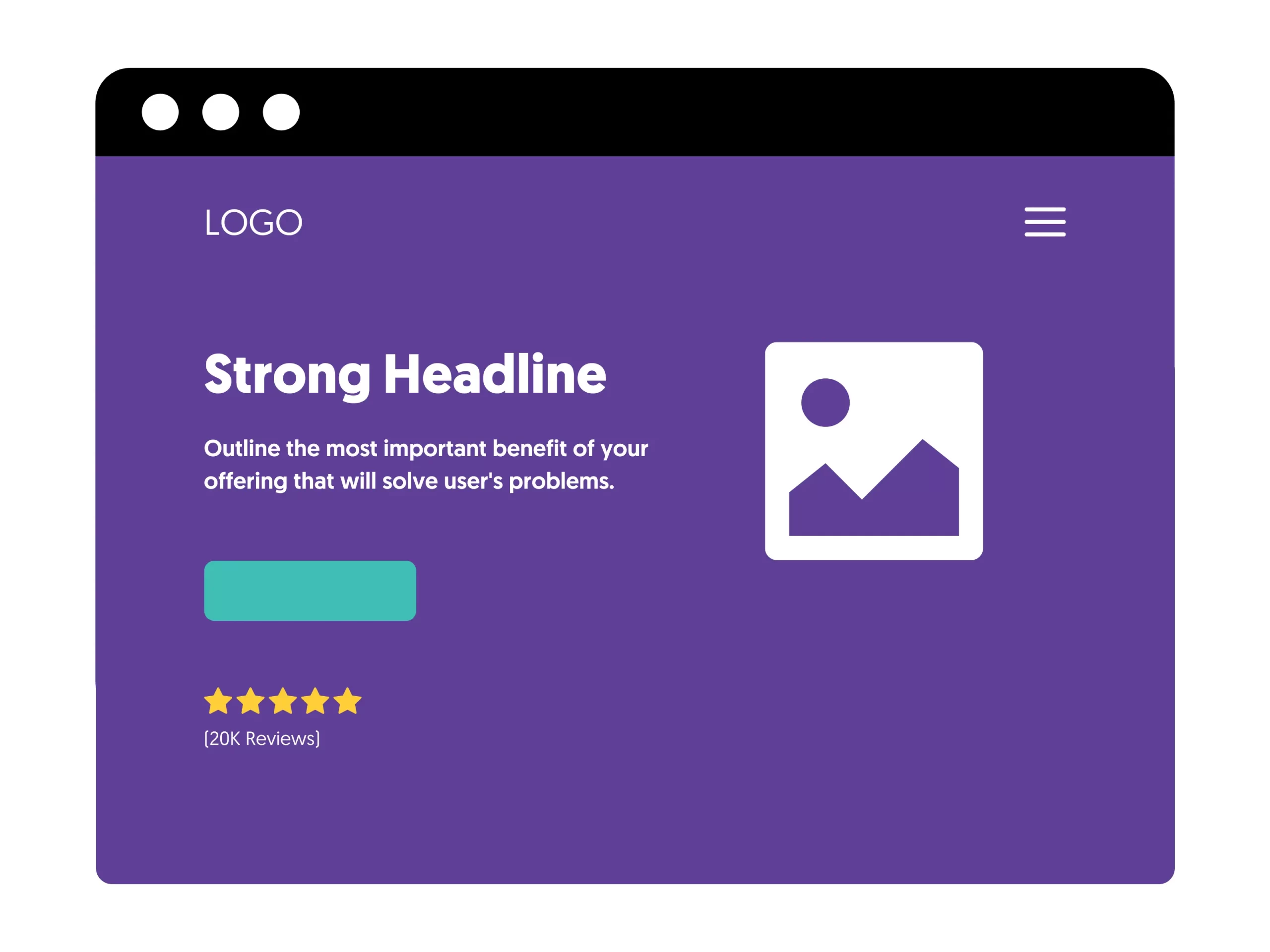
If your goal is to increase your email list, you need to ensure that users can easily find how to sign up for your list and give them some benefits for doing so.
The scenarios are a lot, and it’s your job to define your conversion goals and work on conversion optimization.
Top Landing Page Best Practices (High-Converting): How to optimize your landing pages for SEO and conversions.
11. Set up tracking and evaluate your website’s performance
One of the nicest things about digital marketing campaigns is that everything is measurable from start to end.
There are several metrics to use to evaluate the performance of your campaigns and your website. For the website part, you need to ensure that:
- You have Google Analytics 4 (GA4) installed and properly configured
- You track your key actions (purchases, form submissions, sign-ups) as conversions in GA4
- You have added and verified your website in Google Search Console
- You use UTM parameters on links in your emails, social posts, and ads, so you can see which campaigns bring visitors and sales
- You know how to read and evaluate your GA4 reports and metrics
Resources to Learn More
- Best Google Analytics Courses: learning resources to become a Google Analytics Expert.
Search Engine Optimization Checklist
SEO is the most efficient digital marketing process that can (almost) guarantee the longevity of an online business. Without SEO, it is very difficult to stay in business for many years. Paid Ads can boost your revenue, but it’s search engine traffic that can help you grow and establish your brand in the online world.
12. Learn SEO Basics
is the process of making your website friendly for search engines so that they can understand and index your content.

Through SEO, you can increase your site’s visibility on Google and get more traffic from search engines.
The SEO process has three main types: Technical SEO, On-Page SEO, and Off-Page SEO. For the best results, you must ensure your website is optimized for all three.
Resources to Learn More
- SEO Checklist: The complete SEO checklist (Epic Guide).
- How to Learn SEO - a learning plan to teach yourself SEO.
- Best SEO Certifications - courses to learn SEO and get certified.
13. Optimize your website for Technical SEO
Technical SEO is the process of optimizing your website for the crawling and indexing phase.
This is a critical process because technical SEO errors can damage the performance of your campaigns without understanding why.
Things to check and optimize include:
- Proper use of canonical URLs
- txt optimization
- URL Optimization
- Structured Data Markup Implementation
- Fix crawl and indexing errors
- XML Sitemap Optimization
- Website Security (SSL)
Technical SEO Guide: A complete guide on how to optimize your website for technical SEO.
14. Optimize your website for On-Page SEO
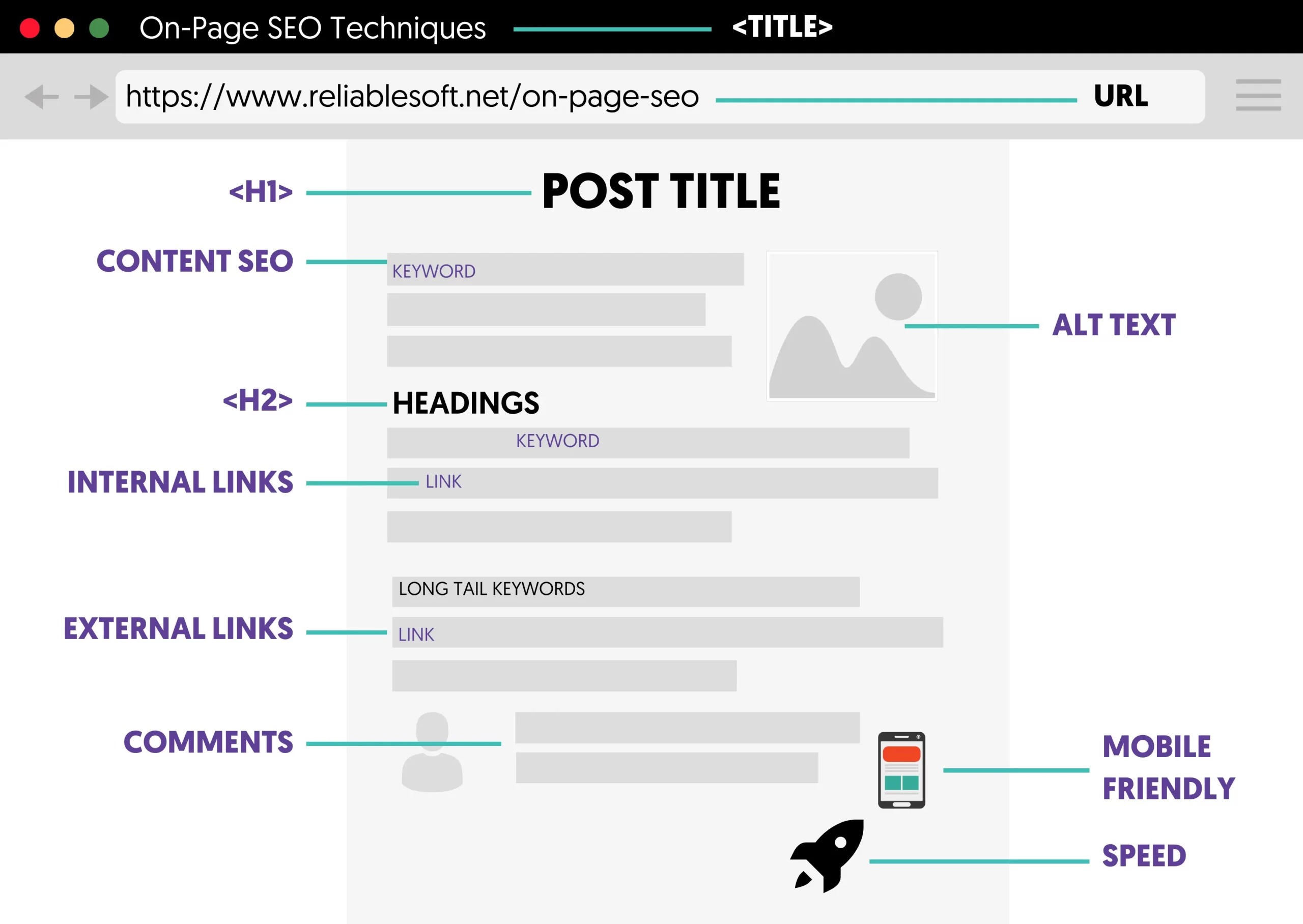
On-page SEO is the process of optimizing your content for search engines. On-page SEO techniques help search engines understand both the meaning and context of your content and this can have a positive effect on your rankings.
Things to optimize as part of on-page SEO include:
- Optimizing your page titles and meta descriptions
- Optimizing your headings
- Content formatting
- Image Optimization
- Optimizing internal linking
On-Page SEO Guide: A step-by-step guide on how to optimize your website for on-page SEO.
15. Optimize your website for off-page SEO
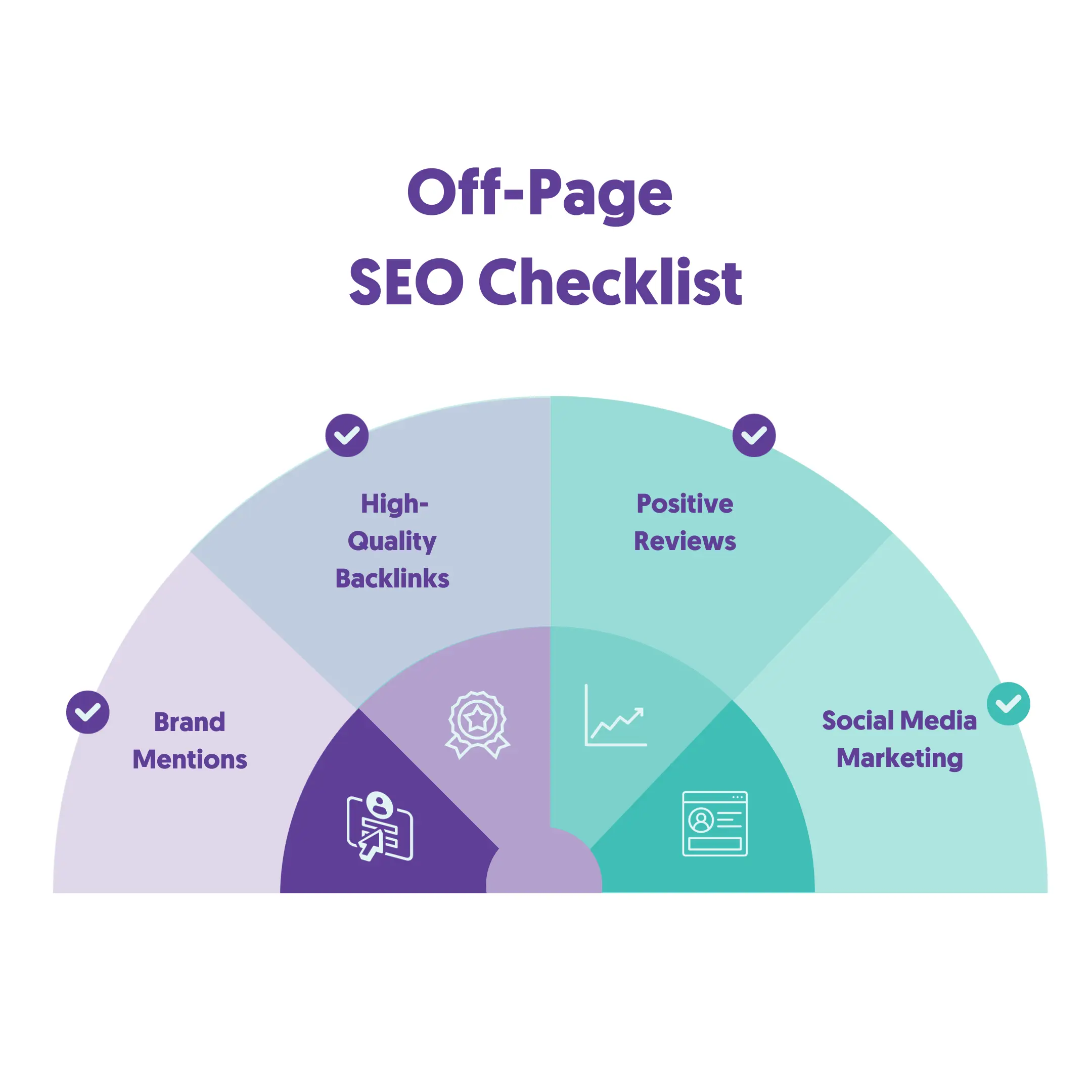
Off-page SEO has to do with activities you can perform outside the boundaries of your website to promote your website and content on the Internet.
The most important off-page SEO tasks are:
Link Building: The process of getting links from other websites that can positively influence your search engine rankings.
Social Media Marketing: Promoting your website and content on social media networks.
Brand Mentions: The process of making your brand known on the Internet to get mentions with or without links.
Reviews - The process of getting positive reviews from third-party review sites.
Off-page SEO is a great way to establish E-E-A-T (Experience, Expertise, Authoritativeness, and Trustworthiness).
16. Perform an SEO Audit
A recommended step to ensure that your SEO is in good standing is to perform an SEO audit. An SEO audit will tell you what’s wrong with your website’s SEO and how to fix it.
There are various ways and tools to perform an SEO audit, but the best method is the manual method.
A manual audit is more effective since an experienced SEO expert can give you advice based on real-life experience and SEO best practices that no tool can provide.
SEO Audit Guide: A thorough guide on performing an SEO audit of your website (with a checklist).
Paid Advertising Checklist
Paid advertising is one of the fastest ways to make sales online. It is the recommended channel for startups and for a business that needs results fast. Optimized paid ads can generate revenue and profit for businesses until SEO and other digital marketing techniques become ready to contribute to growth.
17. Explore all available paid advertising channels
Paid Advertising is a huge chapter in digital marketing. There are so many platforms you can use to place your ads in front of your target audience, and for the best results, you need to explore and test as many as possible.
The most commonly used paid advertising channels are:
- Google Ads
- Facebook Ads
- Instagram Ads
- YouTube Ads
- Microsoft Advertising (Bing)
- X Ads
- LinkedIn Ads
Add in your checklist to run pilot campaigns in these networks and evaluate the results.
Depending on your products and services, some channels may work way better than others, and the only way to find out is to test them.
18. Let machine learning and AI do the hard work
All major advertising platforms now use machine learning and AI to display the right ads to the audience most likely to convert.
Google Ads offers automated (Smart) bidding and Performance Max campaigns, and Meta offers Advantage+ campaigns. Test these options, give them clear conversion goals to optimize for, and compare them against your manual campaigns.
19. Optimize your PPC campaigns by running A/B tests
One of the core principles of running profitable PPC campaigns is continuous A/B testing.
When optimizing a PPC campaign (in any platform), you must keep testing ad messages and types, bidding options and audience targeting, device targeting, and many other features to ensure your campaigns are fresh and relevant for your users.
Content Marketing Checklist
For SEO, paid advertising, email marketing, or social media marketing to work, you need to be able to create high-quality content regularly, and this is what content marketing is all about.
20. Understand what content marketing is
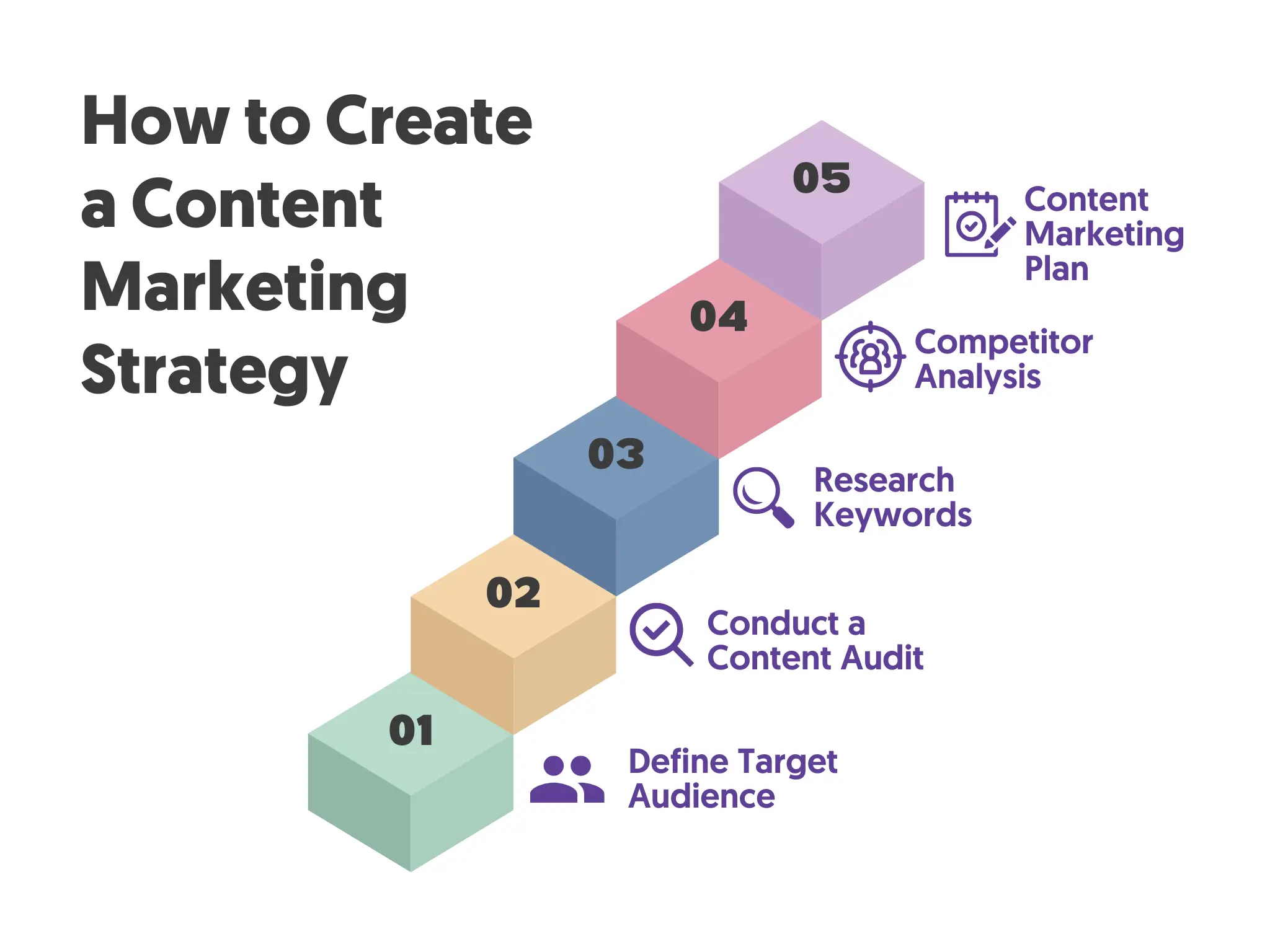
Content is the driving force behind ANY digital marketing campaign. Whether it's ads, posts, podcasts, or videos, content is a huge decisive factor for the success or failure of your campaigns.
Content marketing is the process of creating content to increase your web traffic, get new customers, make more sales, or simply increase brand awareness.
- Content Marketing Guide: an introduction to content marketing for beginners.
- Best Content Marketing Courses - learn content marketing from experts.
21. Identify what content your target audience needs
Randomly publishing content is not the way to do content marketing. The first step is to research and identify what content your target audience needs and in what format.
Is it text content or video? Do they need step-by-step instructions to carry out a task? Are they looking for an answer to a question? A product to buy?
Once you have the answers, you can proceed to the next step.
Resources to Learn More
- How to Build an Online Audience: Understand how to build an online audience through content marketing.
22. Match Content with Each Stage of the Customer Journey

A typical marketing funnel has many stages that resemble the customer journey, from the time they search for something on the Internet to the time they are ready to convert (make a purchase).
To be successful in digital marketing, you need to have the right type of content for each stage, and performing a good keyword research analysis will help you achieve that.
23. Create a realistic content marketing plan
Once you know what type of content to create and for what topics/keywords, the next step is to devise a plan to make this happen.
Your content marketing plan should be realistic, considering your available resources, time, and budget. Turn it into a content calendar that shows what you will publish, on which channel, and when.
Good content is one of the most expensive items in a digital marketing campaign, and instead of creating an optimistic plan you cannot follow, better create a plan you can execute.
Each content you publish on any internet marketing channel should be considered an asset for your business and campaigns.
24. Create SEO-friendly Content
is an art that can be mastered with knowledge and experience. Before you hit the publish button for content geared towards organic search, you need to ensure that it is great for both search engines and users.
Users like to read content that satisfies their intent, and search engines want to index content so that it’s easy for them to understand its meaning.
Accomplishing these two concepts together is what makes SEO-friendly content.
25. Distribute your content on all possible digital marketing channels
As mentioned above, creating good content is expensive, and every piece of content you create should be considered an asset. To benefit the most from your content assets, you can distribute them across various channels.
For example, you can convert a blog post into a presentation and share it on LinkedIn or into a thread on X, a carousel on Instagram, or a short video.
Transforming your content into various formats and distribution channels will increase your reach and give you fuel to feed your channels. Start with your best-performing content, since it has already proven that your audience wants it.
26. Publish thorough content based on research or statistical analysis
There are roughly 4 million blog posts published each day. This is a huge number that is growing rapidly day by day.
To increase your chances of ranking high on Google and to get more social shares and mentions for your brand, you need to make sure that your content is thorough and is based on research, statistical data, or your experience and expertise.
It’s not a matter of how many words you publish but what users want to read. Thorough content that fully answers the question tends to earn more links and shares.
27. Go back and update your existing content
Publishing new content targeting new topics/keywords is essential for your digital marketing success, but it’s not enough.
You must frequently revisit your most important content and ensure it is updated and always relevant.
By doing so, you increase your chances of:
- Maintaining your existing Google rankings
- Gaining more links
- Re-using your content in social media
Nobody wants to read out-of-date content, including search engines and users.
Email Marketing Checklist
Creating a community around your brand and a tribe of loyal followers is the recipe for running successful digital marketing campaigns, and email marketing is the medium to do that.
28. Understand what email marketing is
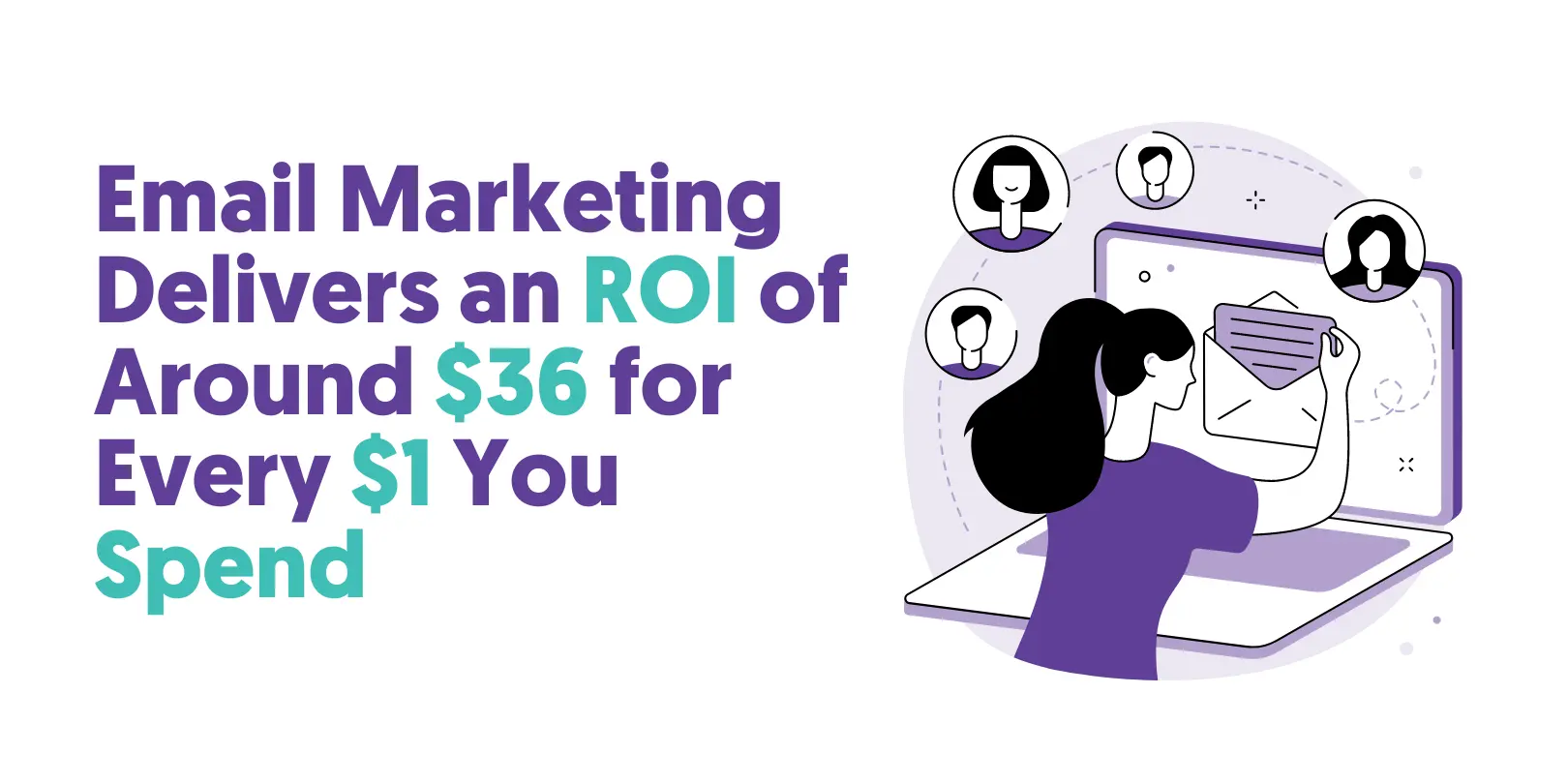
Email marketing is not dead. Despite the rise of social networks, email marketing is still one of the most effective sales channels.
As a marketer, you need to understand what email marketing is and how it works. Having a newsletter and sending out a weekly email is not the end of the story.
You need to learn how to get visitors to sign up on your email list, how to use email funnels, how to use list segmentation, and many more features to make email marketing work for your business.
- What Is Email Marketing: how email marketing works, step by step.
- Best Email Marketing Courses - a list of online courses to learn email marketing.
29. Create an email marketing strategy

Having an email marketing plan is the best way to approach email marketing. Your strategy should include things like:
- What incentives to offer to get people to register for your list
- How often to send emails and what type of content to include
- A/B Tests to make to find out what emails/messages generate the best results
- Ways to segment your list based on customer profiling
- How much to invest, and what is the projected ROI?
- What are your email marketing goals? (educate users, make sales, etc.)
30. Optimize your emails
Email optimization is essential for every email you send out. By email optimization, we mean:
- Take the necessary measures to ensure that your emails will get delivered to the right audience.
- Optimizing your open email rate (the number of people that will open your email).
- Optimizing your click rate (the number of people that will click a link in the email).
Measuring, monitoring, and improving the above numbers will help you run profitable email marketing campaigns.
31. Set up automated email sequences
Automated emails are sent when a subscriber takes an action, so they keep working without extra effort. Start with the sequences that matter most:
- A welcome sequence for new subscribers
- Abandoned cart reminders, if you run an online store
- Follow-ups after a purchase or a download
- Re-engagement emails for subscribers who stopped opening your emails
Track the open rate, click rate, and conversions for each sequence, and improve the ones that underperform.
Social Media Marketing Checklist
Running social media marketing campaigns is not optional but a requirement for companies who want to have a present and future in the online world. Thousands of companies are making money on social media marketing alone, and many more are losing money on social media, so you must do it correctly to minimize the risk of failure.
32. Create business pages on all available social media networks
As a business, it is important to have a presence in all the networks that your audience is using.
All big social networks (Facebook, Instagram, X, LinkedIn) have the option to create a business account, and you need to make sure that your brand name is claimed and accurately represented.
The following links will help you get started:
33. Optimize your social media pages
For all social pages you create for your business, ensure it has the necessary information to learn more about your business and your offerings.
A mistake that many businesses make is to create a Facebook page and leave it empty with no content or information. This can do more harm to your business reputation than good.
34. Increase your social media followers
Social proof is a very powerful tool in digital marketing. It’s a way to establish trust and convince new users to follow your brand.
People are more likely to buy products from brands they trust than from brands they know nothing about.
There are various ways to increase your social media followers. The most effective methods are:
- Publishing helpful content regularly
- Using paid ads
- Offering incentives (running contests, giving prizes, etc.).
How to Get More Followers on Facebook: A case study on increasing your Facebook following with paid ads.
35. Update your social media pages on a regular basis
The date a page was updated is something that many users take into account before making a buying decision.
Before making a purchase, users will likely search for your brand on Facebook and visit your business page.
If you have outdated posts or a page that looks ‘abandoned’, this can reduce trust and negatively affect their decision.
For best practices, ensure your social media pages are updated regularly with new content.
This can be content from your blog, news about your products or services, industry news, industry studies, etc.
36. Create a social media marketing strategy and plan
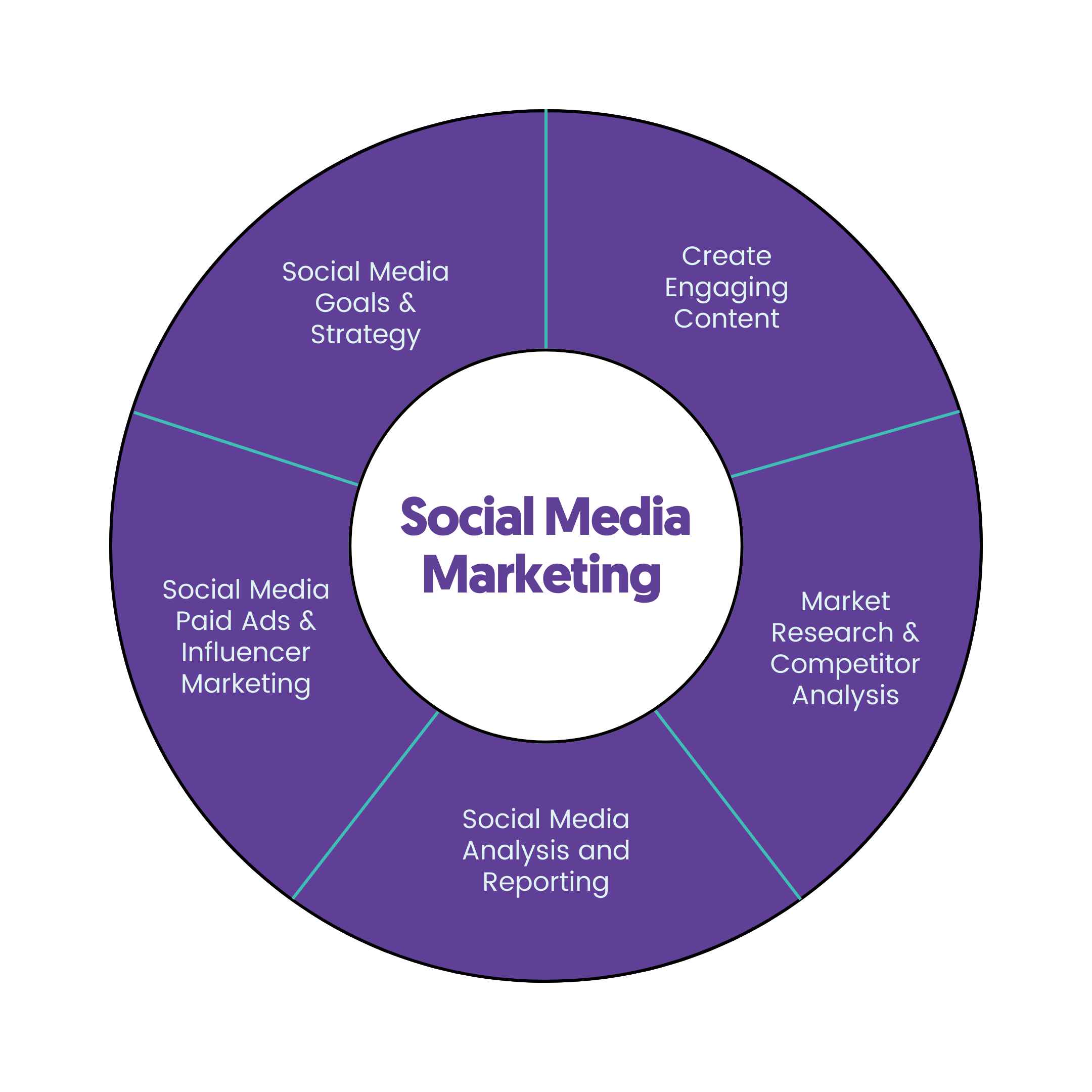
Updating your social media pages while working on other digital marketing tasks can be a big issue for small businesses with limited resources.
The best way to handle this is to create a realistic social media marketing plan. Your plan should include the following:
- Your social media marketing goals
- Analysis of your audience's personas
- Posting Calendar
- Metrics to use to analyze the performance of your campaigns
Social Media Marketing Courses: Everything you need to know to start with social media marketing.
If you’ve made it to this point, congratulations! You should now have a better idea of how to make digital marketing work for your business.
Digital Marketing Checklist FAQ
What should be on a digital marketing checklist?
A complete checklist covers your goals and budget, your website and tracking setup, SEO, paid advertising, content, email, and social media. This checklist includes 36 tasks across those areas.
Where should a small business start with digital marketing?
Start with clear goals, a fast and mobile-friendly website, and tracking with Google Analytics and Google Search Console. Then focus on the two or three channels where your customers spend the most time, and add more once those are working.
How often should I review my digital marketing checklist?
Review it at least once a quarter, and whenever you launch a new product, website, or campaign. Update the items that no longer fit your goals.
What is the 70-20-10 rule in digital marketing?
It’s a way to split your marketing budget: about 70% on channels and campaigns you know work, 20% on promising ideas that build on them, and 10% on experiments.